
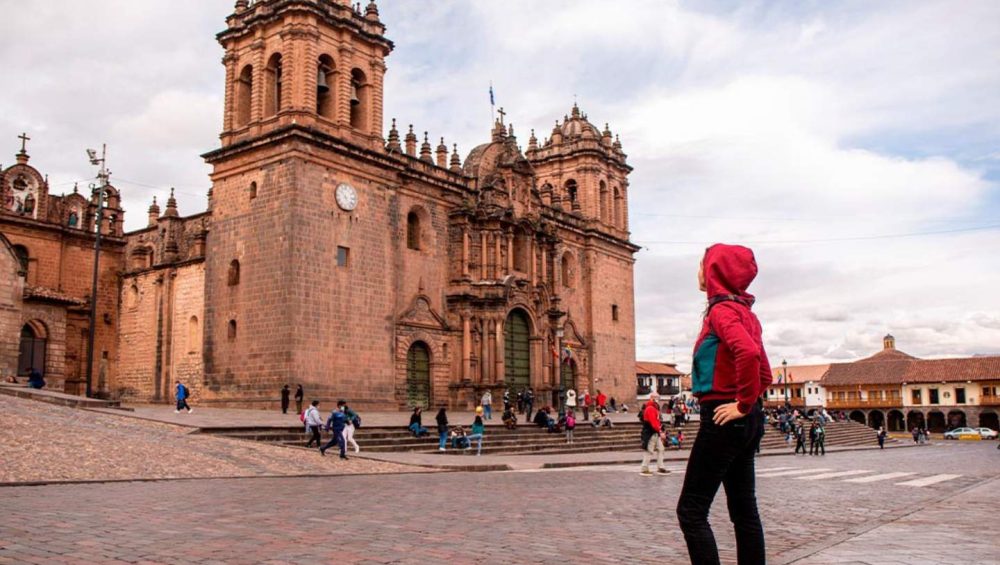
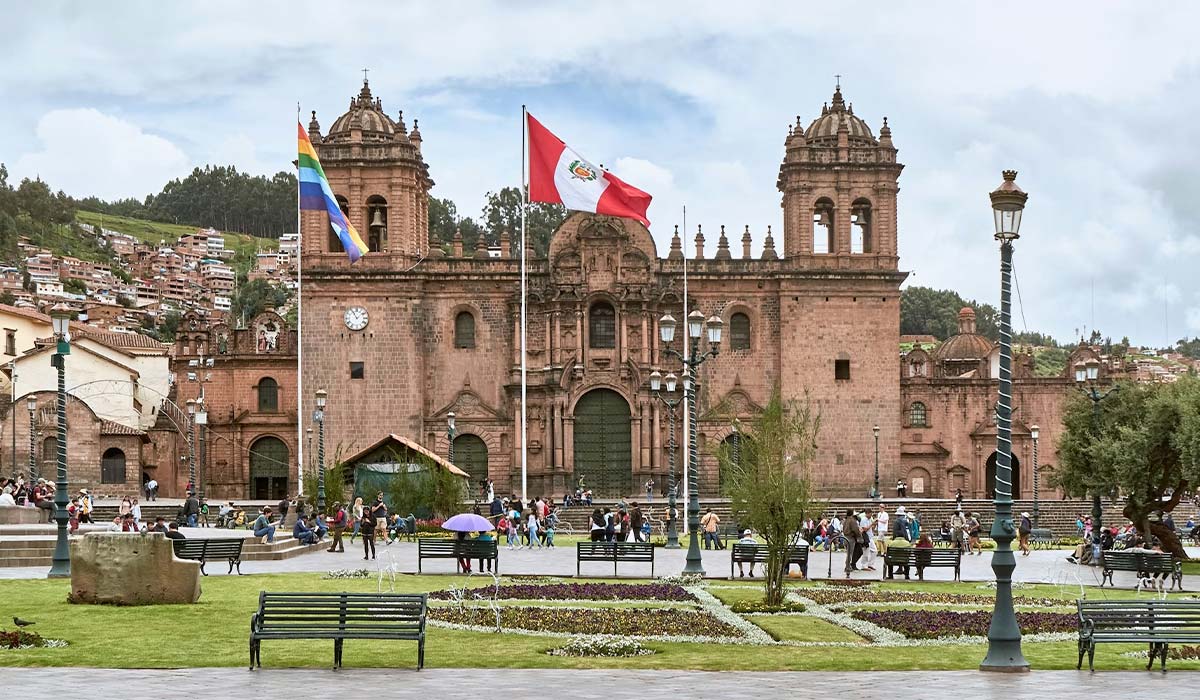
The Cusco Cathedral stands as one of the most beautiful, imposing, and significant monuments in the entire American continent. Built between 1560 and 1664, this architectural gem sits on the Quishuarqancha, the ancient palace of the Inca Huiracocha. For its construction, huge stone blocks brought directly from the Sacsayhuaman fortress were used. Likewise, this piece, considered Cultural Heritage of the Nation, brings together a combination of Gothic, Baroque, and Renaissance styles, turning it into a museum of sacred art.
The history of its location is as fascinating as its structure. When the Spaniards arrived in the city of Cusco, they requested the creation of the Bishopric from Fray Vicente Valverde, which started the construction of the main temples. However, the cathedral took more than 100 years to be completed due to several changes in location. First, it was built on the site where the Church of the Triumph stands today; later, the Cusipata area was considered due to the size of the project, until finally acquiring the Quishuarqancha land in 1553, where it now stands out in front of the main square.
Where is the Cusco Cathedral located?
The Cathedral Cusco enjoys a privileged and central location in the entire region. It is situated on the north side of the Plaza de Armas, dominating the architectural landscape of the historical center. Its imposing stone facade visually dominates this public space, making it the main point of reference for any traveler exploring the city of Cusco.
Being located in a monumental area, the cathedral is surrounded by other important attractions, flanked by the Church of the Triumph (the first church in the city) and the Church of the Holy Family.
- Point of reference: In front of the iconic central fountain of the Plaza de Armas.
- Accessibility: It is a mostly pedestrian area, so it is ideal to visit during a walking tour of the center.
- Distance: Less than a 10-minute walk from most hotels in Cusco located in the historical center and the San Blas neighborhood.
History of the Cusco Cathedral: A legacy of stone and faith
The Cusco Cathedral, considered one of the most important colonial works of art in Latin America, is not just a religious building; it is a witness to the fusion of two cultures. It was built over more than a century on the foundations of ancient Inca palaces and in the middle of the great historical changes that marked the identity of the city.
Before the arrival of the Spaniards, the place where the Cuzco Cathedral stands today was a sacred space of power. Here was the Kiswarkancha, the palace and residence of the Inca Wiraqocha (eighth ruler of the Tahuantinsuyo). Next to it stood the Suntur Wasi, a circular structure that worked as the armory and ceremonial center of the city.
With the conquest in 1533, the need arose to build a Christian temple that would symbolize the new religious power.
- 1539: The construction of the “Provisional Cathedral of the Triumph” began over the ancient Suntur Wasi. In this place, the Cross of the Conquest was placed (brought by Friar Vicente Valverde), which remains there to this day. Today, the Church of the Triumph works as the right auxiliary chapel of the Cusco Peru Cathedral.
The Construction of the Main Cathedral (1560 – 1664)
Although the order was issued in 1538, it was not until 1560 that the construction of the current building officially began under the direction of Juan Veramendi. The process was long and complex, passing through the hands of notable architects such as Juan Correa, Juan Rodríguez de Rivera, and Juan Cárdenas.
A crucial event defined its current shape: the great earthquake of 1650. This earthquake seriously damaged the original vault and forced the modification of the plans, removing the third section of the towers to give the temple a more solid, wide, and resistant appearance, a characteristic that defines Cusco architecture today.
Finally, the work was finished in 1654 under the supervision of Miguel Gutiérrez de Sacio, with the inaugural mass celebrated on August 15 of that year. The official consecration took place years later, on August 19, 1668.
Expansions, Earthquakes and Modern Recognitions
The history of the Cusco Cathedral continued evolving through the centuries:
- 1723-1735: The Temple of the Holy Family was built, completing the architectural group we see today in the Plaza de Armas.
- 1928: The Vatican granted it the title of Minor Basilica.
- 1950: A new earthquake shook the city, damaging the Gospel side, which led to important restoration work.
- 1978: An emotional milestone: the remains of Inca Garcilaso de la Vega, the first mestizo writer of universal renown, were brought back from Spain and placed in the Church of the Triumph.
- 1983: UNESCO recognized its priceless value by declaring the city and its cathedral as a World Cultural Heritage site.
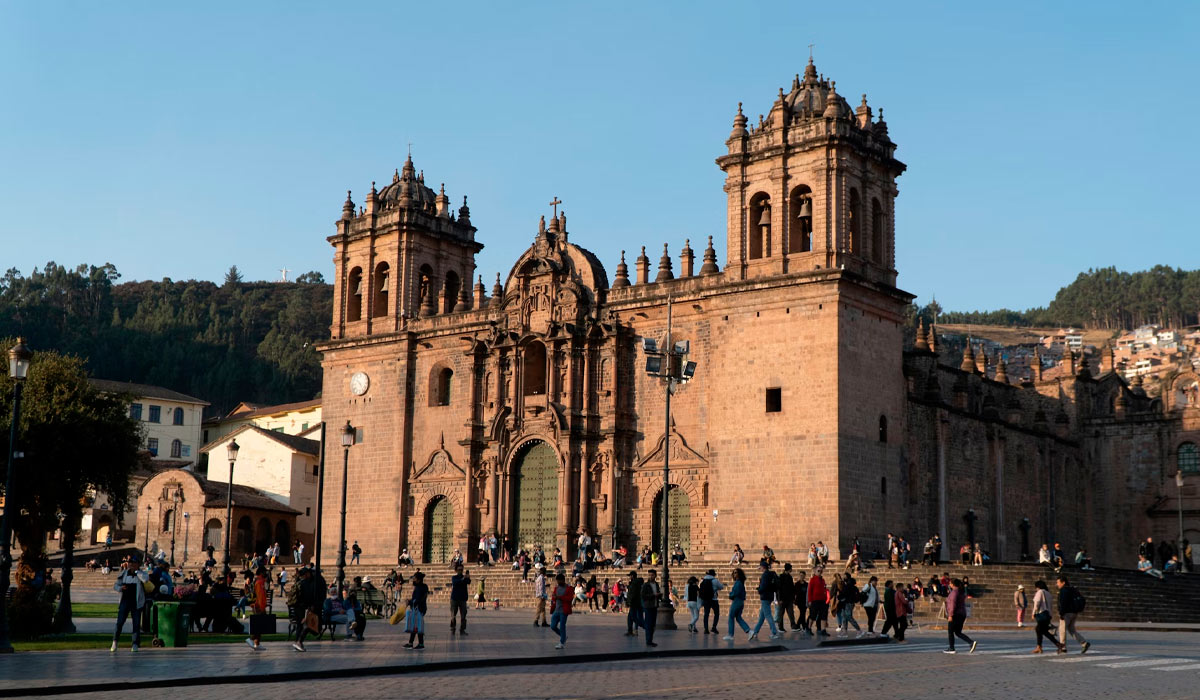
The architecture of the Cusco Cathedral
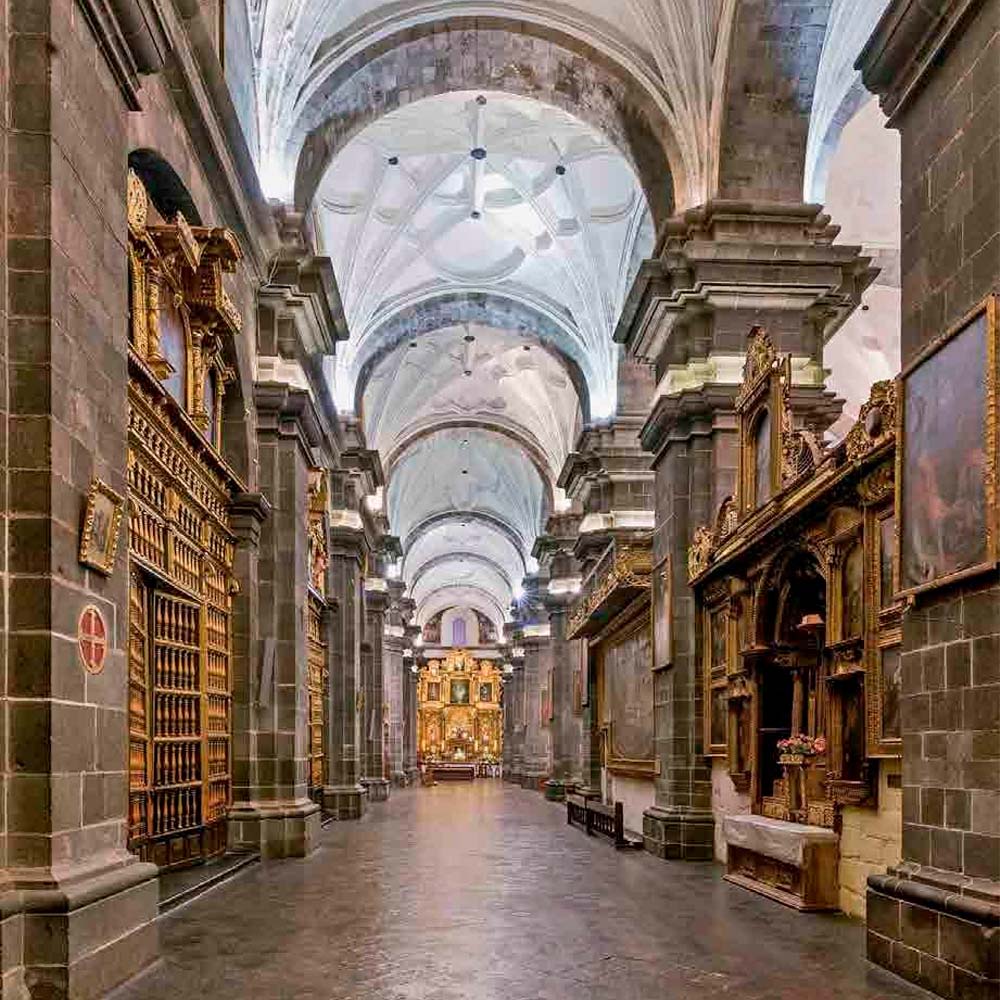
The Cusco Cathedral has an imposing rectangular floor plan in the basilica style. Its internal structure is organized around three main naves: the epistle nave (right), the gospel nave (left), and the central nave. This internal distribution is perfectly reflected on its exterior facade, which features three large access doors that connect directly to each of the naves.
Regarding its structure and internal layout, the support for this monumental work rests on fourteen cross-shaped pillars, elements designed to resist the earthquakes of the region. These pillars support and define the layout of: Twenty-four vaults and the transept dome.
On the other hand, inside the Cusco Cathedral is one of the most important museums of sacred art. Among its most outstanding elements for your visit this year, we find:
- The Main Altar: Made entirely of pure silver, it is a masterpiece of colonial metalwork that symbolizes the devotion and wealth of the time.
- The Sacristy: A space that works as a living pictorial archive, housing a valuable collection of forty canvases that chronologically portray the bishops and archbishops who have led the faith in the city.
- Attached Chapels: The cathedral complex is completed with two side temples: the Church of the Triumph on the right (where the remains of the Inca Garcilaso de la Vega rest) and the Church of the Holy Family on the left.
Curious fact: The Andean banquet in sacred painting
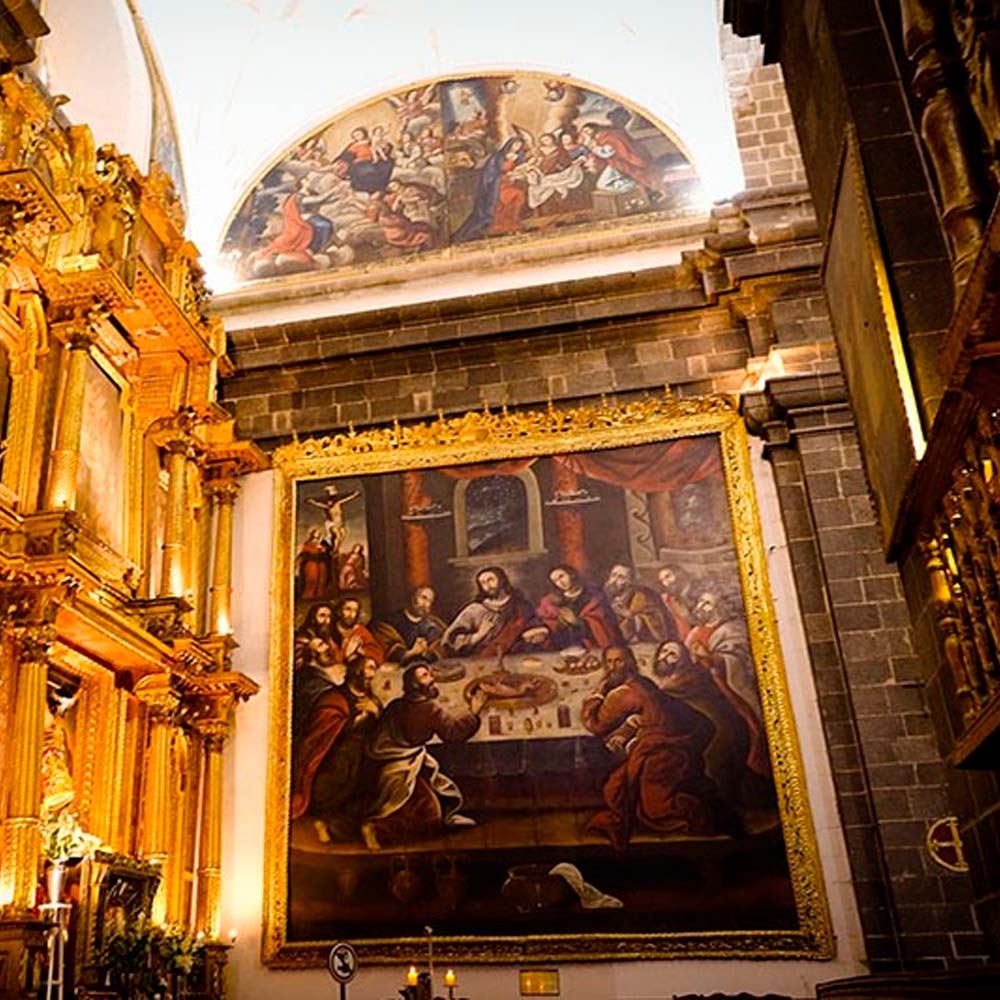
One of the greatest attractions for travelers in this 2026 is the famous painting of “The Last Supper”, a work by the Cusco master Marcos Zapata (18th century). This piece is the greatest example of cultural syncretism:
In this version, Jesus Christ and the twelve apostles do not share traditional European bread, but a deeply Andean banquet. In the center of the table, a roasted “cuy” (guinea pig) stands out, accompanied by local fruits and “chicha de jora”, the sacred drink of the Incas. It is a visual representation of how local artists integrated their own reality into Christian iconography.
 |
 |
What to see? Inside the Cusco Cathedral
When crossing the door of the Cusco Cathedral, the visitor does not simply enter a church, but the most important colonial art museum in the Andes. Its interior houses more than 300 paintings of the “Cusco School”, cedar wood carvings, and silver work that take your breath away. To organize your visit, we have classified its treasures in the following way:
-
The Side Chapels and Independent Altars
The main nave is flanked by 10 side chapels, spaces that in the past were the privilege of powerful families or city guilds. Each one holds priceless treasures of painting and sculpture. Among the most outstanding are:
- Chapel of the Immaculate Conception: Popularly known as “The Beautiful One” of the Cathedral.
- Chapel of the Lord of the Staff: One of the oldest images.
- Other must-see chapels: Virgin of Remedies, Virgin of Carmen, Apostle Saint James, and Saint Joseph.
Additionally, spread throughout the temple, you will find 7 independent altars, such as the Altar of the Holy Trinity and the Primitive High Altar, which tell the story of the site’s stylistic evolution.
-
The High Altar: A mountain of silver
It is the focal point of the cathedral and probably the most important colonial silverwork in America. This neoclassical style altar is covered with more than 1,250 kilos of silver. Its structure of two bodies and three sections guards the richest piece of the cathedral in the tabernacle, while the central part is presided over by a beautiful figure of the Virgin of the Immaculate Conception.
-
The Choir: A masterpiece in cedar
Located in the central nave, the choir is a gem of Baroque carpentry. Carved entirely in cedar wood, it has 42 high seats (for the canons) and 24 low seats. On the backrests, you can admire images of saints and martyrs carved with impressive realism.
-
Cusco School Painting: Syncretism on canvas
The cathedral walls are filled with an art gallery of more than 300 canvases. Three works stand out:
- “The Last Supper” (Marcos Zapata): The most famous work. In it, Christ and the apostles sit in front of an Andean banquet whose main dish is a roasted “cuy” (guinea pig), accompanied by “chicha morada” and local fruits like papaya.
- “The Apotheosis of Saint Christopher” (Basilio Santa Cruz): A monumental canvas located at the door to the Church of the Triumph, showing a muscular Saint Christopher carrying the Child Jesus.
- Canvases by Bernardo Bitti: Mannerist style paintings attributed to this Italian master, who brought the influence of Michelangelo’s school to the Andes.
-
The Lord of the Earthquakes (The Black Christ)
It is the most revered religious icon in the city and the “Sworn Patron of Cusco.” This sculpture of a crucified Christ with dark skin is located in the Gospel nave. The story says that he calmed the earthquakes of 1650 and 1950, as well as several plagues, earning the eternal devotion of the people of Cusco.
-
The Sacristy and the Silverware Room
The sacristy is a historical archive decorated with portraits of all the bishops and archbishops who have governed the Cusco church. Behind a carved wooden door, you enter the Silverware
Room, a treasure vault that keeps:- The imposing silver canopy (1733).
- The silver carriage used for the Corpus Christi procession.
- 18-karat gold pieces with precious stones that adorn the virgins and saints on their feast days.
-
The Crypts: The resting place of history
Under the High Altar, there is a small crypt that keeps the ashes of deceased archbishops. However, the crypt most sought by travelers is located in the attached Church of the Triumph: there lie the remains (or half of the ashes) of Inca Garcilaso de la Vega, the famous mestizo chronicler and author of the “Royal Commentaries,” brought back from Spain in 1978.
Plan your visit: Entry, costs, and schedules 2026
To visit the Cusco Cathedral, you have two main options depending on how much time you plan to spend on the city’s sacred art:
- Ticket Options and Rates
• Religious Circuit Ticket (S/ 40.00): Cathedral, San Blas Church, and Religious Art Museum (Archbishop’s Palace).
• Partial Entry (S/ 25.00): Entry only to the Cusco Cathedral.
• Student Entry (S/ 12.50): Valid with a current university ID card (ISIC or national). - Opening Hours
The cathedral opens its doors for tourist visits during the following schedule:
• Monday to Sunday: From 10:00 a.m. to 6:00 p.m. (18:00 hours).
Important rules during your stay
To preserve the solemnity of the temple and the integrity of the priceless works of the Cusco Cathedral Peru, it is mandatory to follow these rules:
- Absolute silence: Remember that it is an active place of prayer. Keep your voice low if you are with a guide.
- Photography and videos prohibited: The use of cameras and cell phones to capture images of the interior is strictly prohibited to protect the pigments of the canvases and maintain the exclusivity of the site.
- Do not touch the works: The sculptures, gold leaf frames, and Inca walls are extremely sensitive to moisture and the natural oils of hands.
Tip: If you take the famous “Cusco City Tour“, it usually includes the guided visit to the cathedral. Make sure to confirm with your agency if the entry cost is included in your package or if you must pay it at the door at the time of entry.
Frequently asked questions about the Cusco Cathedral
To make your visit perfect, here we answer the most common doubts that travelers usually have before entering this historical monument:
a) How long did its construction take?
The building of the main structure was a massive work that lasted almost a century. It officially began in 1560 and finished in 1654. This long period was due to changes in design and significant interruptions, such as the earthquake of 1650, which affected the ribbed vault and forced the reinforcement of the foundations.
b) Where can I buy the entry ticket?
The entry can be bought at the door of the Cathedral. You can also buy the “Cusco Religious Circuit Ticket”, which includes the visit to the Cathedral, as well as the San Blas Temple, the San Cristóbal Temple, and the Archbishop’s Museum. You can buy a ticket at this last temple.
c) Is it possible to enter for free?
Yes, there is an exception for worship. Access is free exclusively during mass hours, which are usually held on Saturdays and Sundays at 07:00 a.m. and 07:00 p.m.
Note: Keep in mind that during mass, tourism, walking through the side naves, and taking photographs are not allowed.
d) How can I get a tour guide?
At the entrance door itself, you will find official accredited guides who offer their services for a fee to be discussed. However, the most comfortable and safest option is to book a “Cusco City Tour” with a formal agency; these packages already include the expert guide who will explain every detail of the canvases and the architecture.
e) What is the most special date to visit the Cathedral?
Without a doubt, during “Corpus Christi” (June). This is the most important religious festival in Cusco and the moment when the Cathedral comes to life. The 15 most revered images of saints and virgins of the city arrive here in a procession, accompanied by music, dances, and typical dishes like “Chiriuchu”.
f) Can I visit the Cathedral as part of a “City tour”?
Yes! In fact, it is the first stop of the classic City Tour, which combines the visit to the Cathedral with the Coricancha Temple and the four nearby ruins: Sacsayhuaman, Qenqo, Puca Pucara and Tambomachay. Most of these services include transport and guiding, although sometimes tickets are paid separately (check this with your agency).
g) What other churches should I visit in Cusco?
The city is a treasure of colonial architecture. Besides the Cathedral, we recommend visiting:
- Church of the Society of Jesus: Famous for its Baroque facade, also located in the Plaza de Armas.
- Church and Convent of Santo Domingo: Built over the Qoricancha.
- Church and Convent of La Merced: It has an impressive gold monstrance.
- Church of San Francisco: With its catacombs and museum.