
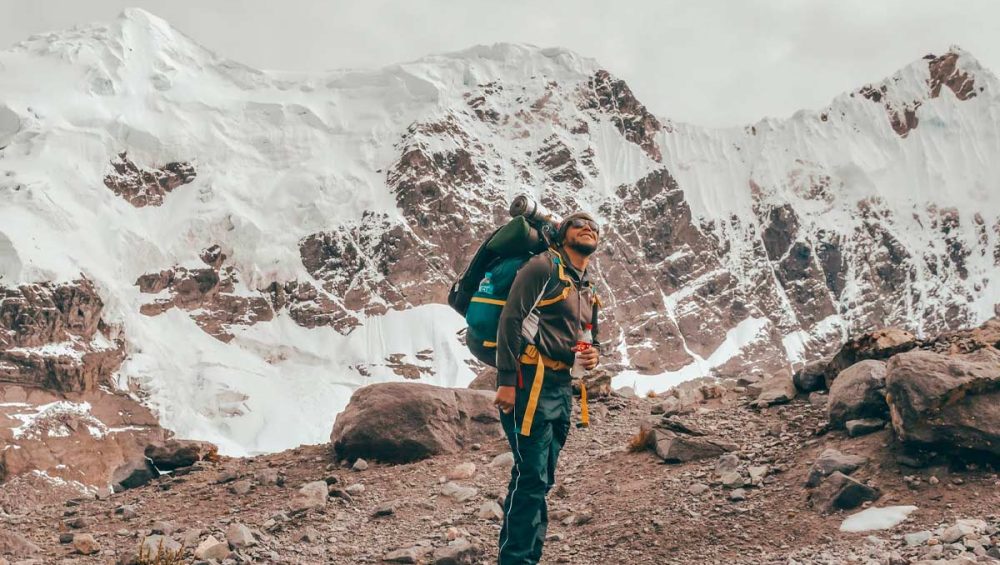
A few hours from Cusco, there is a trek where you can walk for entire days surrounded by snow-capped peaks and a beautiful landscape. Here there are no crowded viewpoints or trains crossing the route. This is the Ausangate Trek, which runs along the foot of this sacred mountain and is one of the most authentic and least traveled experiences in the southern Andes.
Who lives at these heights? On this path, alpacas and llamas graze next to the trail, Quechua shepherds tend their herds as their ancestors did, and each community preserves a way of understanding the Apu that is felt in every greeting and in every offering. But it is also a demanding trek, with high mountain passes and cold nights. Are you truly prepared for it?
Throughout this article you will find everything you need to plan your adventure: the history and significance of the mountain, the attractions you will see along the way, the different route options, the weather, viability, and how to prevent altitude sickness. If you are looking for a different trek connected to Andean culture, then the Ausangate Trek is the option to choose.
Getting to know Apu Ausangate
Before putting on your boots, it is good to understand what you are about to explore. Ausangate is not just the highest point on the landscape; it is a mountain with its own name, history, and a central place in the lives of the communities that live at its foot.
Quick fact sheet
- Height: 6,384 m.a.s.l. It is the highest peak of the Vilcanota Mountain Range and, by elevation, the highest in the Cusco region.
- Distance: About 100 km southeast of the city of Cusco.
- Administrative location: Between the districts of Ocongate (Quispicanchi province) and Pitumarca (Canchis province).
- Trek access: About 3 hours by road from Cusco to Tinqui, the most common base town.
Where is this mountain located?
Although many guides say that Ausangate is in Quispicanchi, the mountain is actually shared between two provinces: Quispicanchi (Ocongate district) and Canchis (Pitumarca district). But this is not highly relevant, because most circuits start on the Ocongate side, in Tinqui or Pacchanta, about 3 hours from Cusco. What does matter is the change of scenery: you leave behind the rhythm of the city and ascend to a high plateau of snow-capped peaks, lakes, and grasslands.
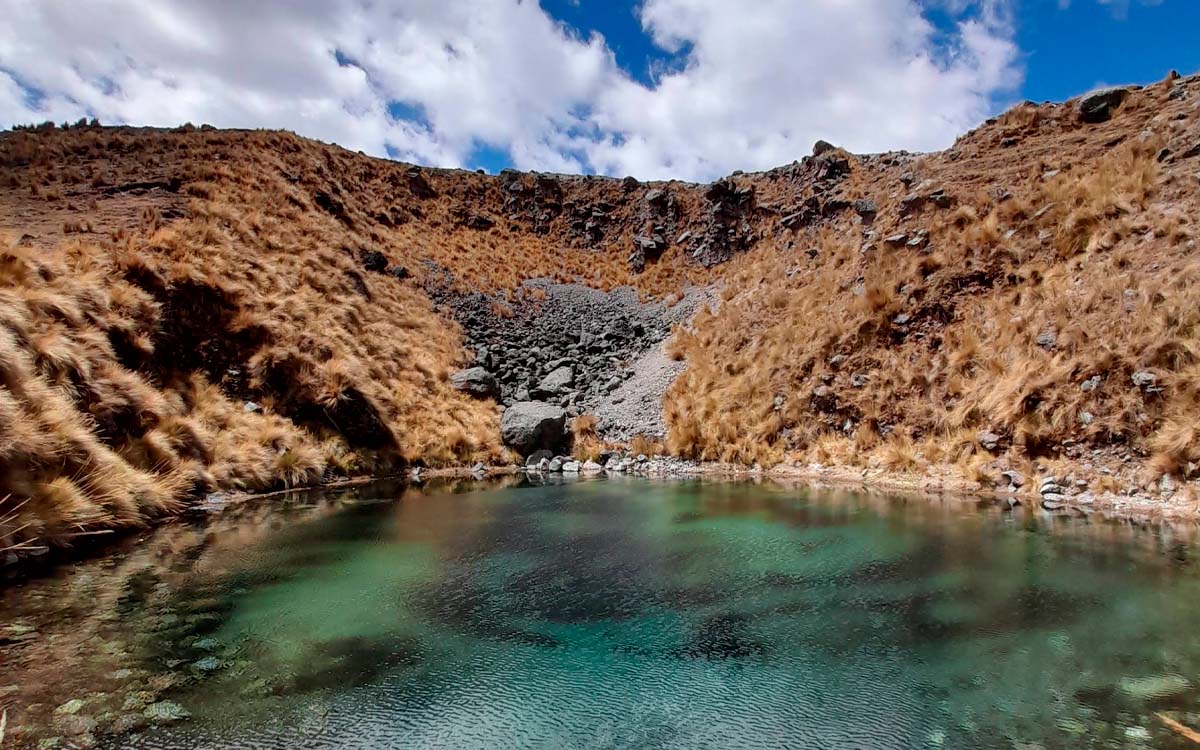
Ausangate is the center of the Vilcanota Mountain Range, a massif located southeast of Cusco, on the border with the Puno region, which extends for about 80 km and gathers 469 glaciers. It is the second largest concentration of glaciers in Peru. That snow feeds the rivers, the turquoise lakes you will see on the route, and the communities that live further down.
Local communities: Pacchanta and Tinqui
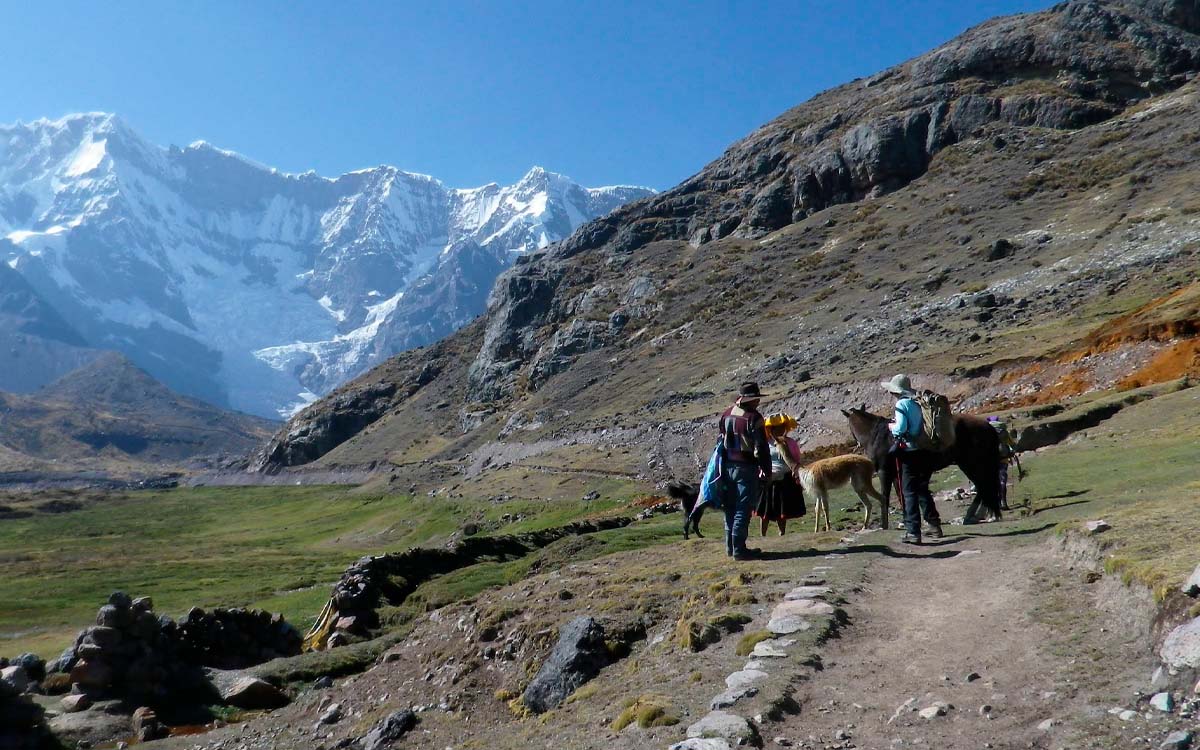
This landscape is not uninhabited. The region is inhabited by communities that live by herding llamas and alpacas, forming one of the few remaining pastoral societies in the world. Shepherds use high-altitude trails to exchange products with agricultural communities in lower areas, and one of those paths is today the trek route.
Tinqui, at about 3,800 m, is the starting and return town for most circuits. Pacchanta, higher up, is famous for its hot springs and for being a resting point at the end of the hike. In both places, it is common to see women dressed in traditional clothing and families offering textiles and handicrafts.
About the flora and fauna
During the Ausangate Trek, you will discover high Andean landscapes where flora and fauna have adapted to low temperatures and high altitude. Along the route, you will be able to observe animals typical of the Andes and vegetation that brings life and color to the mountain environment:
- Alpacas and llamas: They are the main characters of the landscape and the foundation of the local economy.
- Vicuñas: They are more shy and are frequently seen in the higher parts. It is one of the threatened species that the conservation area seeks to protect.
- Andean condor: With a bit of luck, you will see it soaring over the valleys.
- Vizcachas: Soft-furred rodents that peek out from between the rocks, especially at sunset.
- Andean cat and birds of the polylepis forests: They are also part of the area’s featured fauna. The Andean cat is very elusive and almost impossible to see.
- Vegetation: High-altitude grasslands, wetlands, and small polylepis forests between the valleys.
Attractions along the way
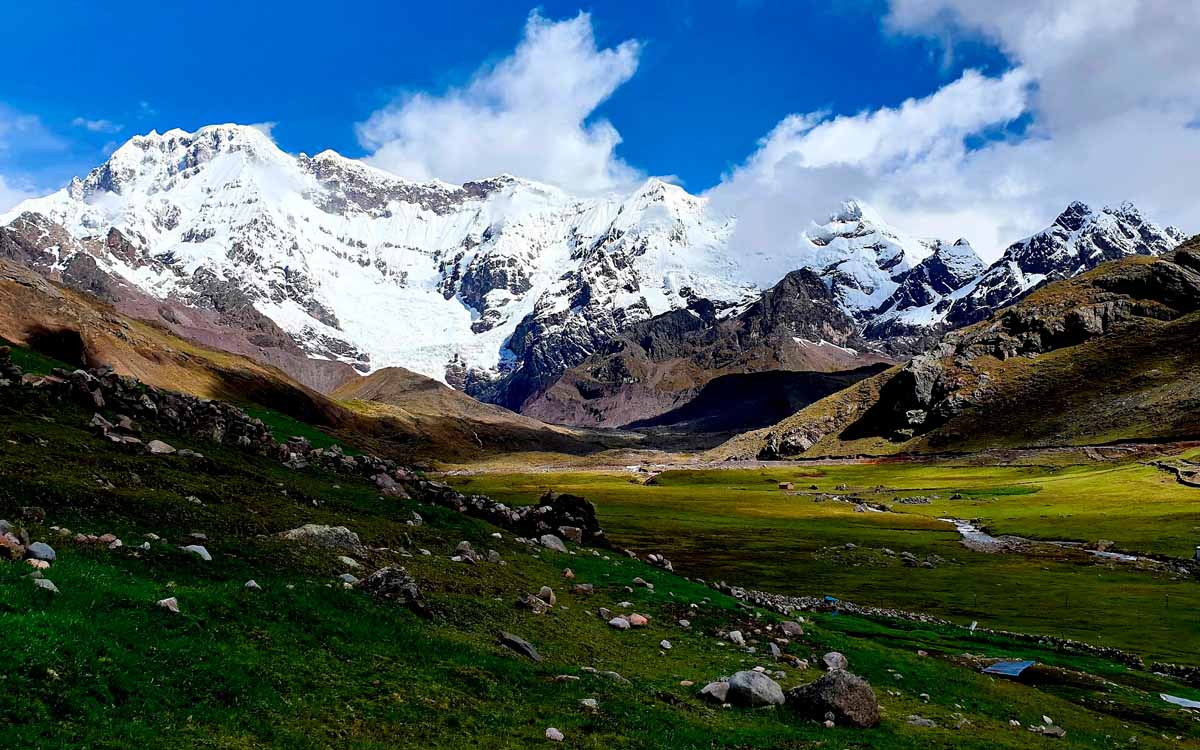
The Ausangate trek surrounds the snow-capped peak of the same name (6,384 m), in the Vilcanota Mountain Range, and combines several types of landscapes in a few days. There are mountain passes above 4,800 m, lakes of different colors fed by melting glaciers, communities where alpacas and llamas are raised, and hot springs at the beginning and end of the route. The attractions are spread throughout the circuit, and several of them coincide with campsites or with the passes crossed each day.
The route takes place between 4,000 and 5,200 m of altitude, so prior acclimatization in Cusco is important to enjoy each point. Itineraries change depending on the agency (4 to 7 days, with or without detours), so the order in which these attractions appear and the day they are visited depend on the chosen program.
- Pacchanta and Upis Hot Springs: The hot springs are the most anticipated rest of the circuit. Those in Upis are near the campsite where the first night is usually spent, with a view of the snow-capped Ausangate at the bottom of the valley. Those in Pacchanta are visited at the end of the trek, after several days of hiking, and many groups take advantage of them before returning to Tinqui and Cusco.
- Palomani Pass: Palomani is the highest point of the circuit. It is generally crossed on the third day, after a long climb that usually starts early. From the pass, there are wide views of Ausangate and the glaciers of the mountain range. In the rainy or frosty season, there may be snow on the trail, which makes the day slower.
- Vinicunca (7 Colors Mountain): Vinicunca is not part of the classic circuit, but some routes include it as a detour, generally crossing the Warmisaya pass (near 4,985 m) to reach the mountain and return to the main path. It is located around 5,036 m, and its colored stripes are due to the mineral composition of the sediments.
- The 7 Lakes: The 7 Lakes are a set of glacial lakes located on a route that joins the circuit in the last stretch, near the Jampa pass and Pacchanta. In this part, the route passes by several bodies of water with Ausangate as a backdrop. The colors vary between turquoise and green depending on the light and the time of day.
Route options
The Ausangate trek can be done in different durations depending on the available time, physical condition, and whether you want to include Vinicunca. The classic circuit lasts between 4 and 5 days and covers the mountain passes, lagoons, and hot springs described above. Shorter versions reduce the route, and longer ones add detours and acclimatization or rest days.
| Duration | Typical Route | Highlights | Difficulty |
|---|---|---|---|
| 3 Day Circuits | Cusco → Upis → Vinicunca (Rainbow Mountain) → Pacchanta → Cusco | A compact version aimed at connecting Ausangate with Vinicunca and the thermal springs. | Demanding (Fast pace) |
| Classic Circuit (4 to 5 Days) | Cusco → Tinki → Upis → Puca Cocha → Palomani Pass → Jampa → Pacchanta → Cusco | The complete circuit encircling the snow-capped peak, crossing colorful lakes and the highest pass (Palomani, 5,200m). | Very High / Technical |
| Full Extension (6 to 7 Days) | Includes the full classic circuit adding the detour to Rainbow Mountain and the Red Valley. | The wildest and most isolated experience deep in the mountain range. | Extreme (Due to cumulative wear) |
The table summarizes the three most common modalities. Exact itineraries change depending on the operator, so it is convenient to confirm the program before booking.
Other options
-
Ausangate + Vinicunca: The most popular combination
Many operators offer the circuit with the detour to Vinicunca, generally 5 to 7 days. The detour is made through the Warmisaya pass and adds one more day of trekking. The advantage is that Rainbow Mountain is visited from the trek side, with less traffic than the direct access from Cusco. Some programs also add the Red Valley, which is located near Vinicunca.
There are also 2 day versions focused only on Vinicunca, with a night in a camp or lodge. They are shorter, but do not include Palomani or the rest of the circuit.
-
Camping vs. lodge-to-lodge: comfort, price, and experience
- Camping: Luggage and camp equipment are carried by horses or mules, with a guide, horseman and cook. It is the most common modality and usually has the lowest cost. In return, nights at high altitude are cold and rest is less, especially during the frost season.
- Lodge-to-lodge: You sleep in fixed accommodations, such as the lodges of the Camino del Apu Ausangate project or those of Andean Lodges, instead of a tent. There is more comfort to rest and less weight to carry, but the cost is usually higher and the route adapts to the location of the lodges, not the camp.
Weather and feasibility
Most visitors place the dry season between May and September, with clearer skies and almost no rain. July and August are the most stable months and also the most crowded. The rainy season goes from October or November to March or April, with January to March as the wettest months. During that period, the trail can get muddy and high sections usually have fog and occasional snow. April and October are considered intermediate months, with mixed dry and rainy days.
Temperatures and risk of frost
The dry season coincides with the Andean winter, so it is also the coldest at night. Temperatures vary according to the camp altitude, the month, and the source:
- Daytime: Between 10 and 20 °C in the sun, and less if the day is cloudy. In lower valleys, up to 20–25 °C is reported.
- Nighttime: Can drop below 0 °C at high camps, and some operators report down to -10 °C in dry season.
- Frost and snow: At high passes, such as Palomani, there can be snow or ice on the trail even outside the coldest months.
A sleeping bag rated for below-zero temperatures, warm layers, and waterproof clothing are necessary all year round, as it can also rain during the dry season.
Is it feasible for you?
Ausangate is classified as a demanding or difficult trek. The effort comes not so much from the distance (the full circuit is around 70 km) as from the altitude: almost the entire route exceeds 4,000 meters and several passes close to or above 5,000 meters are crossed. Moderate to high physical condition is needed, and the second and third days are usually the toughest in the classic 5-day itinerary. It is best to train with long walks with elevation gain and, if possible, do prior outings at altitude.
Comparison with other treks in Cusco
- Classic Inca Trail: Moderate difficulty. Requires advance permit and ends at Machu Picchu.
- Salkantay: Demanding difficulty, with the highest point near 4,600 meters. It is more crowded and has more accommodation infrastructure.
- Ausangate: Demanding to high difficulty. Reaches around 5,200 meters, does not require a permit, has fewer visitors and less infrastructure, and does not include Machu Picchu.
About Altitude Sickness
What is it and why does it occur? Acute mountain sickness (soroche) is a set of symptoms that appears when the body has not adapted to the lower amount of oxygen available at higher altitude. The most common symptoms are headache, nausea, dizziness, loss of appetite, insomnia and fatigue. It usually appears in the first hours after reaching higher altitude and, in most cases, improves with rest and acclimatization.
Recommended acclimatization
Acclimatization usually takes between two and four days. Medical guides indicate that, above 2,500–3,000 meters, the altitude at which you sleep is more important than the maximum reached during the day, and that the daily increase in sleeping altitude should not exceed 300–400 meters.
Recommendations
- Prevention:
- Constant hydration throughout the day and night.
- Slow and steady pace when walking, without sudden efforts.
- Light and frequent meals, even if there is little appetite.
- Avoid alcohol during the first 48 hours at high altitude.
- Coca tea is traditionally consumed in the area, but it does not replace acclimatization.
- Medication: Always consult with a doctor before traveling. Some doctors prescribe preventive medications for people with moderate or high risk, but the decision and dosage depend on each case.
- Oxygen and emergency protocols: Serious operators usually carry a first aid kit and portable oxygen. It is convenient to ask before booking what equipment the guide carries and what the evacuation protocol is. If symptoms worsen, the main measure is to stop ascending and descend.
- Travel insurance: Hire insurance with coverage for high-altitude trekking and evacuation. Many policies limit coverage above a certain altitude, so it is advisable to check that it covers the 5,200 meters of Palomani.
Frequently Asked Questions (FAQ)
- How many days are needed to do the Ausangate Trek?
The classic circuit of the Ausangate Trek lasts 4 to 5 days. There are also express versions of 2 to 3 days and extended variants with Vinicunca, lasting 5 to 7 days depending on the operator. Duration depends on pace, acclimatization, and included detours.
The 5 day version is the most common because it allows crossing the four main passes and reaching the Pacchanta hot springs at the end. Short versions omit part of the circuit. - How difficult is the Ausangate Trek?
The Ausangate Trek is considered demanding, more because of the sustained altitude than the distance. Almost the entire route exceeds 4,000 meters and passes between 4,800 and 5,200 meters are crossed. It requires good physical condition, prior acclimatization, and multi-day trekking experience. In the classic 5-day itinerary, the second and third days are usually the hardest. - What is the maximum altitude of the trek?
The highest point of the circuit is the Palomani pass, at around 5,200 meters according to most sources, although some indicate 5,170 meters. Other passes, like Campa, are between 5,000 and 5,100 meters. The summit of snow-capped Ausangate reaches 6,384 meters, but the trek does not ascend it. - What is the best time to do the Ausangate Trek?
The best time is the dry season, from May to September, with clearer skies and almost no rain. July and August are the most stable months. It is also the coldest season: nights can drop below 0 °C in high camps, with a risk of frost.
April and October are intermediate months, with mixed dry and rainy days. From November to March it rains more and the trail can get muddy. - How do I get from Cusco to Pacchanta or Tinqui?
Tinqui, the usual starting point, is about 3 hours by road from Cusco. Pacchanta is in the same area. Operators usually include private or shared transfer. On your own you can go by public transport, but it is best to confirm schedules and departure points in Cusco. - Can the Ausangate Trek be done without a guide?
It is possible for people with navigation and altitude experience, but going with a guide is recommended. The route is remote, has limited signage, exceeds 4,000 meters almost all the time, and the weather changes quickly. In case of an emergency, help takes time to arrive.
Anyone doing it on their own should carry an offline map or GPS, gear for below-zero temperatures, and be well acclimated. It is not recommended for first-time high-altitude hikers. - How do I prevent altitude sickness on Ausangate?
With prior acclimatization of 2 to 3 days in Cusco or the Sacred Valley, constant hydration, a slow pace, and attention to symptoms. If strong headache, nausea, or dizziness appear, inform the guide and do not ascend further until they improve. Consult your doctor before traveling. - How much does the Ausangate Trek cost?
It varies depending on days, service, and group size. In 2026, group 5-day tours appear from about US$550 to US$650. Private tours, those with more days, or with lodge accommodation can exceed US$1,000. Prices change by season, so it is best to confirm them with the operator. Before comparing, review what each rate includes: transport, meals, camping gear, entrance fees, and oxygen. - What is the difference between the Ausangate Trek and the Inca Trail or Salkantay?
Ausangate has fewer visitors, higher altitude, and does not end at Machu Picchu. It does not require advance permits, unlike the Inca Trail. Salkantay is more crowded and reaches around 4,600 meters, while Ausangate exceeds 5,000 meters. - Can Vinicunca (Rainbow Mountain) be visited during the trek?
Yes. Some variants of the circuit include Vinicunca as a detour, so you arrive via a quieter route than the one-day excursion from Cusco. There are also 2 to 3-day programs focused on Vinicunca and the Red Valley, without the rest of the circuit.