
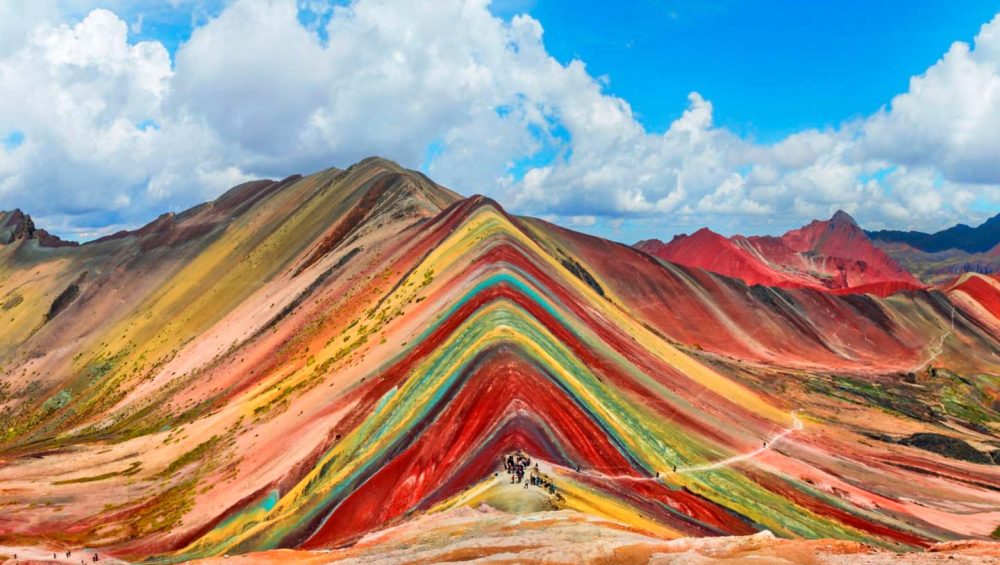
The Rainbow Mountain Peru is one of the most photographed landscapes in the country and a destination that attracts a large number of travelers. Its reddish, green, yellow, and violet tones draw much attention from the visitor, but behind this natural spectacle there is a fascinating scientific explanation; therefore, understanding the geology of the Rainbow Mountain will allow us to know how its mineral layers were formed and why its colors are visible today.
In this guide, we will explore the geological processes that gave rise to Vinicunca, from the accumulation of minerals millions of years ago to the tectonic movements that revealed its multi-colored layers. Moreover, if you are thinking of visiting this place, this information will help you know clearly and precisely how one of the most surprising attractions of Cusco Peru was formed.
What is the Rainbow Mountain and where is it located?
The Rainbow Mountain of Peru, also known as Vinicunca, is a geological formation located in the Vilcanota mountain range, in the southeast of Cusco Peru. It is located at more than 5,000 masl, in an area where erosion, extreme climate, and the exposure of ancient mineral layers have revealed its natural colors. Its geological importance lies in the fact that it allows for the visible and orderly observation of layers formed millions of years ago, making it one of the best examples of how the internal processes of the Earth can transform the Andean landscape.
How was the Rainbow Mountain formed?
The Rainbow Mountain was formed through a combination of geological processes that happened over millions of years. Its colors visible today are the result of ancient mineral deposits, the lifting of the Andes mountain range, and the natural erosion that left its layers exposed. To understand this landscape, it is important to know how sediments, tectonic forces, and deglaciation interact, which are key elements in the geology of the Andes and are highly studied by those who investigate the geological formations in Peru.
-
Sedimentary Origin
The origin of the colors of Vinicunca is in its ancient sedimentary layers. During the Mesozoic era, this area was covered by seas and lagoons where minerals like iron, sulfur, and clays built up. As time passed, these sediments became compacted and formed rocks with different tones; therefore, this sedimentary base is fundamental for understanding the Rainbow Mountain geology and why its colors have such a sharp layered pattern.
-
Andean Tectonic Activity
After the formation of the mineral layers, the Andean orogeny lifted these rocks towards the surface. The collision between the South American and Nazca plates caused the layers to fold, break, and rise, exposing layers that were previously buried. This process explains why the Rainbow Mountain shows inclined and visible lines, a typical feature of the tectonic uplift processes that characterize the Andes of Peru.
-
Erosion and Deglaciation
Finally, natural erosion and deglaciation played a decisive role. As the glaciers retreated during the last great warming period, the mineral layers were completely exposed to the open air. Rain, wind, and extreme temperature variations intensified the contrasts between the minerals, making their colors more noticeable. This process continues to this day, which is why the landscape is a clear example of erosion-driven landscape formation in high mountain areas.
Scientific Explanation for the Colors of Vinicunca
The colors of the Rainbow Mountain of Peru have a completely scientific basis. Each visible tone corresponds to specific minerals that were deposited millions of years ago, and today they can be studied as a clear example of Rainbow Mountain geology. The combination of the mineral composition, oxidation, and high-altitude environmental conditions explains Why is Rainbow Mountain colorful?, a topic highly sought after by travelers and geology lovers. To understand it better, let’s review what generates each color, why they look so intense, and what natural factors can change their appearance.
Minerals of each color
The tones that form the multicolor landscape come from different minerals gathered in sedimentary layers:
- Red: created by iron oxides, a key component within the Rainbow Mountain minerals.
- Green: linked to chlorite and iron and magnesium compounds.
- Yellow: result of the presence of sulfur and limonite.
- White: comes from quartz and light sandstones.
- Brown: linked to aged clay rocks.
- Pink and purple: product of clays rich in iron and magnesium.
This mineral variety is the scientific basis of the Rainbow Mountain formation, one of the most studied aspects within high-Andean geology.
Why are they so intense?
The colors of Vinicunca not only depend on the minerals, but also on chemical processes like oxidation. Exposure to the open air, direct sun radiation, and the lack of plants allow the minerals to react and adopt stronger tones; furthermore, being more than 5,000 m in altitude, the atmosphere is thinner, which causes the colors to reflect light with greater intensity. This phenomenon is key to understanding many of the Rainbow Mountain Peru facts that surprise visitors.
Environmental factors that affect visibility
The color intensity can change based on the climate. Sunny days highlight the red and yellow tones, while cloudy days soften the contrast between the layers. Rain can also temporarily darken the minerals and make the colors look less striking; in the same way, the presence of snow can cover whole sectors and change the perception of the landscape. These environmental factors explain why each visit offers a different visual experience, even when the geological structure remains the same.
Why was the Rainbow Mountain only discovered a few years ago?
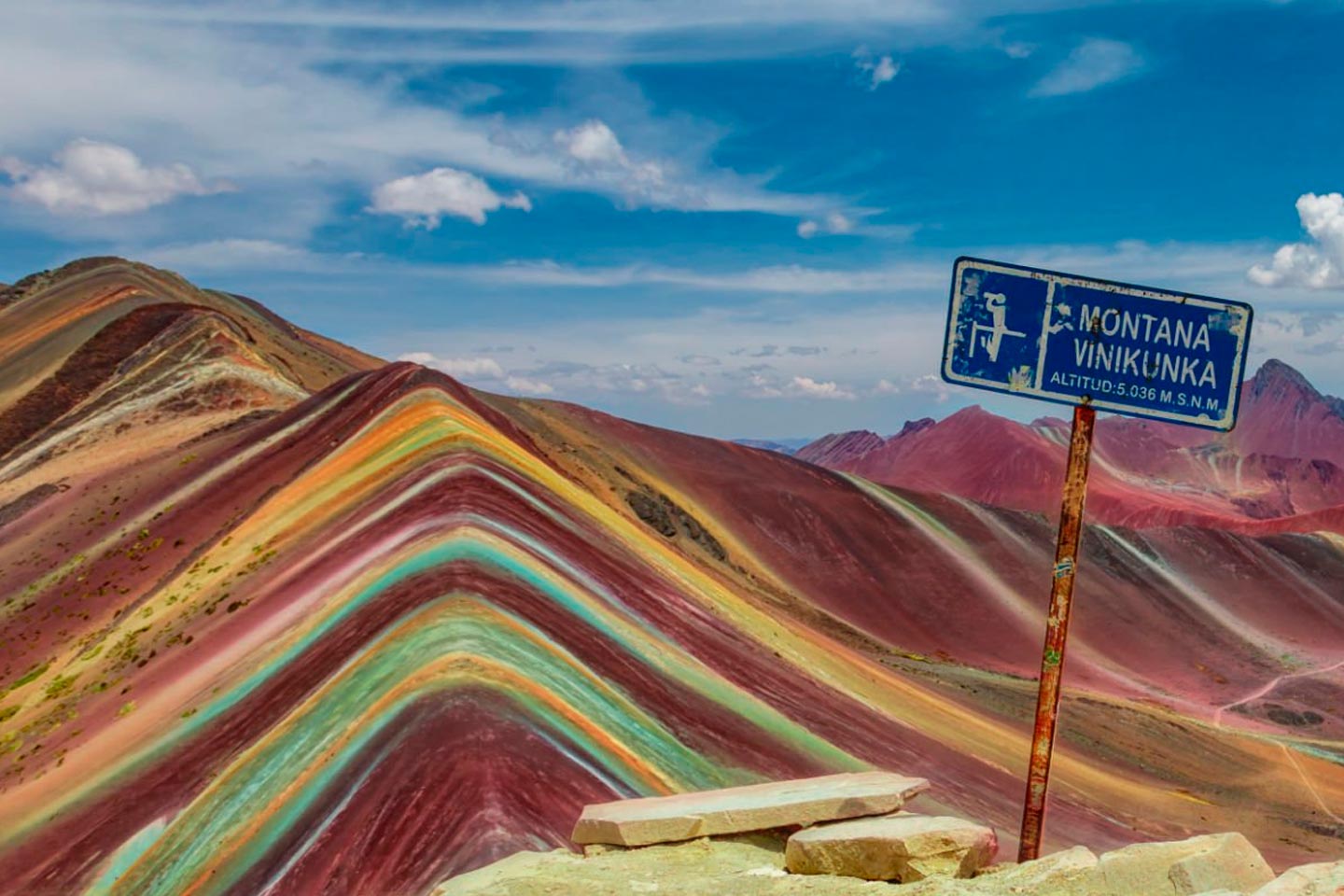
The Montaña Arcoiris became visible recently due to a natural process of deglaciation that happened in recent decades. For centuries, a large part of its mineral layers was covered by permanent snow and ice, which prevented seeing the colors that attract the visitor’s attention today.
As the glacier retreated due to the temperature increase in the Andes, the sedimentary layers were exposed and began to show the tones that explain why is Rainbow Mountain colorful, a much discussed topic in modern geological studies. This natural change not only revealed the Rainbow Mountain minerals, but also boosted tourist interest, creating routes like the popular Rainbow Mountain tour from Cusco, which leaves daily from the city of Cusco towards the Ausangate area.
The recent exposure of the terrain has allowed researchers to analyze how was Rainbow Mountain formed with greater accuracy and understand that deglaciation was the key for Vinicunca to become one of the most visited landscapes in southern Peru.
Comparison with other colorful mountains in Peru
In Peru there are other multi-colored landscapes besides Vinicunca, and the best known are Palcoyo and Pallay Punchu, also located in the Andean region; although they share a similar sedimentary origin, each one has features that make them different. These contrasts are useful for travelers who seek to choose the best route according to their interest, their physical condition, or the time of year, especially if they consider aspects such as the best time to visit Rainbow Mountain or the effects of the altitude sickness Rainbow Mountain when hiking in high altitude areas.
Main differences between Vinicunca, Palcoyo and Pallay Punchu:
- Diversity of colors: Vinicunca and Palcoyo show a wider palette of tones derived from ancient mineral deposits, while Pallay Punchu stands out for more angular patterns and sharp contrasts.
- Accessibility: Palcoyo is the most accessible option; its route is shorter and with less steepness, ideal for those who want to avoid the effects of altitude. In contrast, Vinicunca requires greater physical effort due to its altitude.
- Altitude: Vinicunca is over 5,000 masl, while Palcoyo is slightly lower. Pallay Punchu is also found in very high areas, which can increase the risk of altitude sickness.
- Flow of visitors: Vinicunca receives the greatest number of tourists, especially those who arrive from organized tours. Palcoyo is usually quieter and Pallay Punchu attracts travelers looking for a less crowded experience.
- Landscape formation: The three mountains share a sedimentary origin, but the way erosion has shaped each one creates different landscapes: soft waves in Palcoyo, sharp lines in Pallay Punchu, and sloping stripes in Vinicunca.
This comparison helps to understand that, although they are all colorful mountains in Peru, each one offers a unique view. For those planning a trip, knowing these differences allows them to choose better according to the type of hike, the climate, and the experience they seek to have in the Andes.
Frequently asked questions about the geology of the Rainbow Mountain (FAQ)
Below you will find clear and direct answers to the most searched questions by travelers, especially those who research or are curious about the geology of Vinicunca and plan a trip to the Rainbow Mountain Peru. These FAQ are optimized for long searches and common doubts about this unique destination in the Andes.
-
Is the Rainbow Mountain a natural phenomenon?
Yes. Vinicunca is completely natural. Its colors come from layers of minerals accumulated millions of years ago, which answers the very frequent question in English: Is Rainbow Mountain natural?. What you see is not paint or human action, but a unique sedimentary geological process.
-
Why is the Rainbow Mountain so colorful?
The colors are due to minerals such as iron, sulfates, chlorite, and clays. Their exposure after deglaciation explains why it looks so intensely colored, which matches one of the most popular searches: Why is Rainbow Mountain so colorful?. Each color reflects the composition and oxidation of a different mineral.
-
Is it safe to visit Vinicunca?
Yes, it is safe as long as you take precautions related to the altitude and the climate. The area is over 5,000 masl, so altitude sickness is the main risk. Even so, thousands of visitors do the route without problems, which answers the frequent query: Is Rainbow Mountain safe?.
-
How high is the Rainbow Mountain?
Vinicunca is located approximately at 5,036 masl. This great altitude is one of the reasons why its colors are so visible and defined, and it also explains why so many people search: How high is Rainbow Mountain? before planning their hike.
-
Is it worth visiting the Rainbow Mountain?
Yes, definitely. Its geology, its natural colors, and its closeness to Cusco make it one of the most impressive landscapes in the country. Also, it is a unique experience for travelers interested in nature, photography, and geology, answering the common question: Is Rainbow Mountain worth it?.