
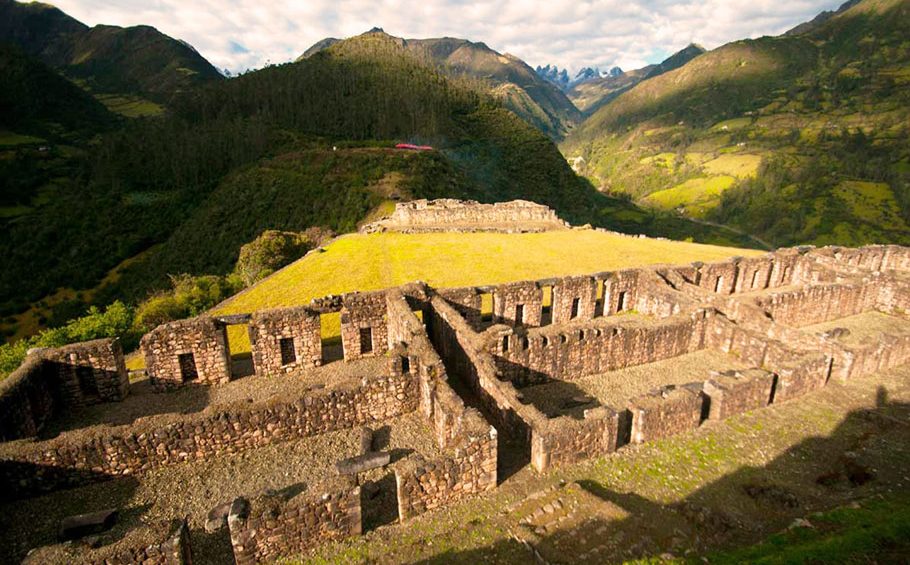
Vilcabamba was the last capital of the Inca Empire, located in what is now the Cusco region of Peru. Founded as a refuge for Inca resistance against the Spanish conquest, it remained active between 1539 and 1572, when it fell after the capture of Túpac Amaru I. Its location in the high jungle makes it an archaeological site of great historical and cultural interest.
Origin of the Refuge
It was established in 1537 under the leadership of Manco Inca Yupanqui, who had initially collaborated with the conquerors but later rebelled due to abuses, loss of authority, and the control that the Spanish exercised over Cusco.
After failing in his attempt to recapture the city, he decided to retreat to a remote region known as Vilcabamba, where he founded a new center of power.
The Neo-Inca State
The Neo-Inca State was the last form of political organization of the Incas after the Spanish conquest of the Inca Empire in the 16th century. This state emerged as a response of resistance against Spanish rule and represented the final attempt to preserve independence, culture, and Andean traditions. From there, the Neo-Inca State managed to remain independent for approximately 35 years, until 1572.
Notable rulers
Manco Inca Yupanqui (1536–1544)
He was the founder of the Neo-Inca State after the fall of Cusco and the initial defeat by the Spanish.
Achievements and actions:
- He retreated to the jungle region of Vilcabamba and established Espíritu Pampa as the capital.
- Organized military resistance against the Spanish, carrying out strategic raids in conquered territories.
- He maintained the Inca political and social structure, preserving the nobility and the ayllu system.
- He initially sought to negotiate peace with the Spanish, but when negotiations failed, he continued active resistance.
Manco Inca Yupanqui solidified the idea of Vilcabamba and Espíritu Pampa as an Inca stronghold, demonstrating that the empire could survive outside of Cusco.
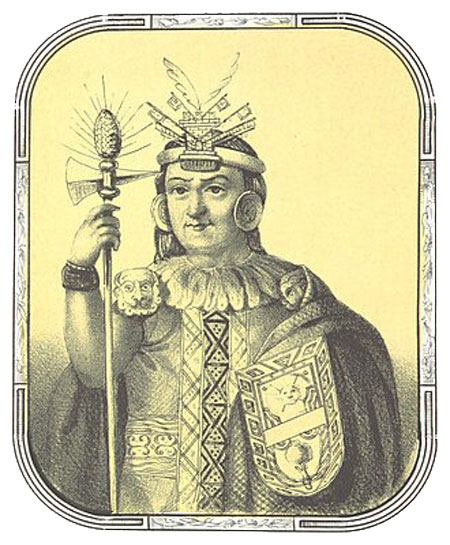
Sayri Túpac (1545–1561)
Son of Manco Inca Yupanqui, he assumed leadership after his father’s death.
Achievements and actions:
- He sought to maintain Vilcabamba’s autonomy while pursuing a diplomatic solution with the Spanish.
- He ultimately agreed to move to Cusco under Spanish guarantees, marking an attempt at peaceful integration without bloodshed.
- During his rule, some internal stability was promoted in Espíritu Pampa, and direct confrontations were reduced.
He was a more diplomatic than military leader, striving to protect the Neo-Inca State through agreements and concessions with Spain.
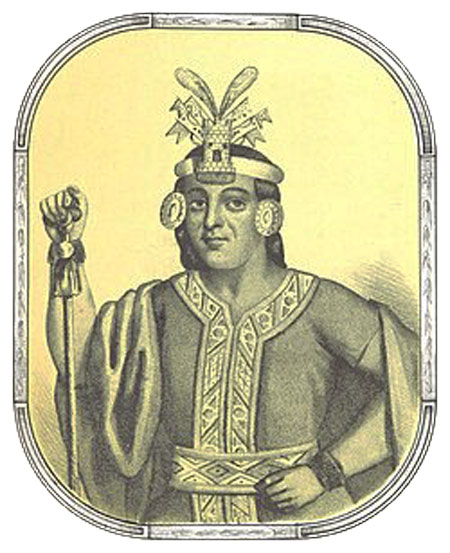
Titu Cusi Yupanqui (1561–1571)
Brother of Sayri Túpac, he returned to Espíritu Pampa when relations with the Spanish began breaking agreements and increasing military pressure.
Achievements and actions:
- Reinforced military resistance against the Spanish, keeping Espíritu Pampa as a center of defense.
- He promoted the internal organization of the Neo-Inca State, strengthening agriculture, supply systems, and social cohesion.
- Established communication channels with other indigenous groups to maintain alliances.
- He received Spanish and religious visitors, negotiating temporary agreements without losing autonomy.
Titu Cusi Yupanqui consolidated the administrative and defensive structure of Espíritu Pampa, keeping the spirit of the empire’s independence alive.
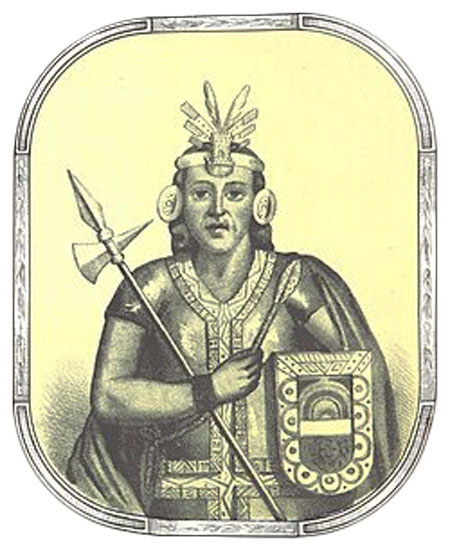
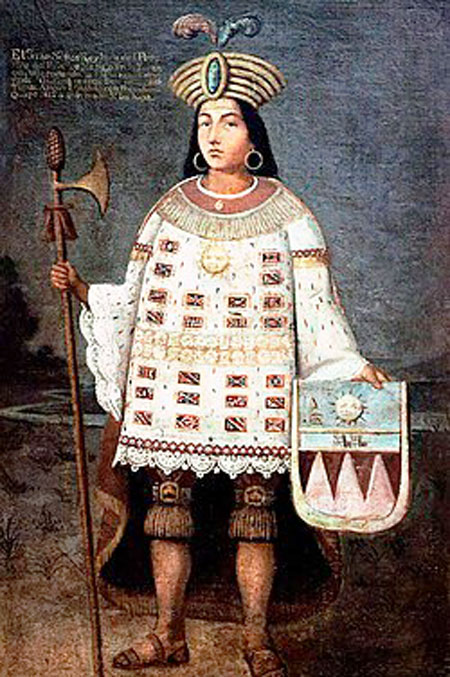
Túpac Amaru I (1571–1572)
The last Inca emperor, son of Titu Cusi Yupanqui, he assumed leadership at the height of Spanish pressure, during the expedition led by Viceroy Francisco de Toledo aimed at ending the resistance in Vilcabamba.
Achievements and actions:
- He led the final resistance from Espíritu Pampa against the Spanish expedition organized by Viceroy Francisco de Toledo.
- He attempted to defend the territory using military strategies and his knowledge of the jungle terrain, but Spanish superiority was overwhelming.
- Captured in 1572 and taken to Cusco, where he was publicly executed.
During this period, there were both conflicts and attempts at negotiation with the Spanish.
The Fall of Vilcabamba
The end came in 1572, when the Viceroy of Peru, Francisco de Toledo, decided to definitively eliminate Inca resistance. He organized a military expedition that managed to penetrate Vilcabamba, capture the city, and dismantle the Neo-Inca State.
The last ruler, Túpac Amaru I, was captured, taken to Cusco, and publicly executed. This event marked the definitive end of the Inca Empire as a political entity.
Rediscovery of Vilcabamba
In 1911, Hiram Bingham, an American explorer, was searching for Machu Picchu and reached the region, but he initially confused several ruins and did not accurately identify Vilcabamba.
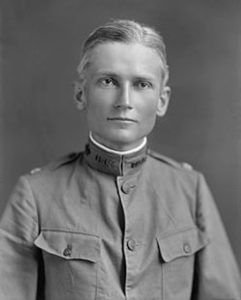
Decades later, in 1964, the American explorer and archaeologist Gene Savoy finally located the true site of Vilcabamba at Espíritu Pampa, confirming that it was the last refuge of the Incas. Thanks to his expeditions, the academic world was able to identify and study the ruins, gaining a better understanding of how the Incas resisted for nearly 40 years after the fall of Cusco.
This rediscovery not only solved a historical mystery but also allowed the preservation of an invaluable cultural heritage, connected to the resistance and legacy of the last Inca rulers.

Why You Should Visit Vilcabamba and Espíritu Pampa
Authentic adventure without mass tourism
Unlike Machu Picchu, Espíritu Pampa has not been heavily developed for tourism, so there are no large crowds or extensive tourist infrastructure. This allows for a more authentic and peaceful experience in direct contact with nature, where visitors feel they are truly exploring a little-known place rather than simply following a traditional tourist route.
Hidden ruins in the jungle
The structures of Espíritu Pampa are partially covered by vegetation, creating a mysterious and unique atmosphere. The jungle has grown over the Inca constructions for centuries, allowing visitors to see ancient plazas, houses, and roads in a more natural state, giving the feeling of discovering a lost city.
Historical and scientific importance
Espíritu Pampa holds great historical and scientific value because it has been key to understanding the true end of the Inca Empire. For a long time, it was believed that the last capital was elsewhere, but modern archaeological research has demonstrated its significance. Studies and discoveries continue in the area to this day, making it a living historical site.
Nature and unique biodiversity
The area is located in a transitional zone between the Andes and the Amazon, resulting in great biodiversity with abundant flora and fauna. Visitors can find a variety of plant, bird, and animal species in a nearly untouched natural environment, making the experience a unique combination of history and nature.
Personal challenge and achievement experience
Reaching Espíritu Pampa requires physical effort due to long hikes, difficult paths, and variable weather conditions. It is precisely this challenge that makes the experience more rewarding, as it is not a typical tourist destination but an adventure, giving visitors a sense of personal achievement for reaching a remote and historically rich place.