
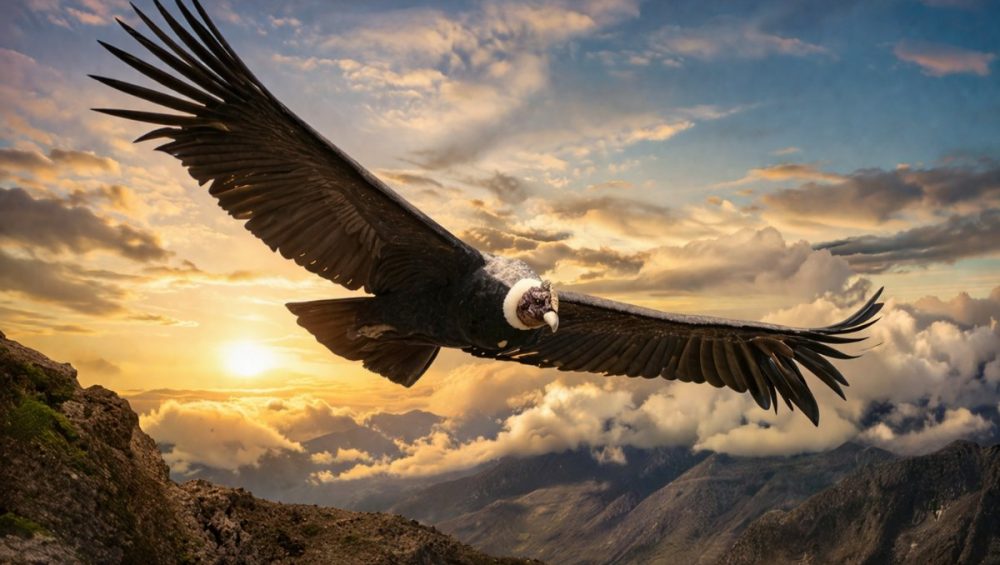
The Andean condor (Vultur gryphus) is not only a fascinating species, but also the largest flying bird in Peru and one of the most majestic and impressive on the entire planet. The unmistakable appearance of the condor stands out for an imposing black plumage that contrasts with an elegant collar of white feathers around its neck and subtle details on its huge wings.
Since pre-Columbian antiquity, the majestic Andean condor has been revered as an undisputed central figure in the mythology and the deep-rooted traditions that define the Peruvian highlands. Furthermore, for the deep worldview of the Incas, the Andean condor was considered an absolutely immortal being and the sacred representation of the “Hanan Pacha”, symbolizing the celestial world above, the home of the gods, and the vision of the future.
Although the imposing presence of the Andean condor extends along the entire mountain range covering other South American countries, it is in the deep canyons and high Peruvian peaks where its sighting is established as a truly unforgettable experience for any traveler.
The sacred meaning of the Andean condor for the Incas
For the worldview of the ancient Incas, the Andean condor was much more than just an animal; it was considered a sacred bird and a mystical bridge to connect the celestial world (“Hanan Pacha”) with the earthly world (“Kay Pacha”). Likewise, known under the ancestral name of “Kuntur” in Quechua, the wise men of the Inca Empire worshiped the Andean condor as a superior and immortal spirit, gifted with the ability to travel freely between the different parts of the universe to carry the messages of the gods.
Beyond its role as a divine messenger, the Andean condor represented fundamental values for the Andean man, such as unbreakable strength, absolute freedom, and the power of nature. Today, many communities maintain a respect toward the Andean condor, celebrating in various areas of Peru the traditional “Fiesta del Yawar” (Blood Festival), a custom that gives it a leading role and shows its importance as a symbol of Andean culture.

Surprising facts about the Andean condor:
- Name and symbology: Its name in Quechua is “kuntur” and the Incas firmly believed in the immortality of the Andean condor. It represented the “Jananpacha”, meaning the land above, the infinite sky, and the future.
- Record wingspan: The distance between the tips of the extended wings of the Andean condor reaches approximately 3.3 meters, which gives it the largest wingspan recorded for a land bird.
- Shared parenting: They are strictly monogamous birds and both parents share the task of incubating the egg. The chicks of the Andean condor stay under the care of their parents for up to two years before facing the world on their own.
- Feeding routes: In certain specific times of the year (as happens in October in Peru), the Andean condor flies from the high peaks of the Andes to the Pacific coast to feed on the carcasses of dead sea lions.
- Anatomical power: The Andean condor is one of the few scavenger predators that has enough strength in its beak to break the tough and resistant skin of guanacos.
- Extreme vulnerability: The Andean condor reaches sexual maturity very late (at least at 5 years old, although some reports indicate the first chick is born at 11 years old) and they only have one chick every 2 or 3 years. This slow reproduction makes the Andean condor very vulnerable to threats.
- Cleaning etymology: It belongs to the Cathartidae family, a word that comes from the Greek “kathartes”, which literally means “the one who cleans”, defining the ecological role of the Andean condor.
- Effortless flight: The Andean condor flies by taking advantage of thermal vision currents, which allows it to spot carcasses from very high up and descend toward them without wasting energy.
- Sexual differences: It is easy to tell males from females, as male Andean condors show a distinctive white collar and a fleshy crest.
- International emblem: The figure of the Andean condor is so imposing that it is found on four national shields, representing different values: in Bolivia (search for an unlimited horizon), in Chile (strength), in Colombia (libertad and order), and in Ecuador (power, greatness, and courage).
About the Andean Condor: A Majestic Bird
The Andean condor, the largest flying bird in the world, holds immense importance in the worldview of the inhabitants of the mountain range. Likewise, this majestic bird has been deeply admired for a very long time, becoming an important part of the Peruvian cultural identity. Therefore, understanding the fragile conservation status of the Andean condor is vital for its survival, as this species is currently in danger of extinction, both globally and in Peruvian territory.
To reverse this situation, it is fundamental to recognize the valuable ecological role that the Andean condor plays as the main scavenger of mountain ecosystems. Furthermore, by feeding almost entirely on dead animals that it spots thanks to its excellent sight, the condor speeds up the decomposition process and significantly reduces the risk of dangerous diseases in nature.
Also, the imposing figure of the Andean condor flying over well-preserved natural areas has become an unmatched attraction for sustainable ecotourism, a model that, if managed properly, generates income for the local population while directly protecting the vast habitat of this species.
-
The Immense Mastery of the Skies
The priceless territory of the Andean condor extends from the refreshing breeze of the coast to the freezing and rough highest zones of the Andes Mountain Range. This aerodynamic giant is designed to fly at an impressive altitude, reaching 7,000 meters above sea level without much difficulty. For institutions like the Wildlife Conservation Society (WCS), the responsible observation of the Andean condor in these remote places is one of the best tools to make travelers aware of the importance of protecting the high peaks.
-
Physical Characteristics of the Andean Condor
The Andean condor is undisputedly one of the most imposing and important birds in all of South America, establishing itself as an eternal symbol of power and freedom in various cultures of the region. Beyond its deep symbolic meaning, the Andean condor stands out for its amazing anatomy, which makes it the king of the wind:
-
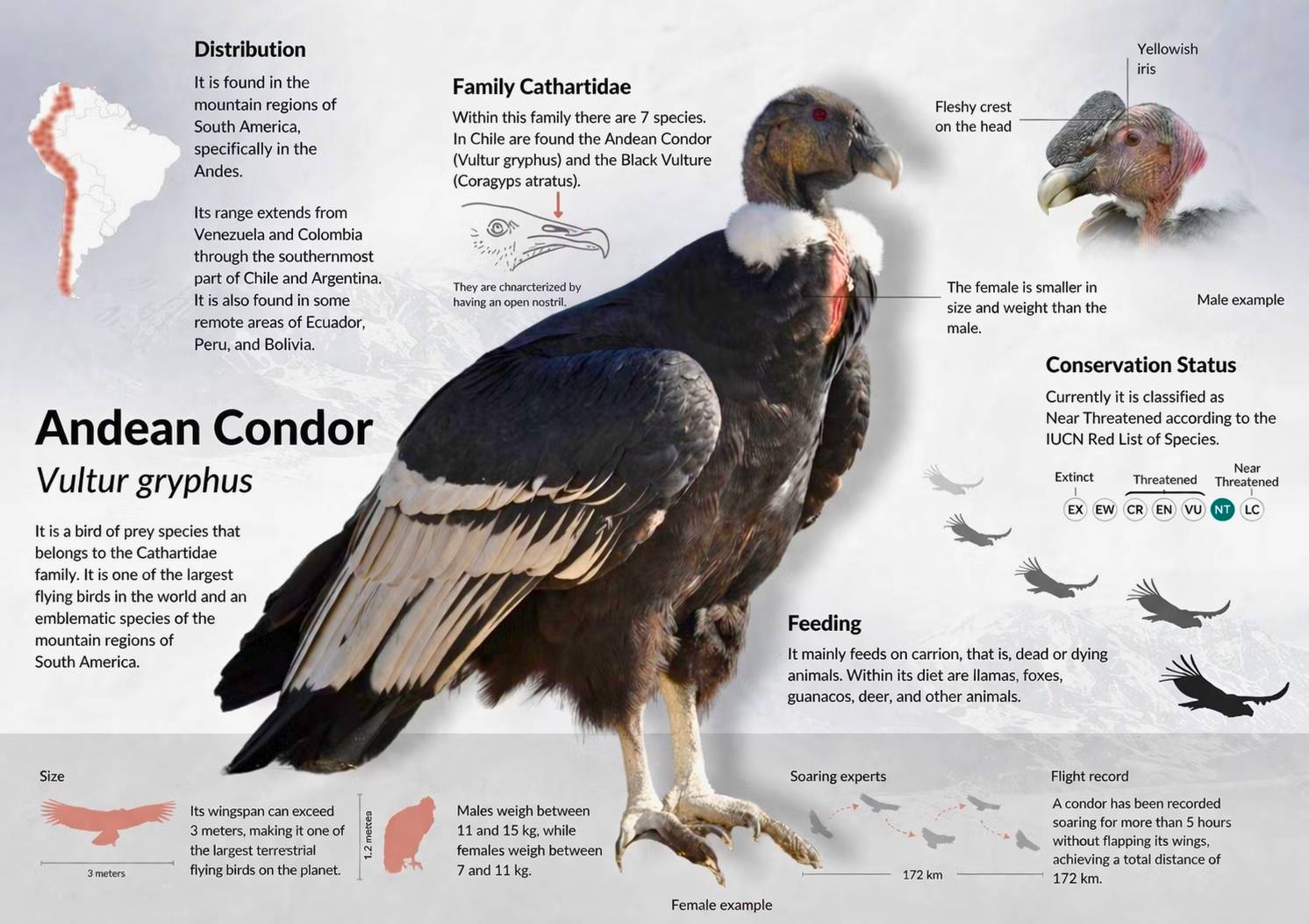
- Size and Wingspan: The Andean condor qualifies as one of the most immense flying birds on the planet. Adult specimens reach between 100 and 130 cm in length, and the formidable wings of the Andean condor can extend up to 3 meters wide. This huge size allows it to glide long distances with minimum physical effort.
- Plumage: The plumage of the adult Andean condor is an intense black, beautifully adorned by white feathers around the neck that form a characteristic collar, along with white spots on the upper part of the wings. However, younger ones have dark brown plumage that will only turn black as they age.
- Adapted Head and Neck: The absence of feathers on the head and neck of the Andean condor is a genius move of evolution. Its skin can slightly change color according to its mood or during the mating stage, but mainly, this baldness helps the Andean condor reduce the buildup of germs after direct contact with its prey.
- Differences Between Males and Females: In a fascinating exception to the general rule of birds of prey, the male Andean condor is notably larger than the female. Male Andean condors show a prominent fleshy crest (caruncle) on the head and additional folds on the neck that females do not have.
- Long Life and Resistance: An Andean condor is synonymous with resistance and longevity, being able to live more than 50 years in the wild and up to 70 in sanctuaries. However, its long life contrasts dangerously with a very low reproductive rate, which makes the Andean condor extremely vulnerable to natural disasters and the destructive action of humans.
-
Behavior, Diet and the Immense Habitat of the Andean Condor
The Andean condor stands out in the skies of South America for a fascinating behavior that makes it the absolute king of the heights. The daily customs of the Andean condor and its incredible flight capacity are the result of millions of years of adaptation to the harsh geography of the mountain. Therefore, looking into the survival habits of the condor allows us to understand why this imposing bird is considered a true biological wonder and an indispensable guardian of the fragile natural balance.
The survival of the Andean condor depends directly on its specialized diet and the vast territory it masters with its majestic wings. Furthermore, this Andean bird fulfills a vital sanitary role for our ecosystem, traveling unthinkable distances in search of its daily food without wasting unnecessary energy reserves. Also, the immense distribution area of the Andean condor connects several sister nations through the Andes Mountain Range, showing that the protection of its habitat requires a unified continental effort.
Exceptional behavior and habits
- Its role in the ecosystem: The Andean condor plays a crucial role in nature as a scavenger, feeding on dead animals to keep the environment clean thanks to its unmatched vision from the heights.
- Mastery of the winds: Thanks to its giant wings, the Andean condor can travel hundreds of kilometers with almost no effort. Due to its great weight, this bird takes advantage of the rising warm air currents from the mountains and the strong marine currents of the Pacific and Atlantic, which allows it to glide for hours with great skill.
- Loyalty and shared parenting: An Andean condor stays with the same partner for its entire life, nesting on cliffs that are very hard to access. The female lays a single egg every two years, which is incubated by both parents for 54 to 58 days, and the chick stays under their strict care for more than a year.
- Group interactions: Although the Andean condor usually patrols the skies alone, it shows strong social behavior by gathering in large flocks when they discover a good food source or when resting peacefully on the rocks.
The specialized diet of the Andean condor
The diet of the Andean condor is based almost entirely on eating dead animals, although on very rare occasions it may hunt small prey. The long and efficient flight of the Andean condor allows it to cover immense territories in a short time to secure its food. Surprisingly, this giant of the skies has the ability to detect its food by following the smell of gas that comes directly from the decomposition of a body on the ground.
The vast habitat of the Andean condor
The geographic distribution area of the Andean condor stretches along the entire South American mountain range, covering from the north in Colombia to the far south of Patagonia in Chile and Argentina, obviously passing through Peru, Ecuador, and Bolivia.
In our country, the Andean condor prefers to live in high-altitude areas, highlighting the famous Colca Valley in Arequipa (located 1,131 kilometers southeast of Lima), although it has also been spotted gliding over the coasts. Since the Andean condor is in danger of extinction, today important joint efforts (public and private) are being made to ensure the conservation of this sacred species in key Andean regions such as Arequipa, Cusco, Apurímac, Lima, Junín and Huancavelica.
Where and when to observe the flight of the Andean condor
To be able to appreciate the Andean condor in Peru within its natural habitat, we must travel toward steep rocky areas located between 1,000 and 5,500 meters above sea level, the perfect refuge where they build their inaccessible nests and raise their chicks.
Integrating the sighting of the Andean condor into your itinerary will allow you to get to know the best scenic routes that complement the mythical paths leading toward the main Inca sites of the country. Also, knowing the seasonality of the Andean climate is a determining factor, as ensuring clear days and good thermal currents will guarantee that you enjoy the incredible visual show offered by the king of the Peruvian Andes.
Where to see the Andean condor in Peru?
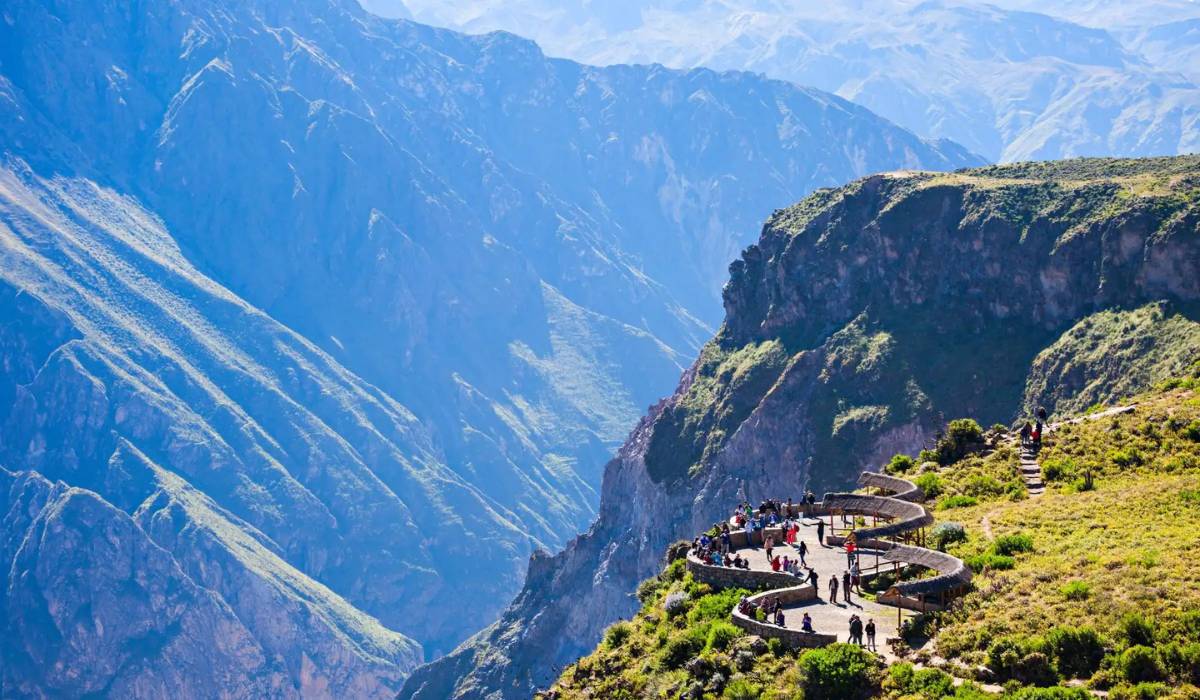
- The Colca Canyon (Arequipa): It is undisputedly one of the deepest abysses in the world and the favorite destination par excellence to appreciate the flight of the Andean condor. This imposing natural setting acts as the perfect home for hundreds of specimens that go out every morning gliding in search of food for their young.
- The Apurímac Canyon (Cusco): Specifically in the Chonta sector, this high viewpoint is gradually establishing itself as a privileged observation point for the Andean condor. Its great advantage is that, for now, it offers a much more intimate and less crowded experience than the classic Arequipa routes.
Complementary adventures and hikes
If you visit our country, you will have the unbeatable opportunity to see the Andean condor mastering the skies and enhance your trip by walking the best paths of the ancient world. Among the most outstanding options for trekking are:
- The classic and world-famous Inca Trail (in its versions of 4 days, 2 days, or 2 days with camping) and the 1-day fast version.
- The exciting Lares Trek to Machu Picchu.
- The challenging 4 or 5-day expeditions toward Choquequirao (historically known as the sacred sister of Machu Picchu), or the extreme resistance route that connects the Choquequirao Trek directly with Machu Picchu.
What is the best time for sighting?
Although the flight of the Andean condor happens constantly throughout the year, the ideal time to appreciate this show at its best is during the “dry season”. Being scavenger birds of enormous size and weight, the Andean condor needs favorable weather, an absence of rain and, above all, strong currents of hot air to help it take flight without wasting its energy.
This window of perfect time and blue skies in key regions like Arequipa and Cusco (ideal for a City Tour) is wonderfully framed between the months of May and October. Planning your trip within this block will give you the perfect atmospheric conditions to visit the viewpoints. You cannot miss the incredible opportunity to appreciate the fascinating flight of the largest bird in the world in total freedom!