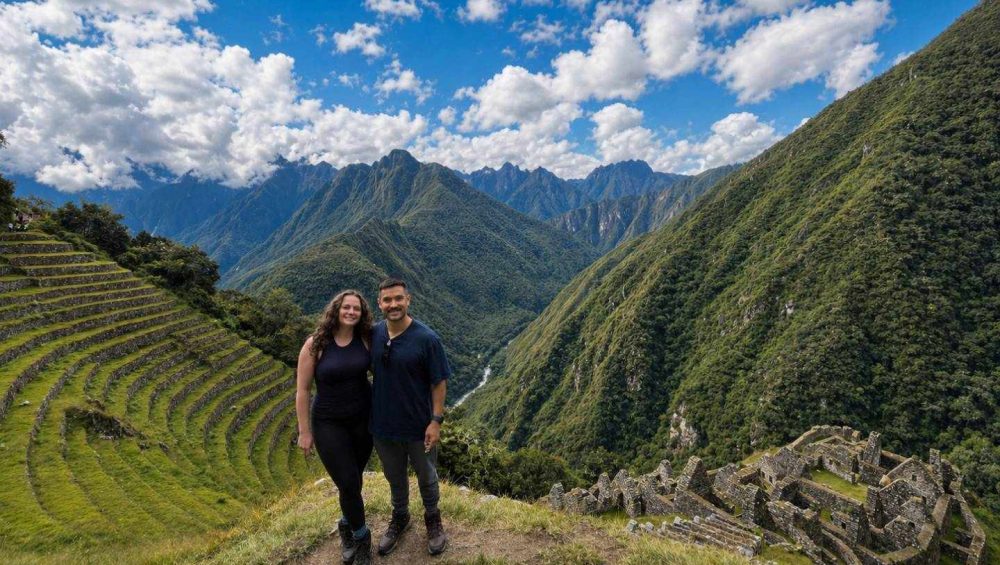
Discovering the dazzling Winay Wayna Ruins represents the great and spectacular final part of the classic Inca Trail before reaching the wonder of the world. Likewise, this amazing archaeological complex, located precariously on the steep eastern slopes of the Peruvian Andes, dazzles explorers with its huge agricultural terraces that descend sharply 900 meters down to the powerful Urubamba River. Therefore, entering this masterpiece of pre-Columbian architecture is a priceless visual experience before arriving at the Sun Gate.
The Winay Wayna Ruins are much more than a simple technical checkpoint or the last campsite; they are a truly exclusive archaeological destination. Additionally, access is reserved only for those who arrive on foot, requiring a coveted expedition permit, strict advance planning and excellent physical acclimatization. Also, throughout this article, we will uncover the mysteries of this sacred sanctuary (whose name in Quechua means “Forever Young”).
What are the Winay Wayna Ruins?
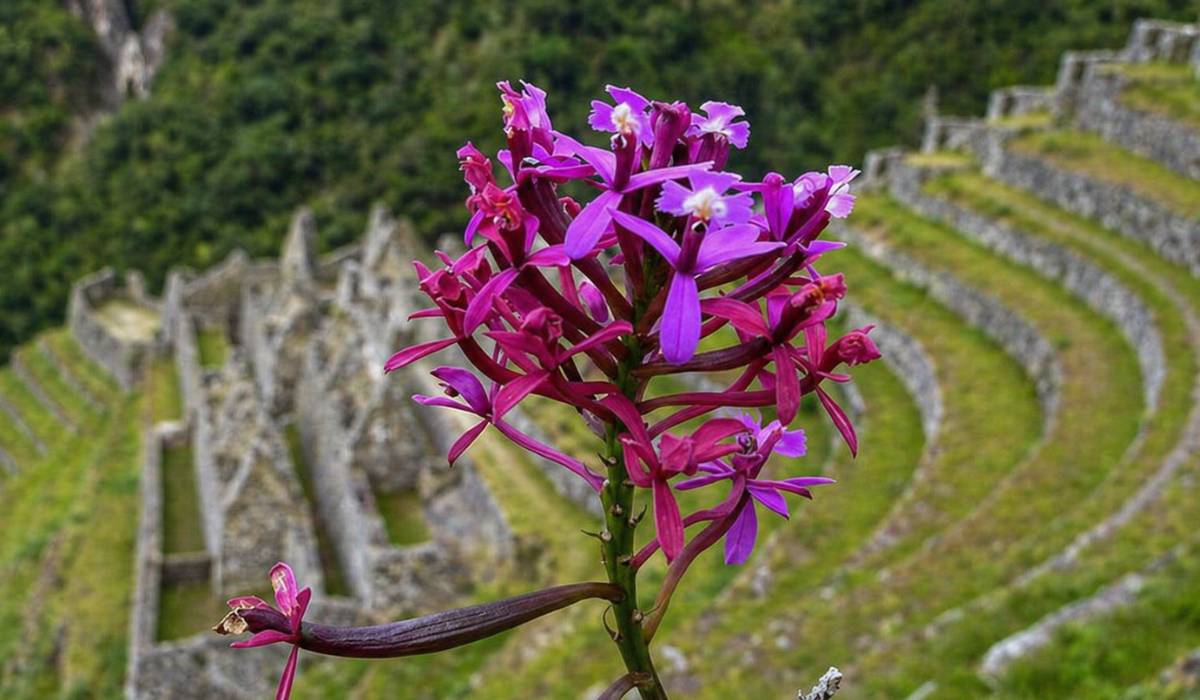
Built in the mid 15th century, the Winay Wayna Ruins were constructed during the time of the greatest glory of the Inca Empire under the rule of Pachacutec. Curiously, its current name pays tribute to a beautiful and colorful orchid (whose name in Quechua means “Forever Young”) that blooms in abundance in the cloud forests of this area.
On the other hand, being the last important stop on the 42 kilometers of the Inca Trail, it is difficult to determine its exact purpose. Experts suggest it could have worked as a vital spiritual and religious center, a temple of purification through water worship, or a luxurious rest stop exclusive to Andean royalty before making their entry to Machu Picchu.
Getting to know the Winay Wayna complex
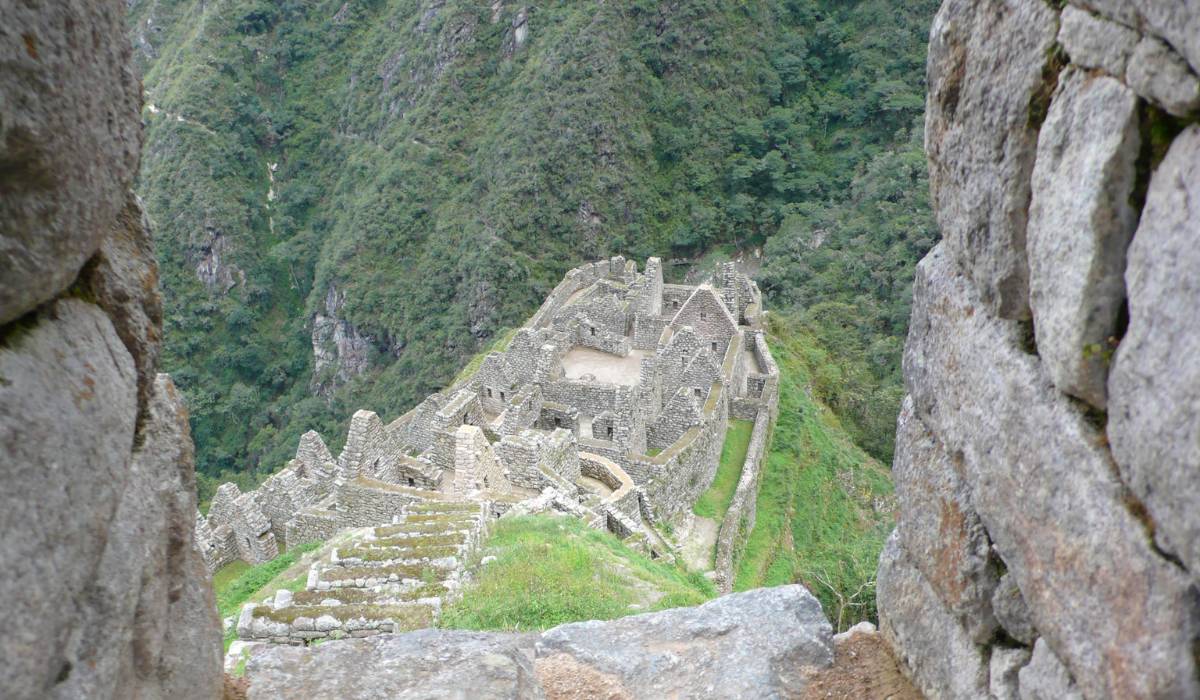
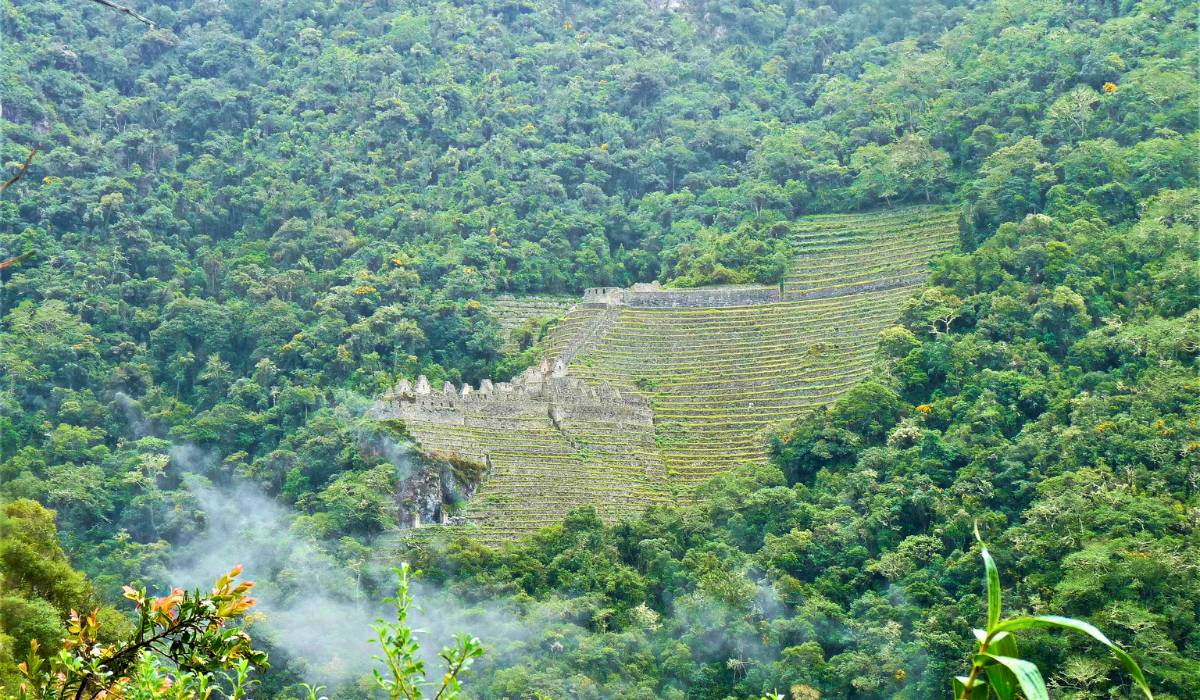
The complex is divided into two large architectural groups (one upper and one lower), which are connected by a steep stone staircase that draws elegant curves on the slope. For its part, the upper sector stands out for having an unusual circular design building, while the lower part shows a group of linear walls with sharp peaks, irregular walls, and huge stone slabs fitted with precision.
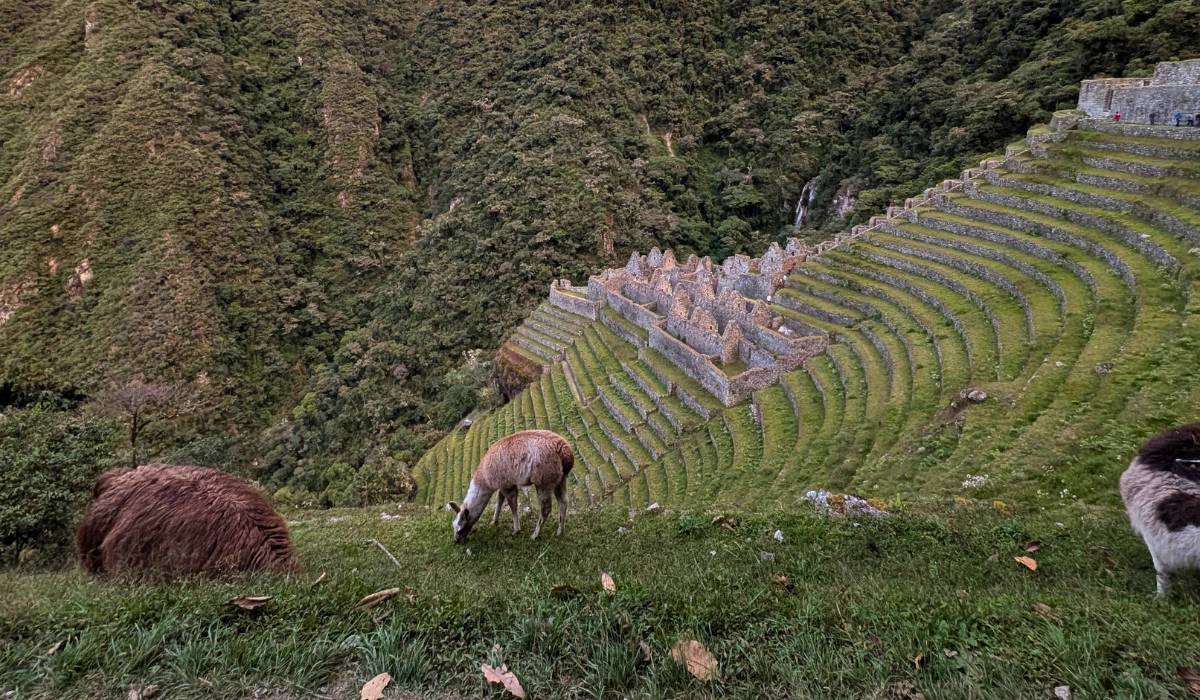
Also, the precarious staircase that joins both levels serves as a guide for a long and continuous row of ancient liturgical fountains. Often called “baths”, these fountains show the advanced hydraulic mastery of the Incas, allowing water to flow constantly through the mountain. On the other hand, the Winay Wayna Ruins are framed by a vast and spectacular agricultural complex. These imposing terraces (“andenes”) were built using extraordinary masonry of local stones, managing to hold the mountain and defy gravity over the Urubamba River valley.
Technical and geographic facts about the Winay Wayna Ruins
The complex is suspended at an elevation of 2,650 meters (8,700 feet) above sea level, located at an altitude level notably lower than the mountain passes of the previous days. Additionally, it has a subtropical climate typical of the jungle brow, characterized by warmer temperatures and high humidity levels. Its climate cycle records constant rains from December to March, always requiring waterproof gear.
On the other hand, the entrance to this sanctuary is exclusively on foot and is strictly regulated by the State. Logistically, it is only possible to enter if you have the sought-after official permits for the Classic Inca Trail (4 days) or for the short route (2 days). Regarding its location, the archaeological site is only 5 kilometers away (3.3 kilometers in a straight line) southeast of the main Machu Picchu citadel. In the layout of the active route, it is located exactly in the middle section between the Phuyupatamarca complex and the mythical “Inti Punku” (the Sun Gate).
About the architecture of the Winay Wayna Ruins
Built during the maximum imperial peak, this complex has managed to perfectly integrate survival needs with religious fervor. After merging the different sectors that make it up, we can highlight the following strokes of genius in its design:
- Agricultural sector: Faced with the lack of flat land in the steep Andean geography, the slopes were sculpted through an extensive system of terraces (“andenes”). These platforms fulfilled the double function of preventing erosion caused by intense tropical rains and serving as huge production centers for growing corn, potatoes, quinoa and coca leaf. Harvests were planned by observing the stars, strategically collecting the fruits just before the arrival of the coldest time of the year.
- Urban and administrative organization: Residential areas follow the “kancha” system model, grouping buildings around central courtyards. The site has an upper and lower sector, perfectly joined by a long staircase. High-ranking officials operated here, managing the huge food warehouses (“qolqas”) and keeping an exact statistical record of production through the complex knotted ropes known as “quipus”.
- Stone masonry: The quality of the construction is at the same level as that of Machu Picchu. The granite structures keep classic imperial elements, such as trapezoidal windows, niches, and doors. The main door shows a distinctive double-jamb design (symbol of the highest hierarchy), while the sloped gables and stone rings that once held heavy thatched roofs are still preserved.
- Hydraulic engineering: Along the central axis and following the main staircase, a long row of religious fountains and liturgical baths flows. These master structures channel mountain water continuously, showing the deep cult of water and the hydraulic mastery of its architects.
The amazing structures of the Winay Wayna
- The Inca House (Royal Sector): This residential group stands out for having the best stone finish of the entire complex. It was intended exclusively for the highest authority of the place or, possibly, served as a resting place for the imperial sovereign himself. The “Inca House” has multiple rooms, private courtyards, water channels, double-jamb doors, and trapezoidal windows, showing masterful planning and execution.
- The Semicircular Tower: In the highest part of the site stands an imposing curved building equipped with seven windows strategically placed to offer absolute panoramic views of the valley and the mountain range. It is firmly believed that its unusual design served a double purpose: as a defensive observation point and as a temple of worship dedicated to the sun and the great “Apus” (the sacred mountains).
- The Liturgical Fountains: Descending majestically next to the tower, there is an uninterrupted succession of ten beautiful water fountains. These channels not only supplied the urban sector but also fulfilled a ritual function strictly linked to spiritual purification. Water flows through them constantly and endlessly thanks to the mathematical perfection of its hydraulic system.
- The Monumental Terraces: The agricultural terraces of this place are, without a doubt, some of the steepest and most impressive of the entire pre-Columbian route. More than 40 stepped terraces have been documented, each exceeding 2 meters in height, designed to defy gravity and maximize food production on extreme slopes. Thanks to this bold engineering system, the Incas managed to grow vital and sacred resources such as potatoes, corn, quinoa, and coca leaf.
It is worth noting that the camping area next to the “Winay Wayna Ruins” is perfectly prepared and secured by formidable retaining walls of more than 125 square meters, providing you with one last night of rest.
Information about the Wiñay Wayna base camp
This camp is established as the third and last stop to spend the night; it is located 10 kilometers from the previous camp (Chaquicocha) and only 4 kilometers from the final goal: the “Inti Punku” (the “Sun Gate”). Also, the area designated for the tents is prepared to handle the continuous traffic of visitors. To guarantee stability against the rough topography and the intense rains typical of the high jungle, the platform rests on more than 125 square meters of solid retaining walls.
From this camp to the “Winay Wayna Ruins” and the end of the path, the landscape of the “Inca Trail” changes definitively. The trail becomes mostly flat, immersed in the abundant biodiversity of tropical flora and fauna, leading you directly toward the rustic final stairs that end at the mythical “Inti Punku” (the “Sun Gate”). The logistical goal of waking up early here is to reach the “Sun Gate” just in time for the sunrise, giving you your first and most spectacular panoramic view of “Machu Picchu“.
How do you get to the Winay Wayna Ruins?
Access to this archaeological complex completely lacks free or vehicular routes. Logistically, there are only two official paths enabled to reach the site:
- Classic Inca Trail Route (4 days / 3 nights): This is the traditional and most complete expedition. The walk begins in the town of Piscacucho (kilometer 82 of the railway) and crosses various altitudes and historical zones such as Cusichaca, Huayllabamba and Phuyupatamarca. Your triumphant arrival at the Winay Wayna Ruins will happen during the afternoon of the third day of the expedition, preparing you for the final push to the citadel on the last dawn.
- Short Inca Trail Route (2 days / 1 night): This is the fastest and most direct way to see the site. It requires traveling by train and getting off at kilometer 104 of the railway. From the Chachabamba checkpoint, a continuous and very demanding climb of approximately 3.5 to 4 hours begins, which ends exactly at Wiñay Wayna. Travel agencies usually offer this expedition under the name “Short Inca Trail“, dividing the effort into one day of intense hiking and a second day dedicated entirely to exploring Machu Picchu.
Mandatory operational requirements
Regardless of the route you choose for your expedition, you must keep in mind two crucial factors before packing your boots:
- Advance booking: Access requires buying government permits several months in advance. The strict daily capacity limit (which includes tourists, guides, and porters) causes spots to sell out quickly worldwide.
- Physical conditioning: Both routes demand adequate and serious physical preparation. The traveler must be ready to face irregular stone terrain, dizzying stairs, changing altitude and the calorie burn typical of hiking in the humid climate of the jungle.
Flora of the Winay Wayna Ruins
This magical sector is established as one of the most fascinating places, not only for its priceless historical weight, but for the extraordinary botanical variety. When walking through its surroundings, visitors can observe an ecosystem rich in giant ferns, leafy pepper trees, sturdy cedars, delicate carnations, and tall eucalyptus trees.
However, the soul of this tropical landscape is the orchid, a flower of unmatched beauty that beautifies the place with its vibrant colors and unique shapes. Moreover, among all this amazing biological diversity, the one that stands out the most is the Wiñay Wayna orchid (of the Epidendrum genus), known for its intense and dazzling purple color. The presence of this flower is so abundant and significant that, in the year 1942, the famous Peruvian archaeologist Julio C. Tello decided to name the ancient archaeological complex in its honor.
The literal translation of the Quechua word Winay Wayna is “Forever Young” (or “Eternally Young”). This powerful name not only pays a well-deserved tribute to the lasting beauty of the orchid that blooms almost all year round on the terraces, but it perfectly captures the eternal and unbreakable greatness of the Winay Wayna Ruins, a treasure on the Inca Trail.