Machu Picchu is much more than an impressive archaeological site: it is also a place with amazing biodiversity. Its location is what makes it so special, since it is found exactly at the point where the Andes meet the Amazon jungle. Consequently, that mix creates a unique ecosystem, with several different climates in very little space, which allows a great variety of plants and animals to live together.
On this tour, we invite you to discover a little more about the nature that surrounds the citadel. In this way, you will see everything from the plants that cover its slopes to the animals, many of them quite hard to see, that inhabit this protected area of the Andes.
The weather in Machu Picchu
Machu Picchu is found right at the point where the Andes meet the Amazon jungle, an area known as the “jungle brow”. Likewise, this combination creates a warm and humid microclimate, with temperatures that generally go from 8°C to 27°C. Aguas Calientes, the town from where you access the citadel and which is at about 2,400 meters of altitude, basically has this same weather.
Throughout the year, the weather of the area is divided into two well-marked seasons:
- Dry season (May, July, August, September, and October)
During these months, the days are usually hot, with a lot of sun and almost no rain. Therefore, it is the best time to visit Machu Picchu, since you can tour the citadel and enjoy the landscape without worrying about storms. - Rainy season (November to April)
In this stage, rains are frequent, and February is usually the most intense month of all. That is why, if you can choose, the best thing is to avoid traveling in February, since strong rains can make the visit to the citadel quite hard.
An extra fact: the edge of the jungle
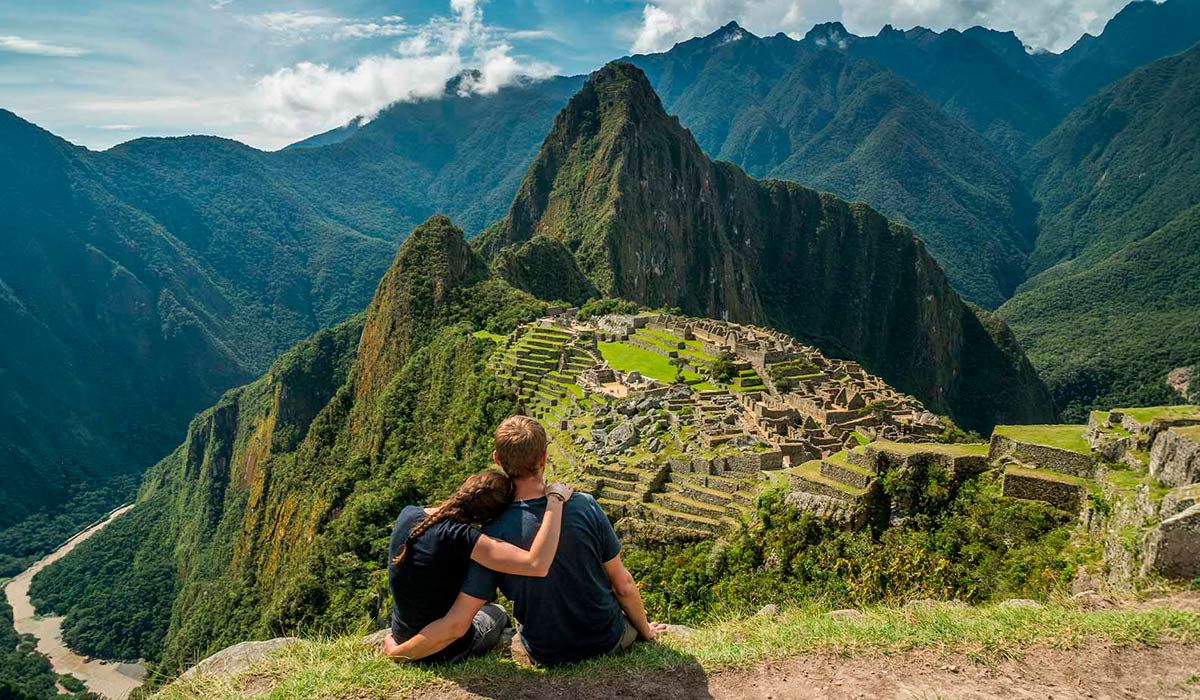
It is worth understanding a little more about the edge of the jungle, that transition strip between the Andes and the Amazon where Machu Picchu is located. It is an area especially rich in biodiversity, and it is not a coincidence.
The combination of warm weather, constant humidity, and dense vegetation creates the perfect conditions for many species of plants and animals to develop there. It is exactly that mix between mountain and jungle that makes this area such a special place from a natural point of view.
The animals that inhabit Machu Picchu
The fauna that lives around Machu Picchu is one of the lesser-known treasures of the place. Over the years, several species have managed to adapt to this very particular terrain, between mountains and forests.
- The Andean bear (spectacled bear)
The Andean bear is the only native bear in South America, and it lives mainly in the cloud forests of the sanctuary. It is easily recognized by the white marks around its eyes, which contrast with its dark fur. It is a solitary animal that feeds mainly on plants, fruits, and honey, and plays a very important role in the ecosystem: it helps to scatter seeds and maintains the natural balance of the area.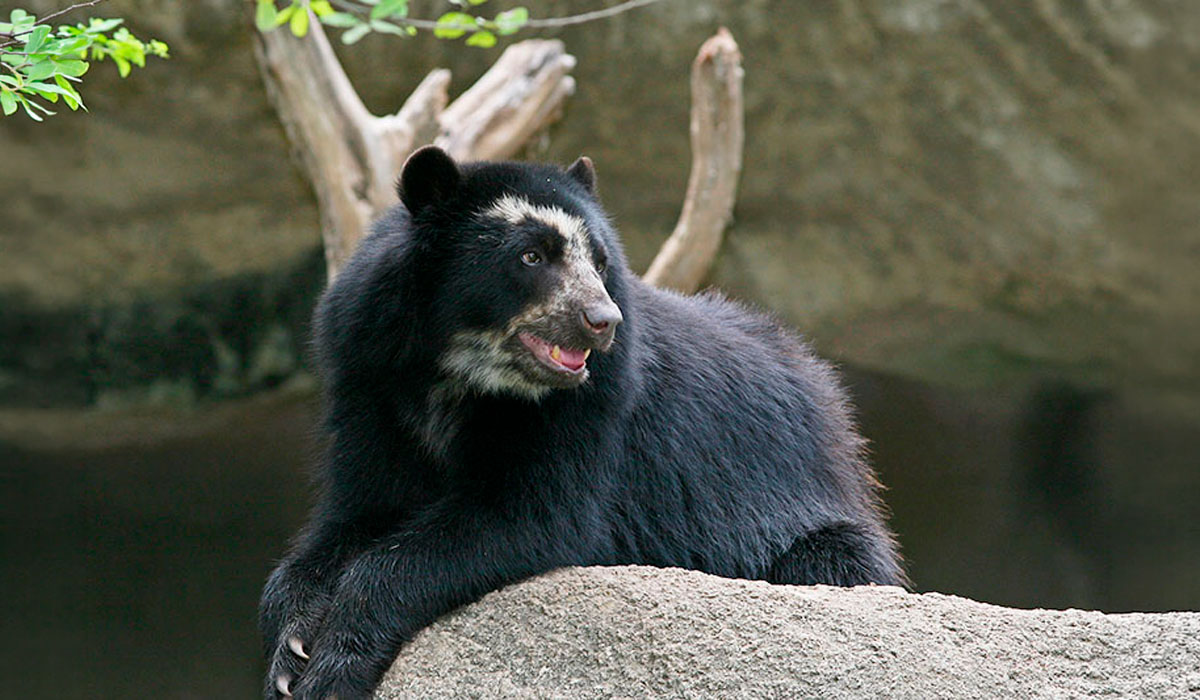
- The Andean puma
In the rocky and wooded areas lives the Andean puma, the most important predator in the region. It is fast, silent, and an exceptional hunter. Since it usually moves in solitary and remote territories, seeing one near the citadel is somewhat uncommon, and if it happens, it is a moment that few travelers forget.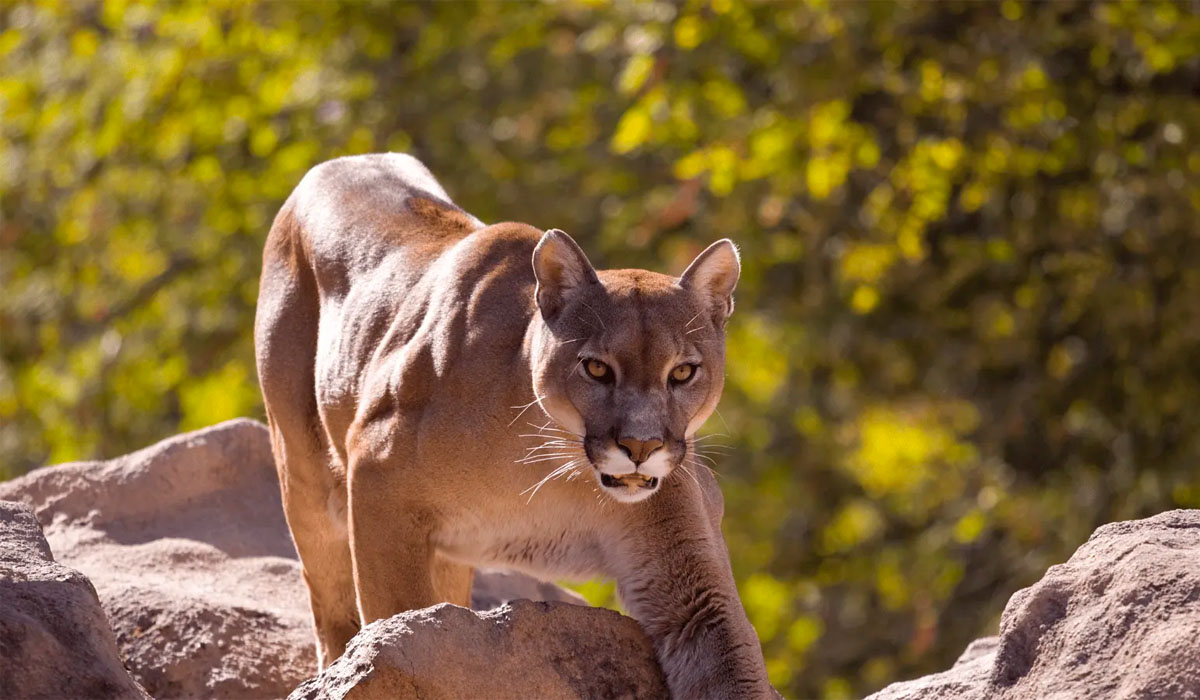
- The vizcacha
In the rocky areas and the stone terraces, it is quite easy to find vizcachas. This small rodent, similar to a hare with a long tail, has adapted perfectly to living among the stones of Machu Picchu. Since it is a daytime animal, it is common to see them early in the morning, quietly sunbathing on the ancient walls of the citadel.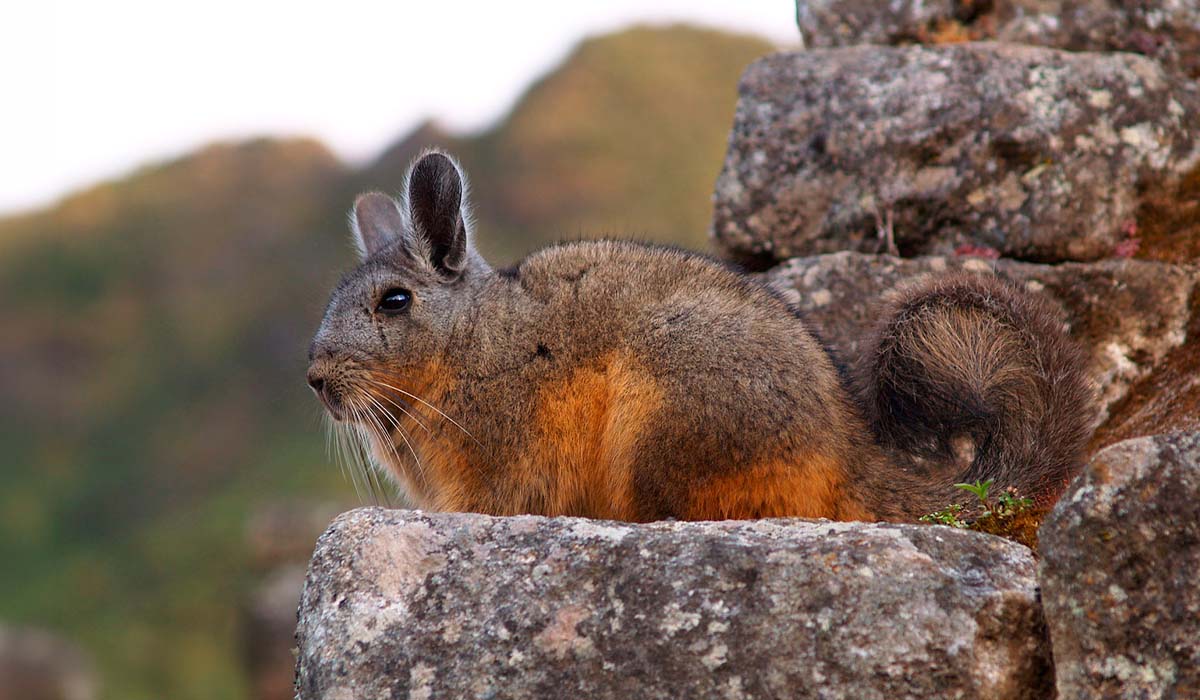
- Llamas and vicuñas
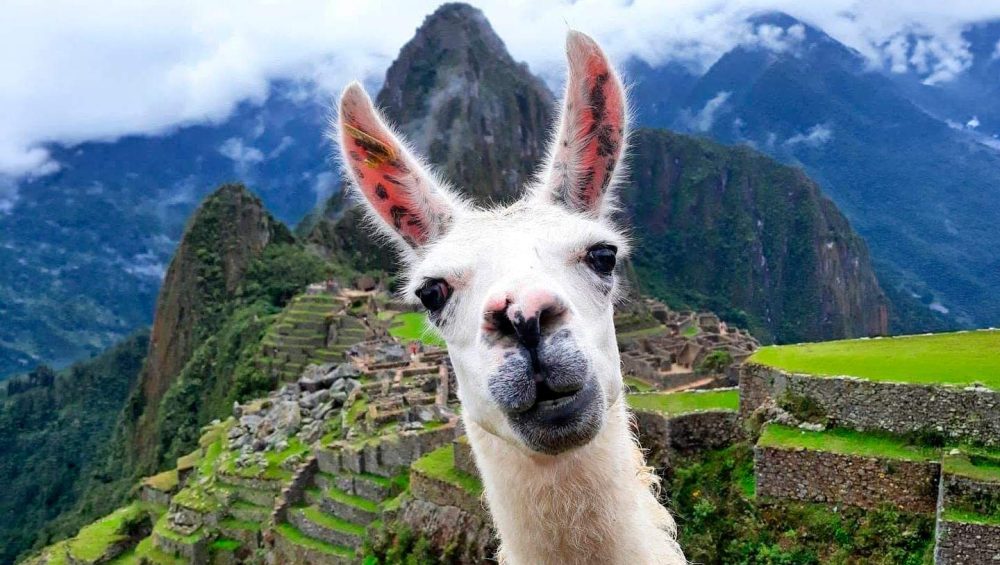
You cannot talk about Andean fauna without mentioning llamas and vicuñas, which have accompanied the cultures of the Andes for centuries. Today they can be seen walking freely around the citadel and grazing on the agricultural terraces. Llamas have been traditionally used as pack animals, while vicuñas are known for producing one of the finest and most valuable fibers in the world. Both continue to be living symbols of the Andean culture.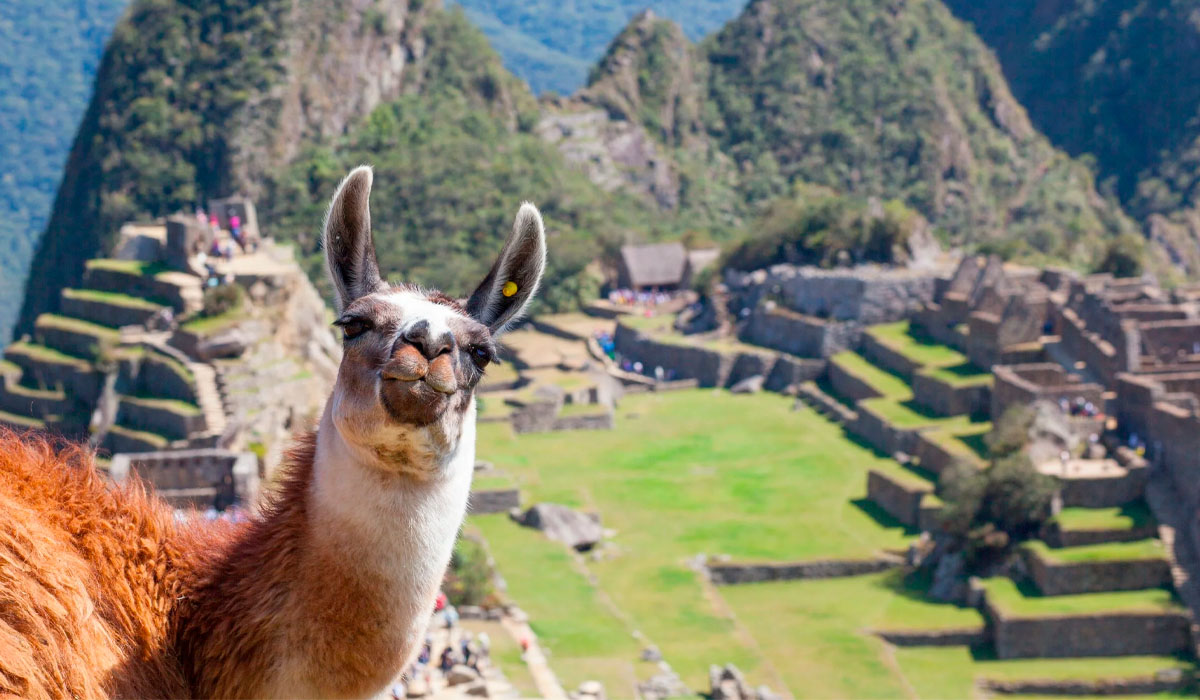
The birds that fly over Machu Picchu
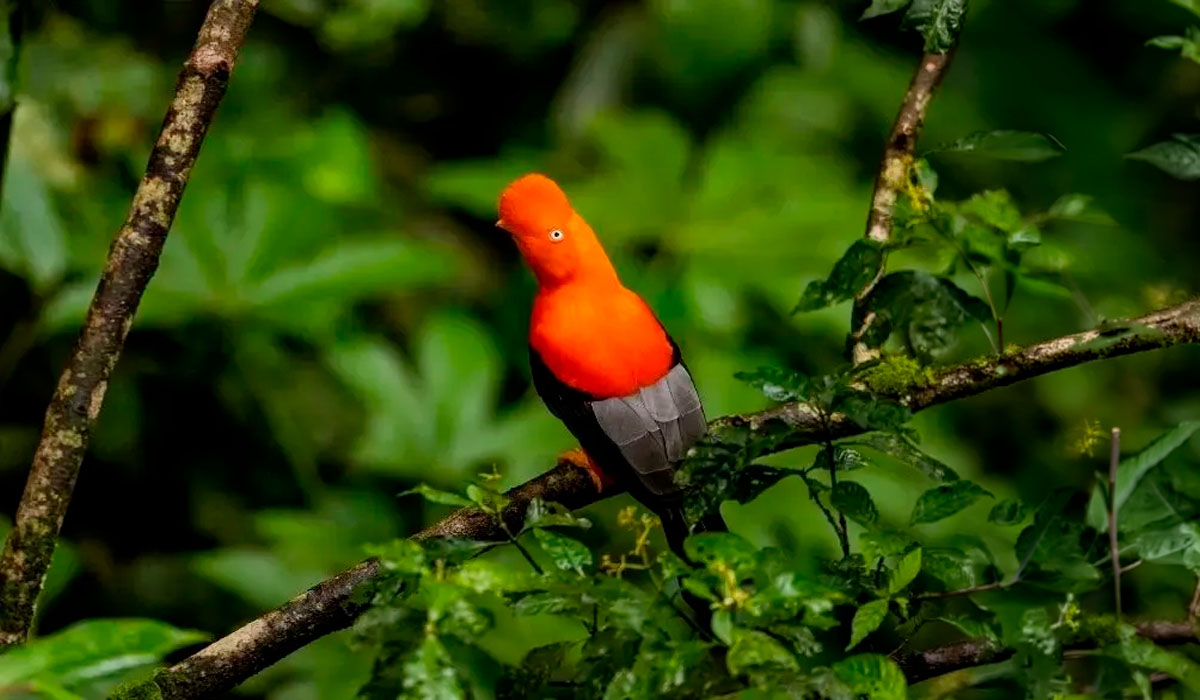
The sky of Machu Picchu has a special main character: the Andean cock-of-the-rock, the national bird of Peru. Seeing it in its natural habitat is something really special. Its deep orange feathers, its fan-shaped crest, and its striking courtship ritual make it one of the most sought-after species by those who enjoy bird watching.
In the cloud forest that surrounds the citadel, it is also common to see hummingbirds. These small birds have vibrant colors and an amazing ability to fly in any direction, even backwards. There is a great variety of species in the area, from the tiny hermit hummingbird to the much larger giant hummingbird, each with its own characteristics.
And if you look up to the heights, you might be lucky enough to see an Andean condor flying over with its wings spread, taking advantage of the air currents. It is also possible to spot eagles and hawks hunting in the highest areas. Further down, among the trees, the forest is filled with color thanks to tanagers, flycatchers, and warblers, small but striking birds that give life and color to the entire environment of the citadel.
Reptiles and amphibians of Machu Picchu
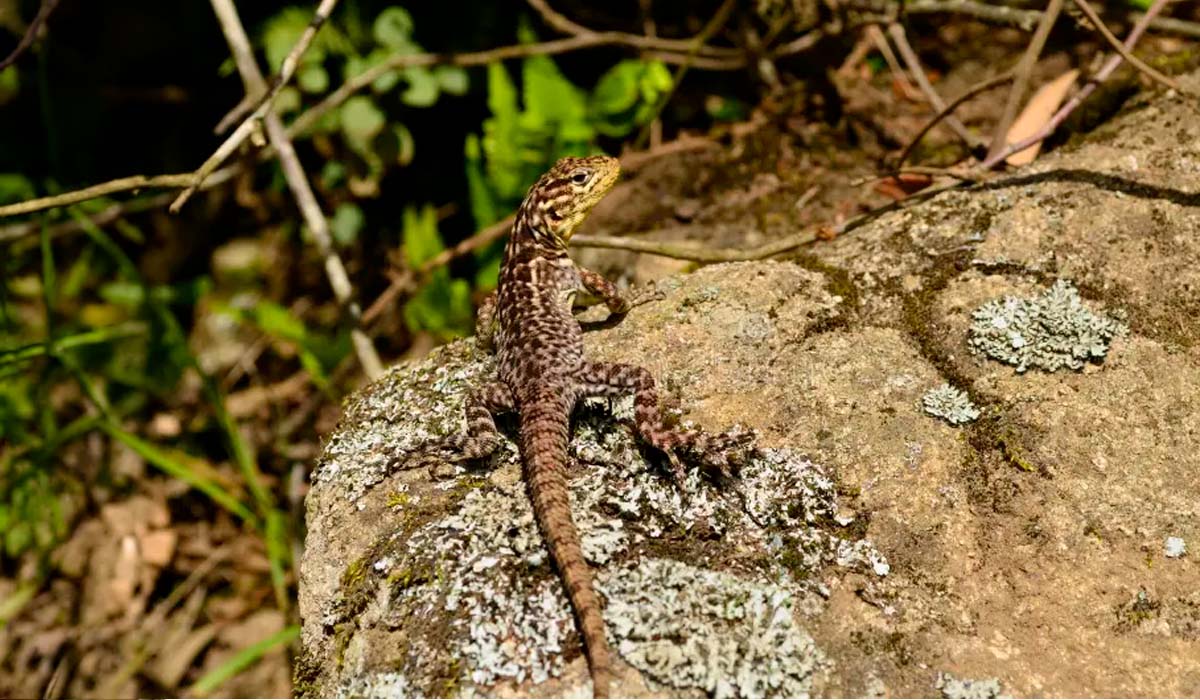
The humid and mountainous terrain of Machu Picchu is also home to a large number of reptiles and amphibians, many of them hard to notice at first sight. According to studies done by the National Service of Protected Natural Areas, 12 species of amphibians and 22 species of reptiles have been recorded in the area.
This number alone says a lot about the biodiversity that exists in the lowest levels of the citadel and its surroundings. If you walk calmly along the stone trails or get close to the vegetation of the cloud forest, it is possible to find frogs, mountain toads, lizards, and some snakes, all of them experts at hiding among the plants and rocks that surround this ancient Inca city.
The flora of Machu Picchu
Machu Picchu does not only stand out for its architecture: it is also home to an incredibly varied vegetation, adapted to the different climates found in this area of the Andes. Here we tell you about some of the most representative plants you will find on the way.
- The orchids
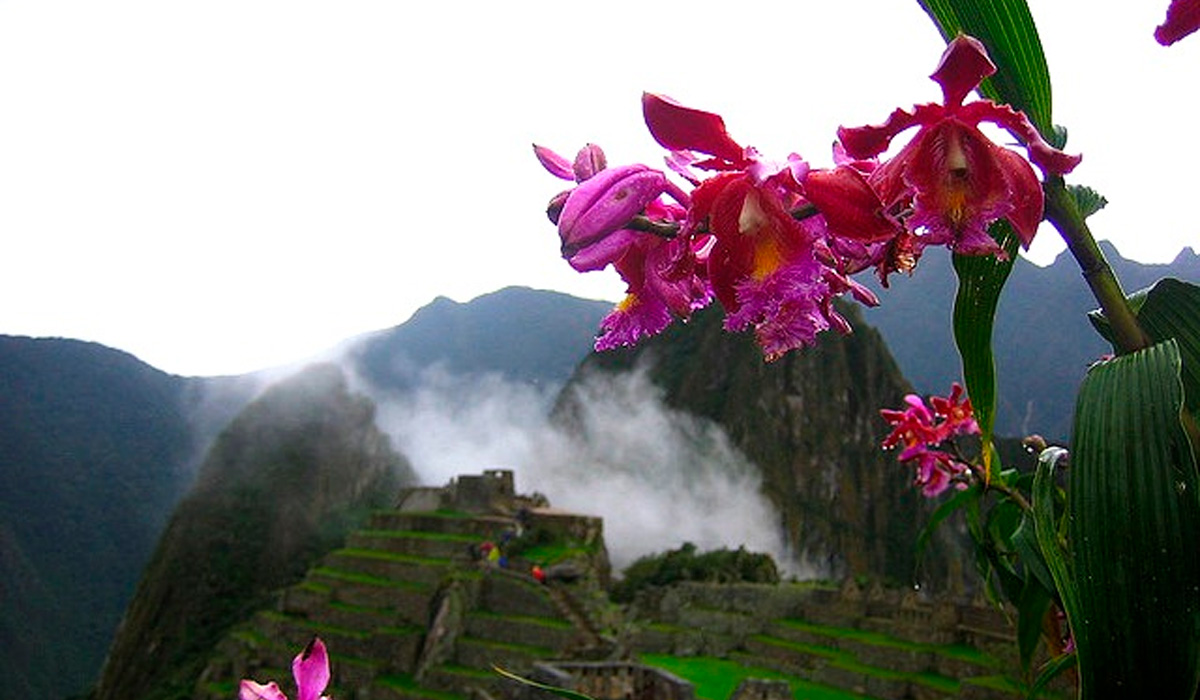
More than 300 species of orchids have been identified in Machu Picchu, making the area a true paradise for those who enjoy botany. From Darwin’s orchids, which only grow in the Peruvian Andes, to the aromatic Cattleyas that attract bees and hummingbirds, these flowers give a touch of color to every corner of the citadel. - The bromeliads
Bromeliads have a very specific circular shape that allows them to easily collect water and nutrients. They grow on other plants and trees, and by doing so, they create their own small ecosystems that serve as a shelter and water source for many small animals in the area. - The ichu
As you climb in altitude, you will find the ichu, the typical grass of the high Andean areas. For centuries, Andean people have used it to roof houses and as fuel, since it burns well and helps fight the intense cold of the heights. - The quinoa
Quinoa is one of the most important crops in the region and, today, known all over the world. For thousands of years, it has been an essential food for Andean communities, thanks to its high protein and vitamin content. It is no coincidence that it is now considered a superfood globally. - The muña
It is easy to recognize the muña by its strong and unique smell. This plant is highly valued for its healing properties, and it is usually prepared in teas to relieve pain and help better cope with the effects of altitude. - The queñoa
In the highest areas, the queñoa trees play a key role: their deep roots help prevent soil erosion, and their ability to survive with very little water makes them a key species to face the effects of climate change in the region.