
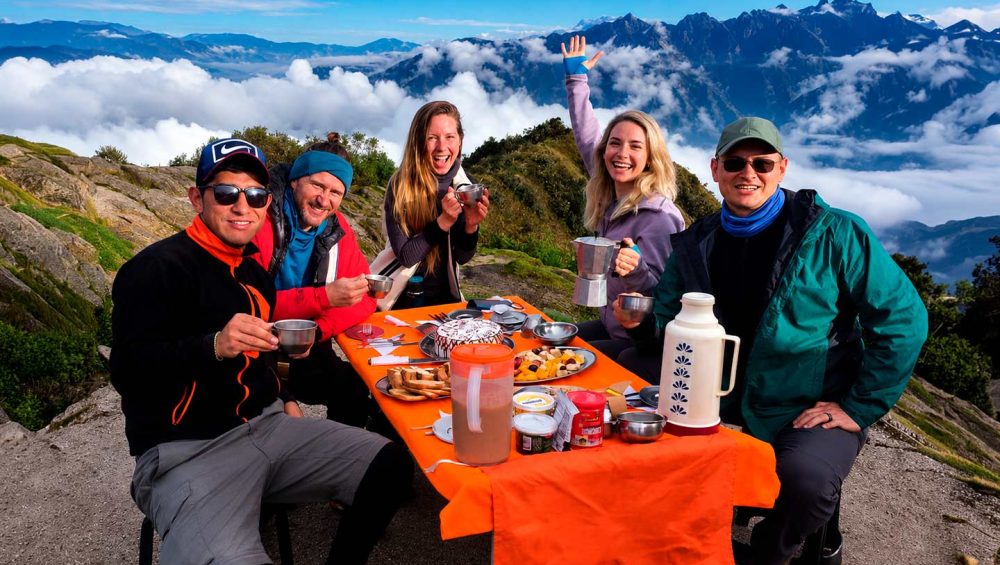
The Inca Trail is one of the most famous hiking routes in the world. An ancient path that leads to Machu Picchu crossing breathtaking landscapes, ruins hidden in the mountains, and high passes that test the body. But there is something that many do not expect to find on the way: a food experience that ends up being one of the most memorable parts of the trip. The food on the Inca Trail is not a minor detail. It is part of the adventure.
And it makes a lot of sense that it is this way. Walking for days at high altitude, with sudden temperature changes and long days, requires the body to receive real fuel. That is why serious agencies do not improvise in this area: they include a food plan designed by mountain cooks who know well what the body needs in those conditions.
What is surprising is the quality. From the breakfast that awaits you when leaving the tent at dawn to the dinner under a sky full of stars, every meal is designed to nourish and also to enjoy. Authentic Andean flavors, prepared in the middle of nature, in one of the most extraordinary corners of the planet. It is the kind of memory that is not easily forgotten.
About the classic 4 day Inca Trail
The classic Inca Trail is the most iconic route to reach Machu Picchu. It is four days of walking along about 43 kilometers of original trails built by the Incas themselves, crossing mountains, deep valleys, cloud forests, and archaeological sites that cannot be visited in any other way. It is an experience that has no substitute.
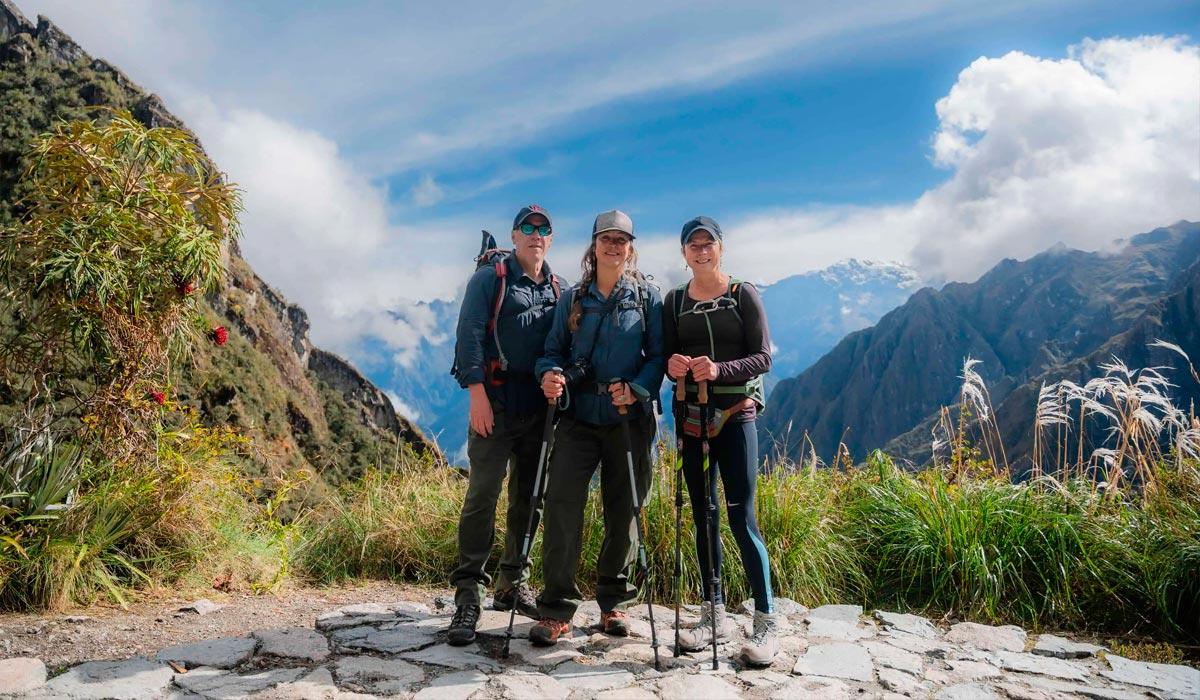
The tour is divided into four stages:
- Day 1 — The warm-up
The trail starts from Kilometer 82 (Piscacucho), with a day of moderate difficulty that serves to get into the rhythm and acclimatize. The weather is mild and the landscape is open, ideal to find your pace before what is coming. The first camp is set up in Wayllabamba. - Day 2 — The hardest day
This is the day everyone remembers. The day requires a continuous climb to the highest point of the whole route: the Dead Woman’s Pass, at more than 4,200 meters above sea level. The slope is steep and the air is thin, but reaching the top has its own reward. - Day 3 — Ruins and descent
The third day is the longest in distance, although the profile goes down progressively and that makes it more bearable. On the way, archaeological sites like Phuyupatamarca and Intipata appear, and the day ends in Wiñay Wayna, the camp from where you leave the next day. - Day 4 — The arrival
The last section starts in the early morning. The goal is to reach the Inti Punku, the Sun Gate, just as the sun rises. From there you get the first view of Machu Picchu with the dawn light. After four days of walking, that moment justifies everything.
What physical level is needed?
The Inca Trail requires a physical condition between moderate and high. The days are long, the altitude changes constantly, and the terrain is not always easy. You do not need to be an elite athlete, but it is a good idea to arrive with some previous training and your muscles used to walking uphill.
In that context, the food on the Inca Trail stops being a simple pleasure and becomes something necessary. What you eat during those four days directly influences how the body performs: in the energy you have to climb, in how fast you recover when reaching the camp, and in how you deal with the altitude. A good mountain kitchen is not a luxury on this route: it is part of what makes it possible to arrive well at the end.
Peruvian food on the Inca Trail
The food on the Inca Trail does not come out of nowhere, it comes directly from one of the most famous cuisines in the world, Peruvian food. A cooking tradition with centuries of history and an incredibly varied pantry, which in this situation has been adapted to answer something very specific: to feed well people who walk for hours at high altitude.
What is served in the camps is not survival food. It is real Andean cooking, nutritious and tasty, built on ingredients that make as much sense in the mountain as on any table in the country: quinoa, corn, rice, chicken, pork, beans, and fresh fruits and vegetables chosen to withstand transport in the mountain range well. And almost always, accompanying each day, a cup of coca tea, the ancient drink that helps the body adapt to the altitude better than anything else.
The chili and the potato: the two main stars
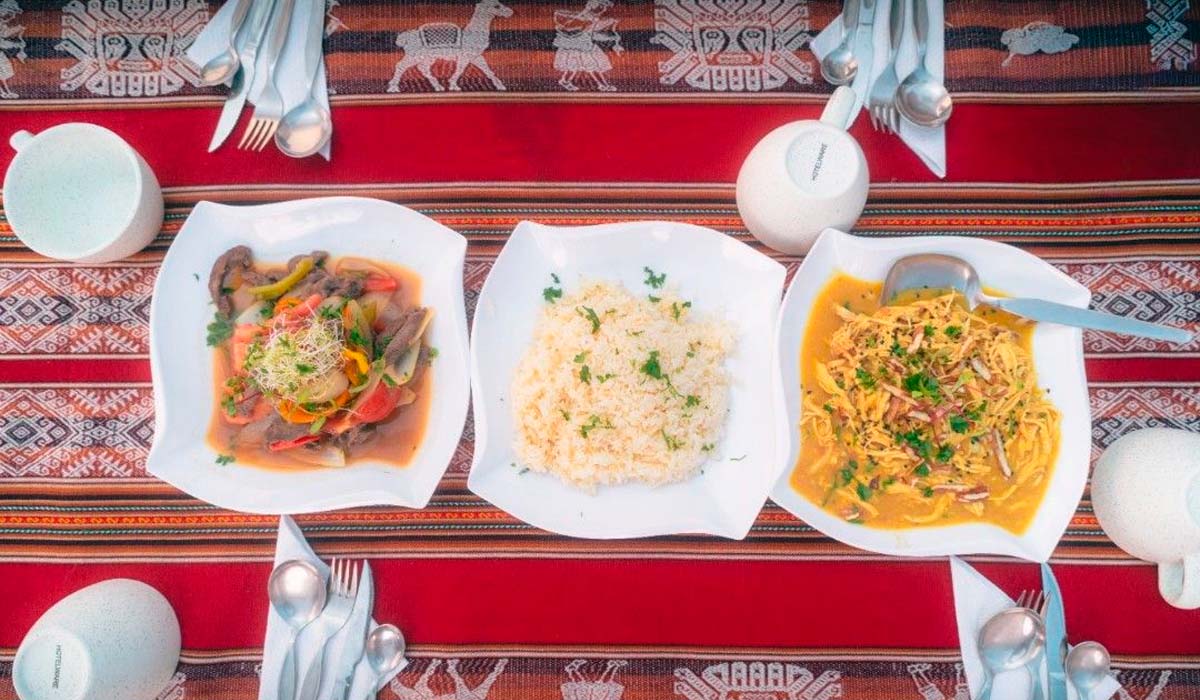
If there are two ingredients that define the food on the Inca Trail, they are the chili and the potato. The Peruvian chili, in types like yellow or rocoto, appears in almost all dishes giving that touch of heat and intensity that makes the food taste different when you are in the middle of nature, surrounded by mountains.
On the other hand, Peru has more than 2,000 types of this potato, and in the Inca Trail camps that richness is noticed. You will find it boiled, mashed, in stews, and in soups after a hard day. It is the most adaptable food on the route and, without exaggerating, one of the great gifts that the Andean civilization left to the world
How food is organized on the Inca Trail
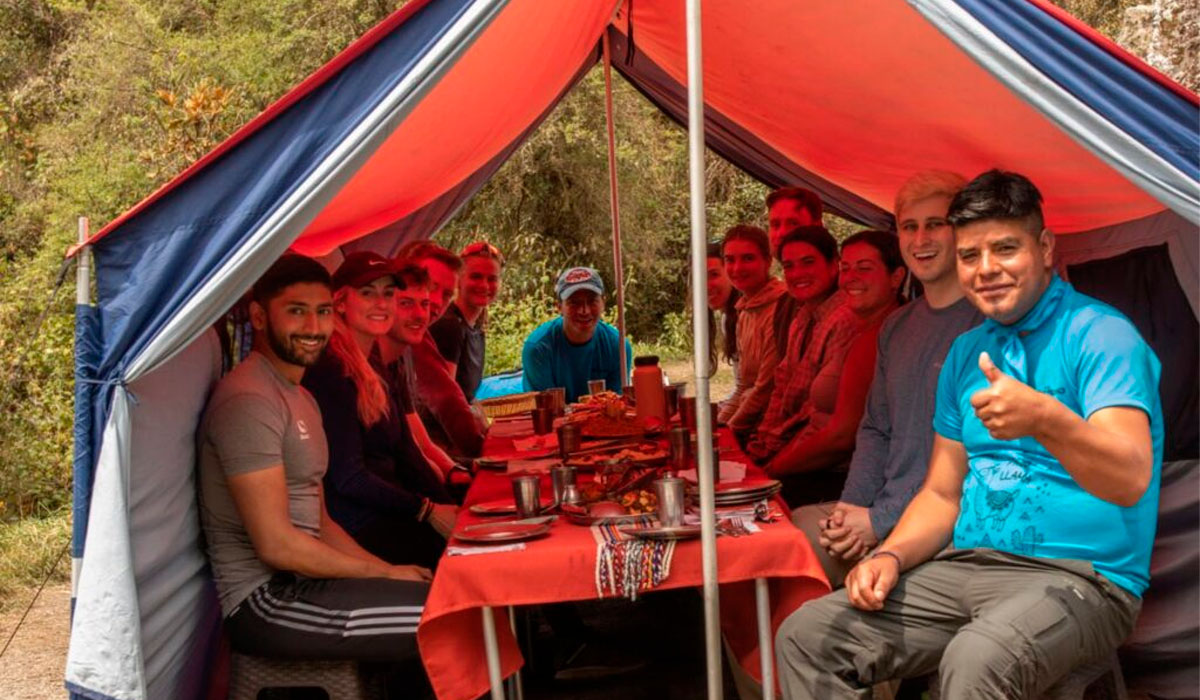
That the food on the Inca Trail arrives hot, fresh, and tasty to your plate in the middle of the mountain range is no accident. Behind every meal, there is a team working quietly to make that possible: mountain cooks with experience in preparing quality dishes in conditions that are not exactly those of a professional kitchen, and porters who carry the food, portable stoves, tables, and everything needed to set up a working camp every day. The ingredients are carefully selected and packed, prioritizing fresh products that hold up well to temperature changes and constant movement.
What do you eat every day?
The food during the four days isdesigned to support the physical effort of the route, not just to satisfy hunger. This is what you can expect at each moment of the day:
- Breakfast
The day starts early and the breakfast must be up to the task. There are hot and varied options: quinoa porridge, oatmeal, eggs to taste, pancakes, or Andean “chuta” bread. To drink, coca tea, coffee, or hot chocolate. A good way to start before returning to the trail. - Lunch
It is served during a break at some strategic point on the route. It always includes a starter, a main course, and a drink, with light but filling options that do not sit heavy on the stomach. Creamy asparagus or mushroom soups, chicken salads, stuffed avocado, stews with potato and rice. The last lunch of the route is already done in a restaurant in Aguas Calientes, with more comfort and variety. - Dinner
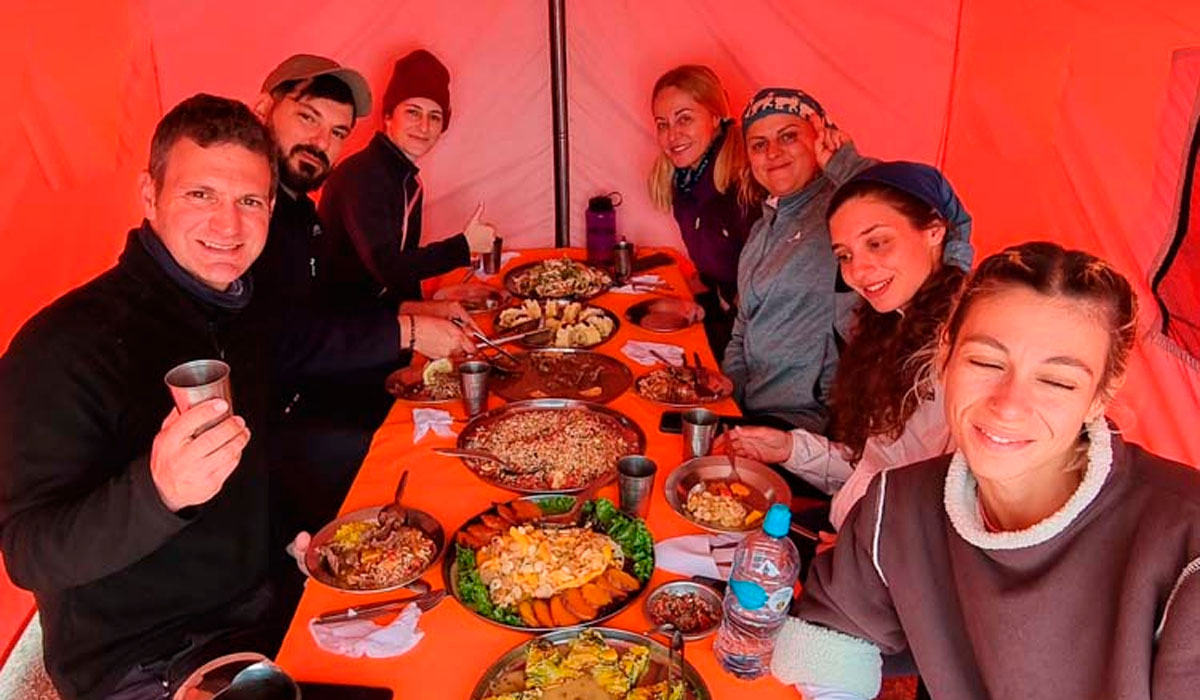
After a long day, dinner is the biggest meal. Between 6 and 7 in the evening, the team has everything ready: a hot cream soup to warm up and then options like pork chops, stuffed chicken, spaghetti, or pizzas made in the camp. Yes, pizzas on the mountain. And the last dinner of the trail deserves a special mention. Agencies usually organize it as a small closing celebration, with a cake made right on the mountain and traditional drinks. It is the time to thank the team of porters and cooks who made everything possible, and to celebrate together with those who shared those four days on the road.
Special diets and food restrictions
The food on the Inca Trail does not follow a single and fixed menu. If you have specific food needs, the important thing is to let them know in advance before starting the route, and the kitchen team will make sure to adapt.
Vegetarian and vegan options
If you do not eat meat or follow a vegan diet, there is no problem. The mountain cooks have experience preparing dishes without animal protein that are still nutritious and full of energy: bean stews, quinoa in different ways, sautéed vegetables, complex carbs, and fresh fruits. The key is to let them know in time so that everything is coordinated from the beginning.
If you are a strict vegan, the most useful thing is to send a list with the ingredients you avoid. That makes planning much easier and reduces the risk of misunderstandings on the way.
Allergies and intolerances
If you have an allergy to gluten, nuts, seafood, dairy, or any other food, mention it at the time of making your reservation, not the day before leaving. Camp kitchens in the middle of nature have their limits and it is not always possible to guarantee a completely allergen-free environment, but the team can take extra precautions to minimize any risk of cross-contamination.
As an extra measure, always carry your own personal first aid kit with antihistamines or whatever your doctor has told you, and if you think it is necessary, some trusted snacks that you already know sit well with you.
In any case, communication is what helps the most. The clearer you are with your agency and your guide about what you need, the calmer and safer the experience will be.
Snacks and drinks for the way
Between meals there are hours of walking, and keeping the body hydrated and with energy during that time is as important as the dishes served in the camp. The food on the Inca Trail covers this, but it is also worth being prepared on your own.
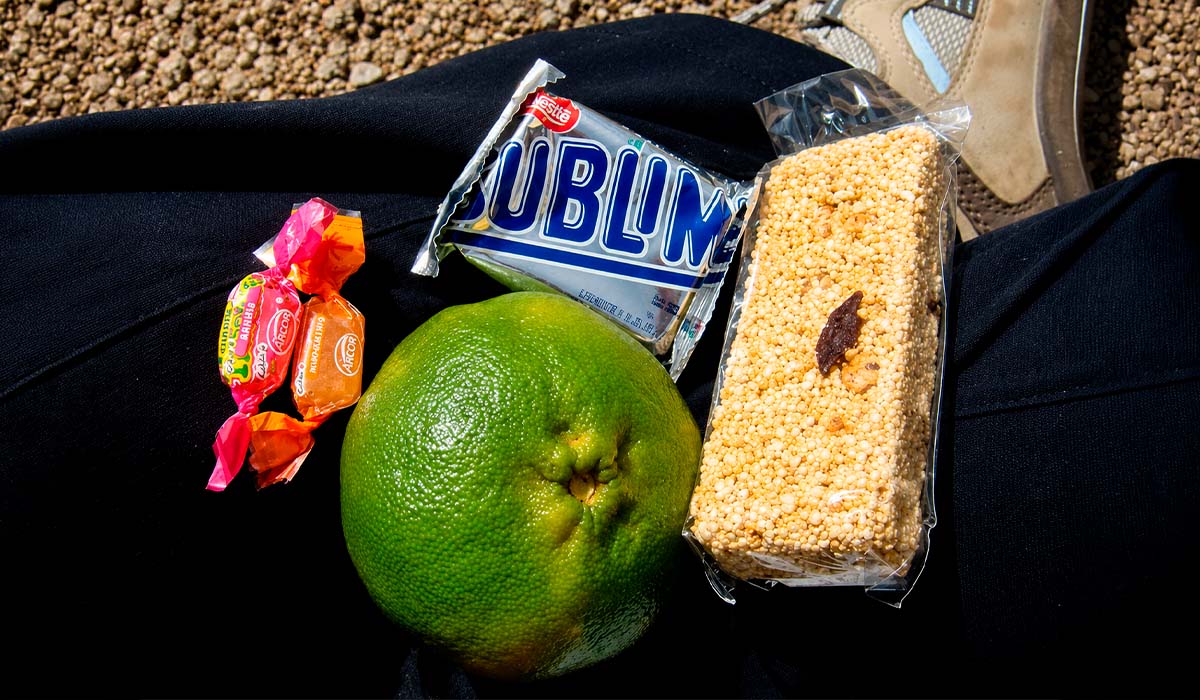
The camps guarantee purified boiled water and hot drinks during the stops, with coca tea being the most common and recommended to help with the altitude. During the walk, fresh fruits, cookies, and occasionally energy bars are also handed out: something light to keep the pace without feeling heaviness in the stomach.
Even so, it is a good idea to carry at least one extra liter of water per day in your own canteen or in a Camelbak-type system, which allows you to drink without having to stop. And for those moments when you need a quick recharge between stops, nothing better than having your own snacks on hand: nuts, dark chocolate, dried fruit, cereal bars, or crackers. They are easy to carry in the outer pocket of the backpack and make a real difference when the body asks for something in the middle of a climb.
Tips to make the most of the dining experience
The food on the Inca Trail is not just fuel: it is part of what makes those four days memorable. With good planning and communication with your agency, the dining experience can be as good as the landscape.
Before leaving: communicate what you need
The most important thing is to inform your agency about any dietary requirement before booking, not on the day of departure. Vegan or vegetarian diet, allergies, medical intolerances: all of that needs to be coordinated in advance so the kitchen team can prepare well.
And even if you do not have severe restrictions, sharing your taste preferences or what you simply do not like also helps. The more information the team has, the better they can adapt the menu to what will really sit well with you on the mountain.
During the route: how to maintain your energy
The physical effort on the Inca Trail is real, and sustaining energy throughout the day requires some dietary discipline. Some practical tips:
- Eat a good breakfast. It is the most important meal of the day on the route. A complete breakfast with carbs, protein, and fruit gives you the start you need before you begin walking.
- Do not skip meals. The altitude sometimes takes away your appetite, but your body still needs fuel. Eat even if you are not very hungry, especially at the camps.
- Hydrate constantly. Purified water or coca tea all day, without waiting to feel thirsty. At altitude, dehydration comes sooner than it seems.
- Carry accessible snacks. Nuts, chocolate, dried fruit, or cereal bars in the outer pocket of your backpack for the moments between meals, especially on the most demanding sections.
- Avoid very heavy or greasy food. Slow digestion in the middle of a climb is the last thing you want. Eat substantial but light meals, and your body will thank you.
Eating well at altitude: how to adapt
The altitude can do curious things to your appetite. It is normal that in the first few days the body does not ask for food with the same intensity as always, and that digestion feels a little different. The key in those moments is not forcing yourself to eat large amounts, but to eat a little and often: small portions throughout the day that keep the body active without overloading it.
That is why the food on the Inca Trail goes for light and easy-to-digest dishes: comforting soups, rice, Andean potatoes, quinoa, fresh fruits. Foods that the body can use quickly and that provide the necessary energy to keep walking without feeling heavy.
Coca tea deserves a special mention. It is the most traditional drink of the camps and, far from being just a ritual, it really helps to relieve the symptoms of altitude sickness: dizziness, tiredness, shortness of breath. If you have doubts about taking extra medication for the altitude, it is best to consult your doctor before leaving, but a good diet and coca tea are already a good starting point.
And beyond the physical, there is something that is hard to measure but that anyone who has done the trail recognizes: a good meal at the end of a hard day changes the mood of the entire group. The food on the Inca Trail not only keeps the body moving, it also sustains the spirit until the last step.