
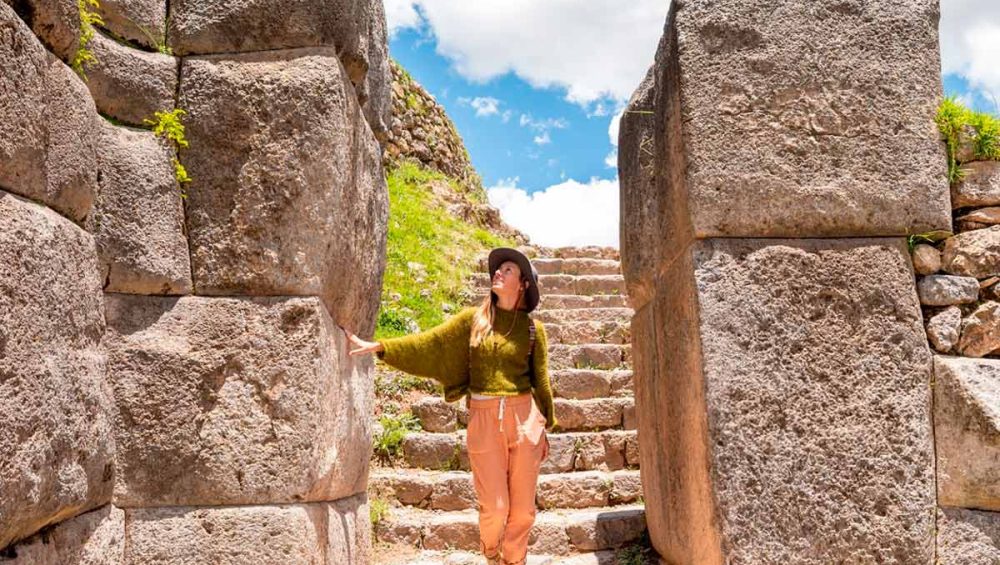
A few kilometers from the historic center of Cusco, on a hill, stands one of the most impressive archaeological sites of the Inca world. Sacsayhuaman, an ancient archaeological center that was built between the 14th and 15th centuries, and its importance within the Empire was only compared to that of the capital itself. It is no accident that it received the title of “The House of the Sun of Hanan Qosqo“, the High Cusco.
The first thing that impresses you when arriving is not only the size of the walls, but the way each stone block connects with the land. The Inca stone workers did not force their work on the landscape: they read it and mixed it in. The result is a complex where the natural rock and human work show the effort of this ancient empire.
History: from imperial fortress to World Heritage Site
Long before the Incas arrived in these lands, the hill was already inhabited. The remains of the Killke culture are the first chapter of a long history. It was Pachacutec who imagined what we know today as Sacsayhuaman, around 1350 AD, but the work did not end with him: his grandson Huayna Capac completed it decades later. Between both reigns, more than 90 years of work passed, with more than 20,000 men moved under the mita, the collective work system that supported the great projects of the Inca State. The result is still one of the greatest expressions of organization and technique of the Andean world.
With the arrival of the Spanish, the site became a battlefield and the last stronghold of the Inca resistance. When the fighting stopped, another kind of destruction began: the stone blocks were systematically taken out to build the colonial buildings of Cusco, including the Cathedral. For centuries, the very inhabitants of the place kept using the ruins as a quarry. That damage did not stop until 1983, when UNESCO declared the city of Cusco a World Heritage Site, with Sacsayhuaman included.
What does Sacsayhuaman mean?
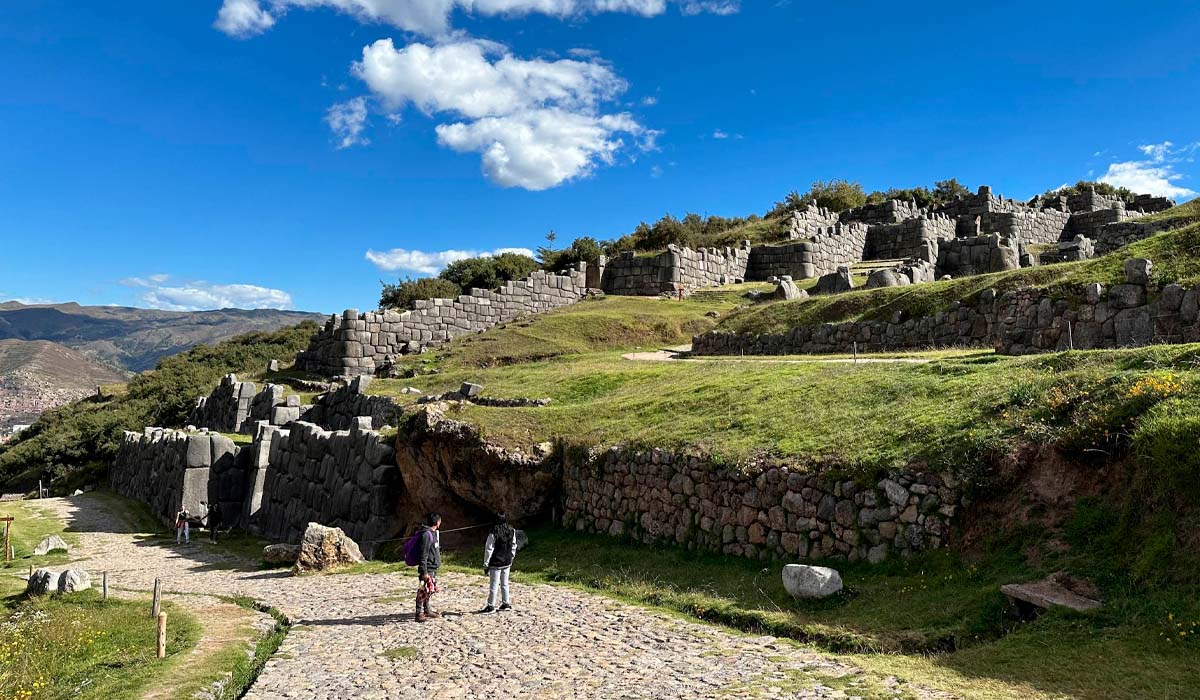
The name comes from Quechua and joins two words: sacsay, satisfied, and huaman, falcon; literally: the satisfied falcon. An image that fits well with what this place was: a guardian over the city, still and powerful, that has spent centuries looking from above at everything the Inca Empire built.
Religious and astronomical importance
Sacsayhuaman was not just a defensive structure. Its esplanades hosted the most important celebrations of the Inca calendar, with ceremonies and offerings that marked every winter solstice. From here, the Inca wise men read the sky: the position of the sun in the solstices and equinoxes allowed them to calculate the calendar, anticipate the seasons, and set the planting and harvesting dates. A knowledge that was at the same time ritual and completely practical, because feeding the whole Empire depended on it.
Architecture: a mystery without a simple explanation
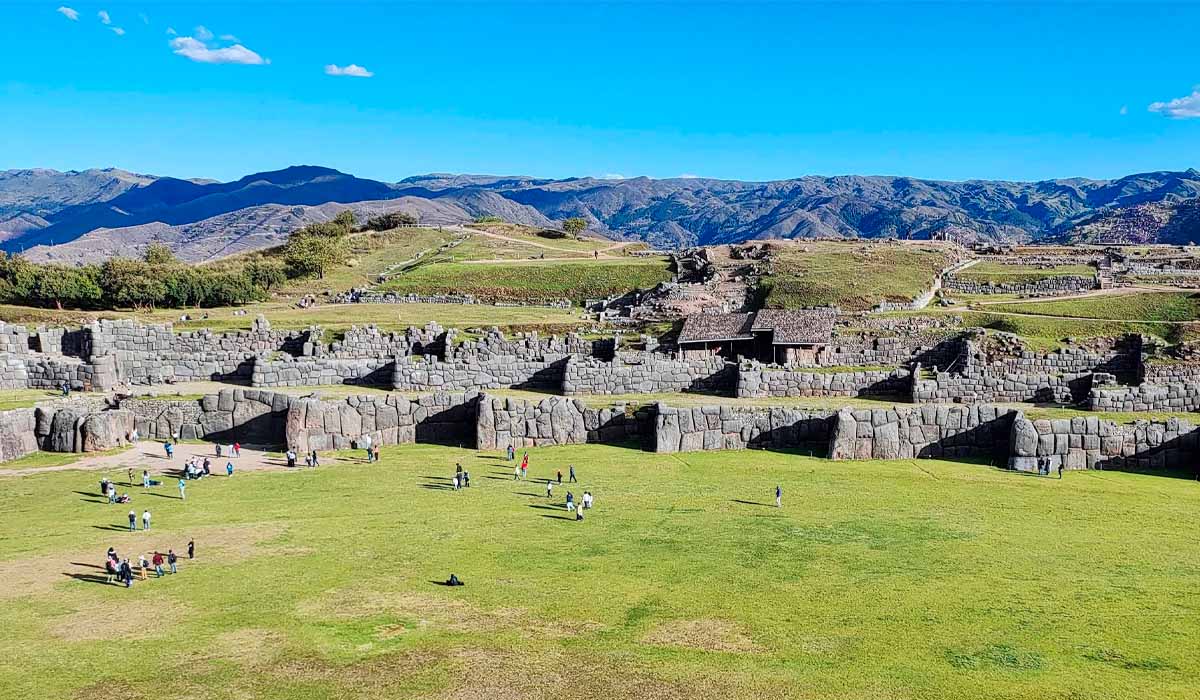
The chronicler Garcilaso de la Vega wrote that Sacsayhuaman surpassed even Machu Picchu in size. Walking among its walls, the statement does not seem exaggerated.
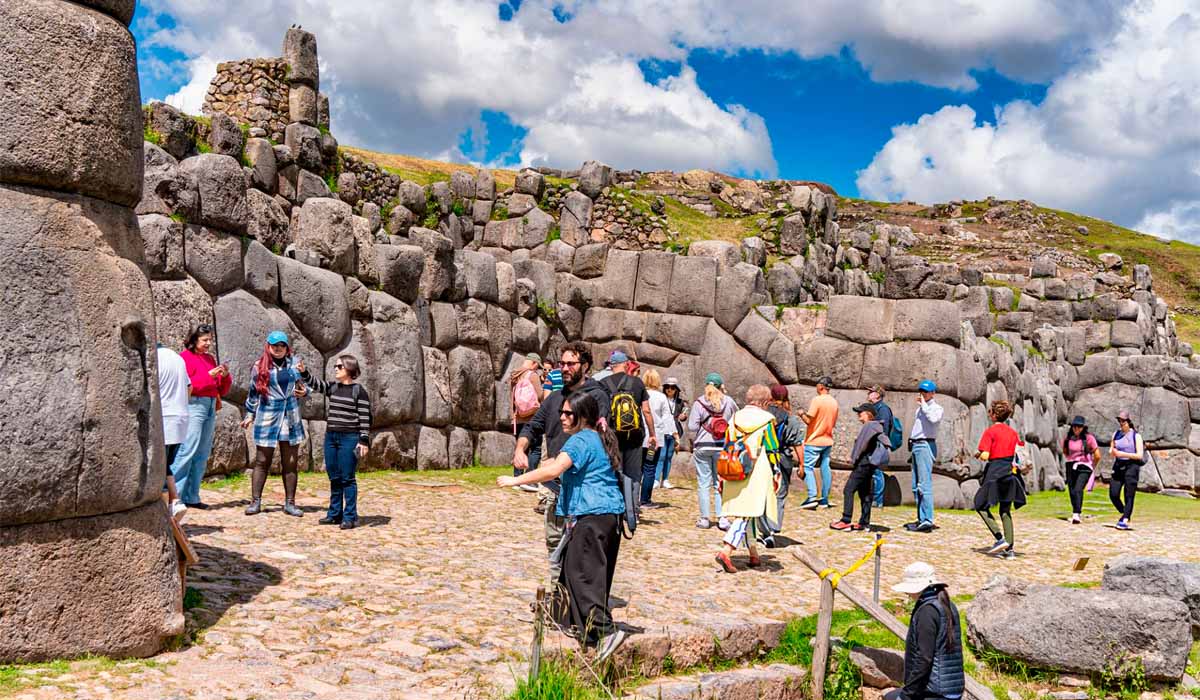
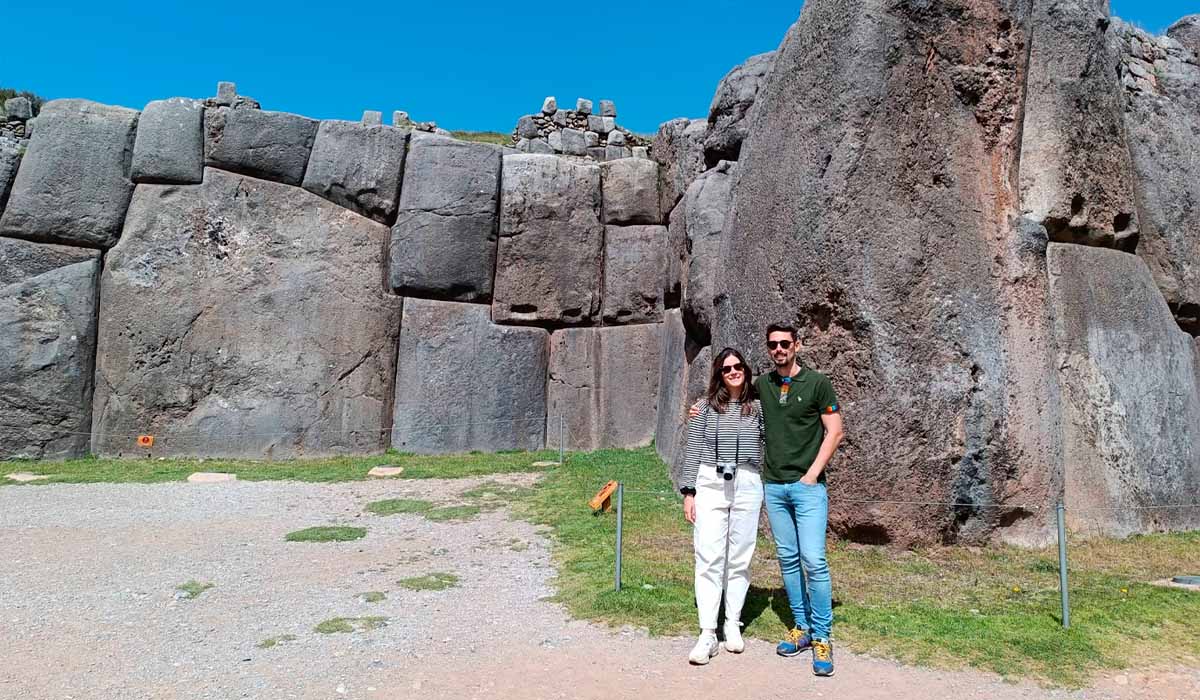
The zigzag walls are built with carved stone blocks of up to five meters high and 125 tons in weight, fitted together without mortar, with a precision that leaves no space between the pieces. How they were cut, how they were transported, and how they were placed is still a question without a final answer.
Beyond the walls, the complex shows ceremonial altars, tower bases, water systems, and stepped terraces, all integrated into the landscape with a harmony that surprises both the architect and the traveler who arrives without knowing very well what to expect.
Sacred temple or military fortress?
The short answer is: both, but not at the same time.
Sacsayhuaman was born as a shrine. It was dedicated to Illapa, the god of thunder, and its original function was ceremonial, rather than defensive. War came later, with the Spanish conquest, and when the site became a battlefield, the conquerors named it as what they saw: a fortress. That name survived. What was there before remained buried under layers of history.
What will you find in Sacsayhuaman?
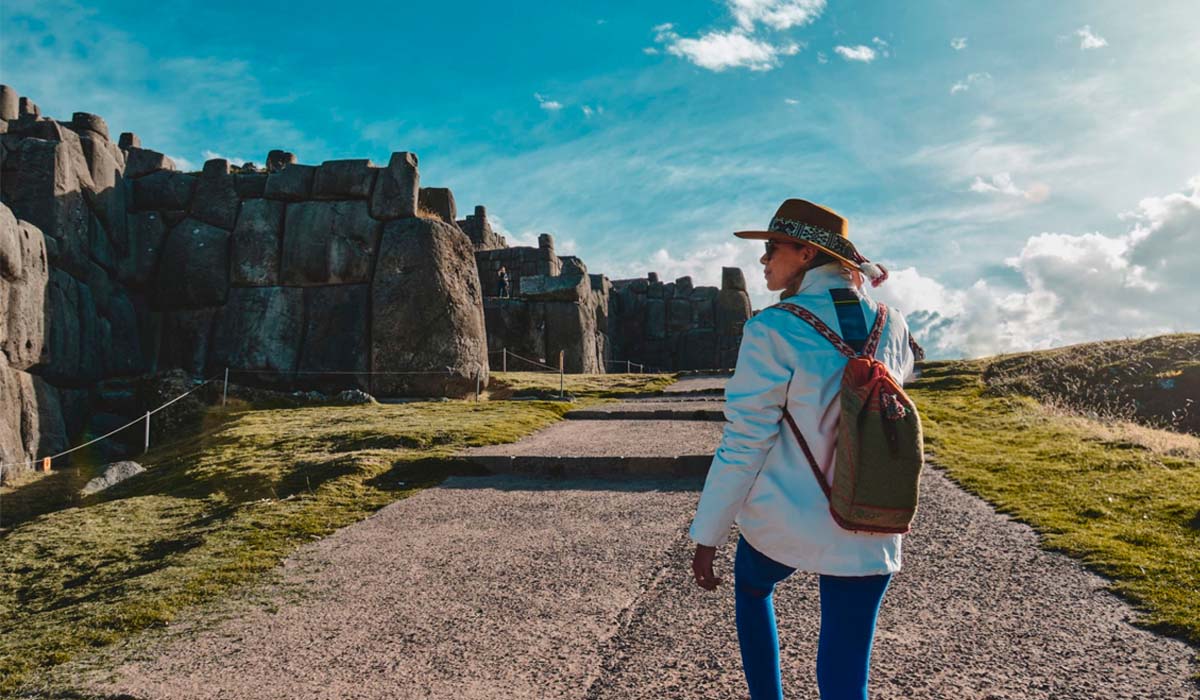
The archaeological park is much larger than a first look suggests. Therefore, it is worth taking it easy and walking without rushing. This is what awaits you inside for your adventure:
-
The towers
At the top of the zigzag walls stood three towers lined up on the hillside, connected to a water supply system whose remains can still be seen. The towers did not survive the colonial period, but the archaeologist Luis E. Valcarcel managed to rescue their foundations. Each one has its own name:
-
- Muyucmarca: The most striking of the group. Its name in Quechua brings to mind something like “round town”, and its bases confirm it: a cylindrical design made up of three concentric circles set inside an uneven square.
- Paucarmarca: Its foundations are still covered with dirt. It is estimated that it had a square shape and that it could have been used to look at the stars.
- Sallaqmarca: Located next to Muyucmarca, its name means something like “town in dry or rocky terrain”, a description that the landscape itself confirms at first sight.
-
-
The rooms and the walls
To the south of the towers, on the top, there is a group of long and narrow rooms connected by trapezoidal doors. The walls are made of stone blocks of irregular shapes, but with edges polished with precision. Further down are the bastions: three stepped platforms in a sawtooth shape, built with huge limestone blocks that fit together in a way that still puzzles engineers.
-
The doors and the Rodadero
Access to the tower area was through three trapezoidal doors: T’iopunku, Ajawanapunku, and Wiracochapunku. Further ahead, the terrain has a completely natural surprise: the Rodadero, also known as Suchuna. It is a volcanic rock formation that over time developed grooves and curves on its surface that look like slides carved in stone. Few visitors, no matter their age, manage to resist the temptation to slide down them.
-
The Throne of the Inca and the Chincanas
On the eastern part of the hill is the K’usilluc Jink’ian, known as the Throne of the Inca, whose name in Quechua translates as “where the monkey stands”. It is a series of steps carved into diorite rock from where the best panoramic view of the whole complex opens up.
Finally, the tour ends with one of the most intriguing corners of the site: the Chincanas, a network of underground tunnels that remain a mystery. The smallest one is accessible and can be explored; while the main one is further north, but it is flooded. However, what is most unsettling is not their current state, but what they could have been. Chronicles like those of the Inca Garcilaso de la Vega, and legends passed down for generations, suggest that these passages connected Sacsayhuaman with the Qoricancha and other key points of the Inca city, which would explain how troops could move without being seen. The mystery, to this day, has no answer.
Where is it and how to get there?
Sacsayhuaman is just north of the Main Square of Cusco, closer than many expect. Getting there is not complicated, although if you decide to go on foot, the climb requires some breath. For those who prefer to go directly and without thinking about logistics, joining an organized city tour is the most comfortable option.
Consequently, there are several ways to go up for your adventure:
- On foot: The most authentic. Between 30 and 40 minutes through stone streets and stairs that are part of the original Inca Trail. The path is tiring, but arriving walking has its reward.
- By taxi: About 10 minutes from the center. Fast and without complications. However, agree on the price before starting.
- By tourist bus: It leaves from the center and connects with the fortress and other nearby sites. A good option if you want to go comfortably and enjoy the landscape on the way.
- By organized tour: The most complete alternative. In BoletoPerú we offer city tours that include transport, an expert guide, and a visit to the nearby complexes: Qenqo, Puca Pucara and Tambomachay. Ideal if you want to understand the context of everything you see, not just see it.
Schedules and tickets
Furthermore, the park opens every day from 7:00 to 17:30. To enter you need the Cusco Tourist Ticket: foreign visitors pay S/ 130 (about 38 dollars) and national visitors S/ 70 (about 20 dollars). It is worth keeping in mind: the ticket gives access to 16 sites in total and is valid for 10 days, so if you plan to tour the Sacred Valley or other points in the region, it is quite useful.
The weather
The weather in Cusco changes a lot depending on the season. Between December and March, rains are frequent; in May, June, and August, the weather is drier and more stable. But there is something that remains constant no matter the month: Sacsayhuaman is at 3,700 meters above sea level, and the cold can appear suddenly even on the brightest days. Always bring an extra warm layer. It is never too much.
Facts you probably did not know
There are things in Sacsayhuaman that do not appear in all guides and that are worth knowing before arriving:
- Some stone blocks reach 9 meters high. Seeing them up close, not in a photo, completely changes the idea one had formed of the place.
- The building technique is cyclopean: huge and irregular stones fitted together without mortar, with a precision that still does not have a completely satisfying explanation.
- The suchunas, those rock formations with natural curves that look like slides carved in stone, are one of the favorite points of the tour, especially for children.
- What can be seen today is barely between 20% and 40% of the original structure. The rest was taken apart during the colonial period to reuse the stones in other buildings in Cusco.
- Archaeological studies confirm that a significant part of the complex is still buried underground, still without being dug up.
Cultural events in Sacsayhuaman
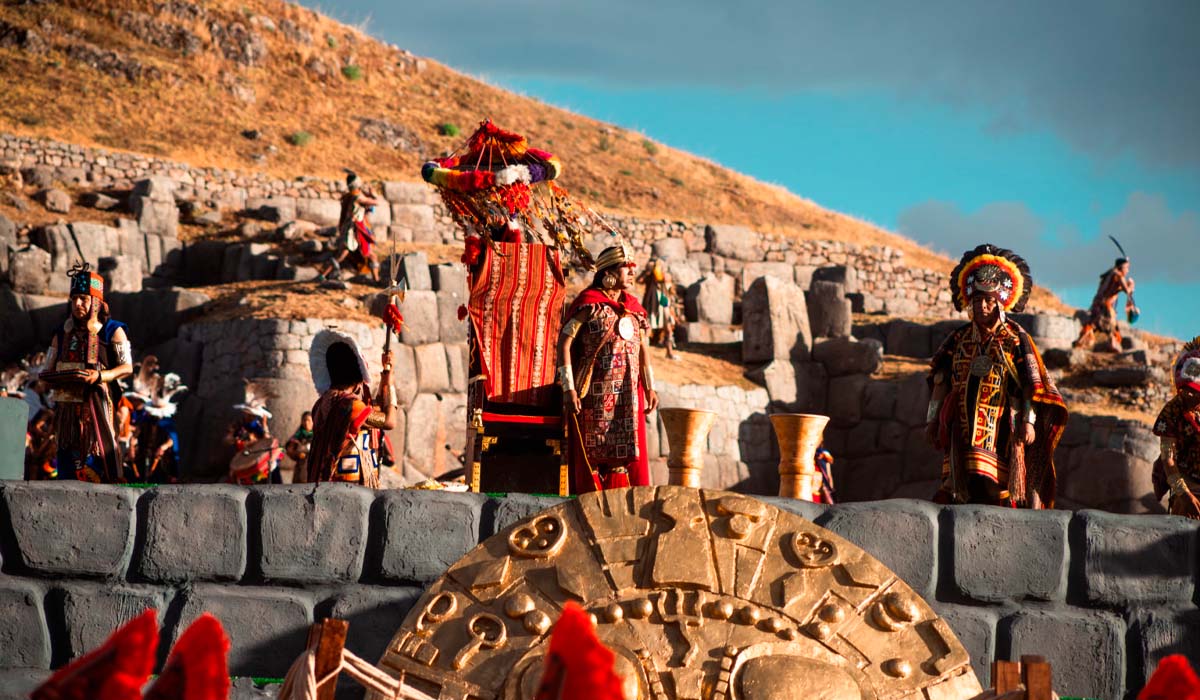
The esplanade is not only an archaeological site: it is also a living stage. Throughout the year, Andean shows and ceremonies are held in its open spaces. The most important one is, without a doubt, the Inti Raymi.
Every June 24, thousands of people from all over the world arrive here to witness the great celebration in honor of the Sun god, the most important festival of the Tahuantinsuyo. Today it is recreated with a show that combines acting, color, and music in one of the most impressive settings you can imagine. If your trip happens on that date, do not doubt it: it is an experience that has no comparison.
You can read more about the Inti Raymi Festival before planning your visit.
What is not allowed inside the site
Sacsayhuaman is a World Heritage Site, and there are basic rules that apply to all visitors:
- No eating inside the archaeological zones.
- No leaving trash or changing the natural environment.
- No camping or spending the night at the site.
- Entering on a horse or a bicycle is not allowed.
Simple rules that help preserve the place for those who come after.