
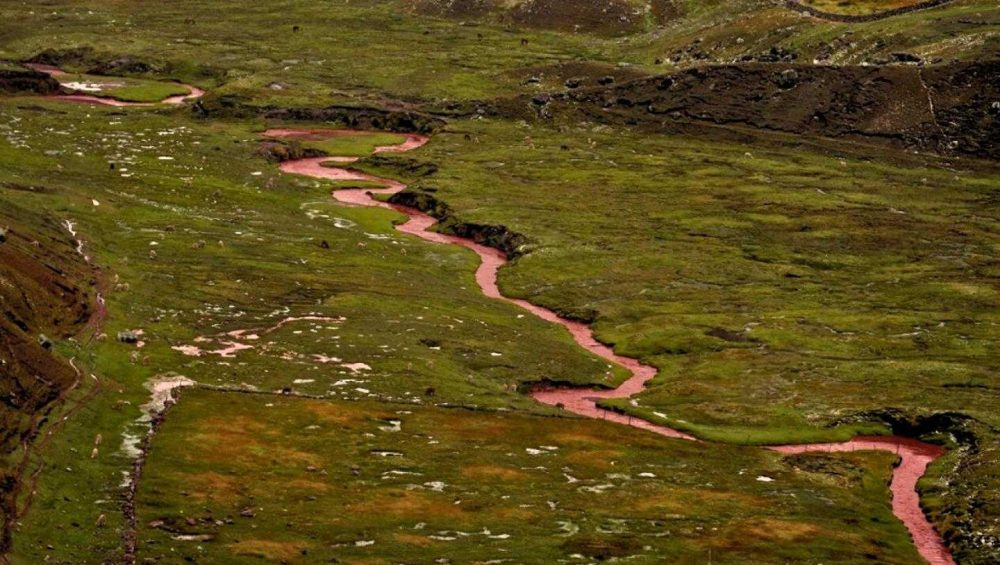
The phenomenon of the Red River of Pitumarca is a unique hydrological spectacle of the Cusco region. This watercourse is a tributary of the Vilcanota River and its crimson coloring is a direct result of the local geology, which has turned it into a rapidly growing attraction in the southern part of the highlands.
The cause of this intense coloring is strictly seasonal. During the rainy season (mainly between January and March), the increase in water flow and runoff drag large concentrations of iron oxides and red clays from the surrounding soils. These iron-rich lands, which form the so-called red valley adjacent to the Mountain of Seven Colors, dye the water a deep crimson shade. The rest of the year, with low water flow, the river keeps its normal coloring.
Here we will tell you everything about this seasonal natural phenomenon, detailing its location and the best times to witness the most intense coloring (January to March), which will allow you to plan your visit to this Cusco attraction with realistic expectations.
Location and Logistics of the Red River
The Red River is located in the Vilcanota Mountain Range, about 100 kilometers southeast of the city of Cusco. Geographically, its origin is linked to the iron oxide-rich soils of the Red Valley of Pitumarca, the same mountain area that houses the Mountain of Seven Colors.
The most common way to access the river is through the town of Pitumarca, which is located at 3,570 meters above sea level. From this Andean town, a route begins that combines vehicle transport on dirt roads and a final hike. The hike to the Red River from the starting point takes approximately 2 to 3 hours, depending on the hiker’s pace.
Origin of the Red Coloring
The crimson color of the river is a seasonal geological phenomenon that occurs in the Pitumarca region. The red shade is due to the high content of iron oxide and red clays (argillites) on the slopes of the surrounding valley. Water erosion is the trigger: during the rainy season, the increased flow drags these oxidized sediments into the riverbed, dyeing the water an intense and visible color along its course. The phenomenon is observed most clearly between January and March, during the peak of the wet season.
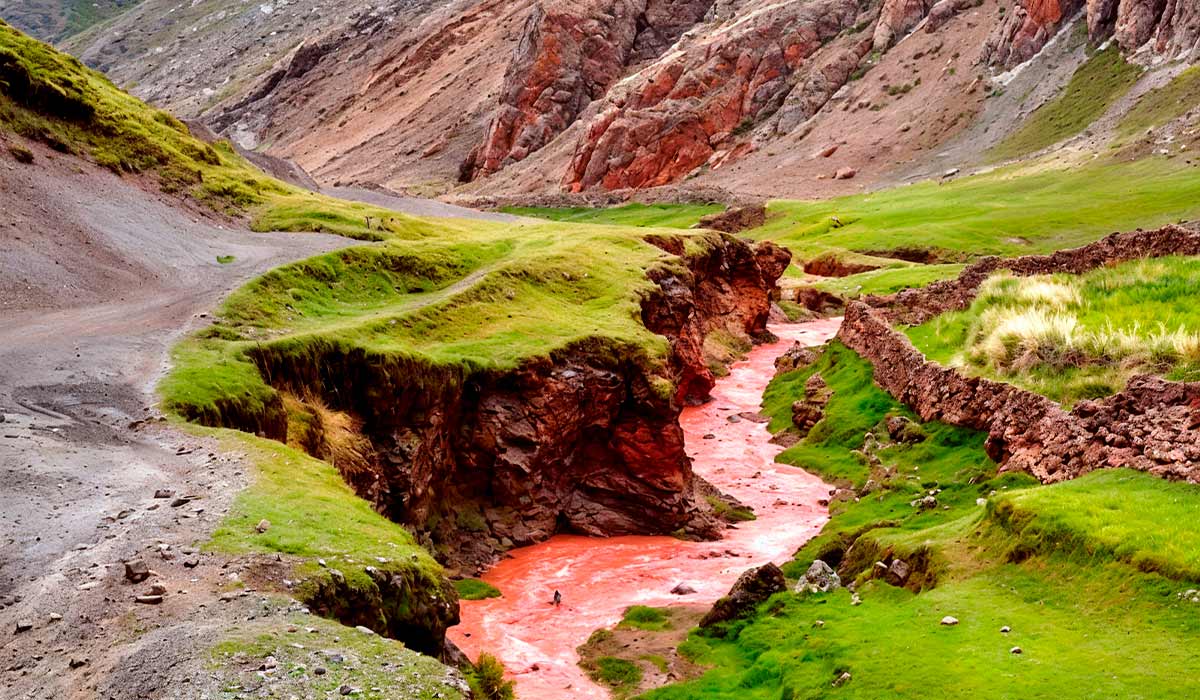
Landscape and Biodiversity
The Red River is located in a high Andean mountain environment (puna), with altitudes that exceed 4,000 meters. The geography of the place is defined by the impressive presence of the Ausangate Mountain (6,384 masl), the highest peak in the region and a guardian mountain (Apu tutelar) of great significance for the Inca culture.
The glacial activity of the mountain range gives rise to a network of glacial lakes, which are sources of crystal clear water, highlighting the Amayuni, Singrenacocha, and Silbinacocha lagoons. The flora of the place is composed of vegetation adapted to extreme cold, such as Andean straw (icchu). This environment serves as a habitat for local wildlife species, including the Andean condor, the Andean fox, the vizcacha, and the Andean puma.
Frequently Asked Questions about the Red River
- What is the best time to see the Red River?
The phenomenon that dyes the river crimson is strictly seasonal, a result of rain erosion that drags iron oxides. Therefore, the ideal time to see the color at its highest intensity is during the rainy season, which runs from December to March. During the dry season, the river keeps its normal color due to the low water flow. - Is there more than one Red River and where are they located?
Yes, there are at least two popular points where you can see the phenomenon, both located in the same Vilcanota Mountain Range:
– Red River of Vinicunca: Accessible from the town of Pitumarca, near the famous Mountain of Seven Colors.
– Red River of Palccoyo: Accessible from the town of Combapata, near the Palccoyo Mountain. - How do you get to the Red River on your own?
The Red River is a destination that can be visited independently. From Cusco, you take a public bus at the Huayruropata Avenue stop (heading to Pitumarca or Combapata). The cost of the ticket is approximately S/ 8.00 – S/ 10.00 soles. Once in the access town (Pitumarca or Combapata), you will need to hire local transport or start a walk of 2 to 3 hours to the viewing point. This is the cheapest option. - Why hire an Organized Tour?
Hiring an organized tour is the simplest and most efficient way to visit the Red River. Agencies use the Vinicunca or Palccoyo routes and guarantee complete logistics (round-trip transport, guide, and food). Furthermore, the expert guide can ensure that the chosen route maximizes the chance of seeing the phenomenon and will avoid problems on the long vehicle journey.
Practical Tips
- Best Time for Color: The crimson color phenomenon is most intense during the months of January, February, and March, as this period matches the greatest rain erosion and the water flow needed to drag the iron oxide sediments. Plan your visit within this time window to ensure maximum color saturation.
- Essential Gear: Given the rainy season (January to March), it is crucial to bring waterproof clothing (poncho or jacket) and trekking footwear with good grip. The right footwear is essential, as the access trails can become muddy and slippery.
- Ethics and Conservation: The Vilcanota Mountain Range is home to communities that depend on its water resources. Take care of the environment, avoid leaving trash, and respect the marked trails. It is essential to recognize that these waters are of vital importance to the local inhabitants downriver.
- Photography: The contrast between the crimson river and the green landscape of the Andean puna offers great photographic potential. Make sure to bring a camera with enough battery and protection against humidity.
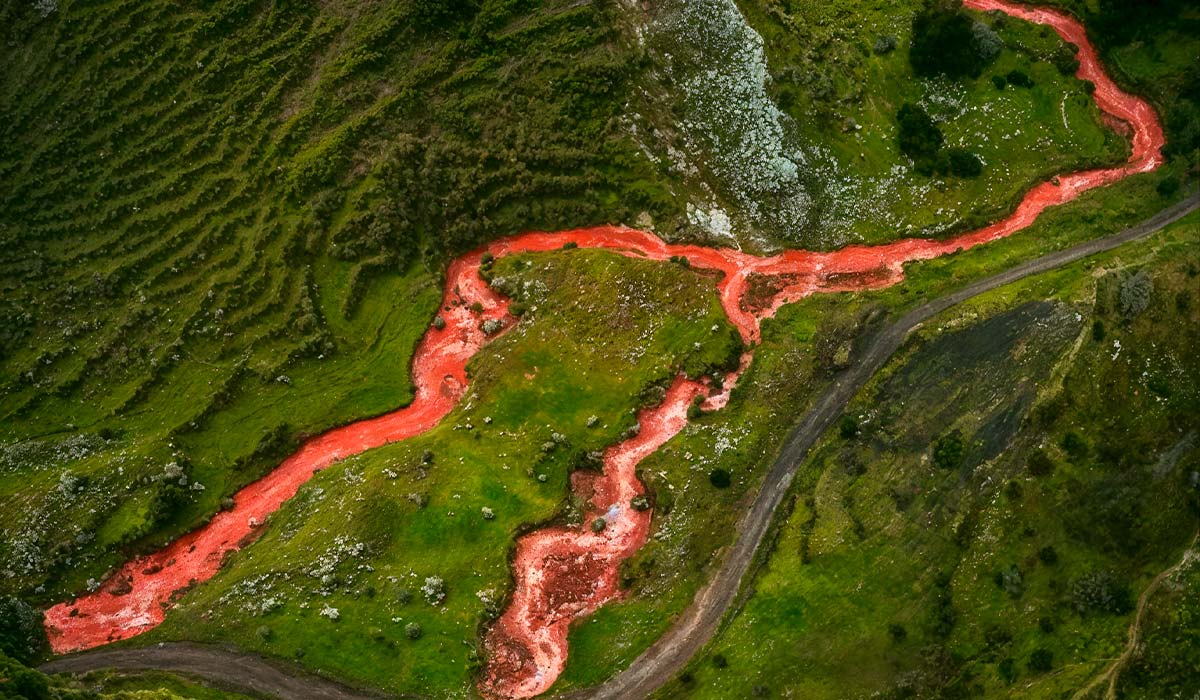
Discover Other Nearby Attractions
The Pitumarca zone, where the Red River starts, is a hub of geological attractions that allows travelers to combine several visits in a single day. The river phenomenon is part of a larger geological circuit of the mountain range.
-
Mountain of Seven Colors (Vinicunca)
The Vinicunca complex is the most ambitious and popular day destination in the Cusco region, being the second most visited point of interest, only surpassed by the Inca citadel of Machu Picchu. This geological phenomenon has become an attraction of the place thanks to the spectacular visual contrast of its slopes, colored with iron oxides, and the presence of glaciers in the Vilcanota Mountain Range.
The ascent to Vinicunca has positioned itself as a high-level challenge in the Treks in Peru. However, it is a destination that requires planning and acclimatization, as the route exposes visitors to extreme altitudes that exceed 5,000 meters above sea level in a single day.
– Difficulty: Challenging (the hike is not technically difficult, but the challenge is the extreme altitude reached in a short period).
– Distance: 8 kilometers (round trip).
– Maximum Altitude: 5,036 meters (16,522 feet).
– Best Time: Dry season (April to October).
– Logistics: It is a full-day tour that involves a long vehicle trip (approx. 3-4 hours) from Cusco to the starting point. Prior acclimatization in Cusco is essential. -
Palcoyo Rainbow Mountain (Palcoyo)
The Palcoyo Rainbow Mountain has emerged as a logistically and physically more accessible alternative to Vinicunca, designed for those looking for the same landscape without the extreme effort of the high-altitude hike. Instead of a single imposing peak, Palcoyo offers a valley experience, where you can see several colored peaks at the same time from an easily accessible viewpoint.
This route is ideal for travelers who have less time for acclimatization or who, for health reasons, seek to reduce the intensity of the hike, since the final trail is shorter and has a much more gradual slope.
– Difficulty: Easy to Moderate (due to the short ascent trail).
– Distance: 4 kilometers (round trip).
– Maximum Altitude: 4,900 meters (16,076 feet).
– Best Time: Dry season (April to October).
– Logistics: The ascent takes about 1 hour, which allows visitors to dedicate more time to photography and rest at the summit, making altitude management easier. -
Red Valley of Pitumarca (The Origin of the Color)
This canyon is the main source of the crimson-colored sediments that dye the river. The landscape is characterized by reddish slopes that offer a visual contrast. The color is due to the high concentration of iron oxide and clay in the soil. This valley is often visited on the same tour as Vinicunca, as it is geographically an adjacent site and represents the cause of the phenomenon.