
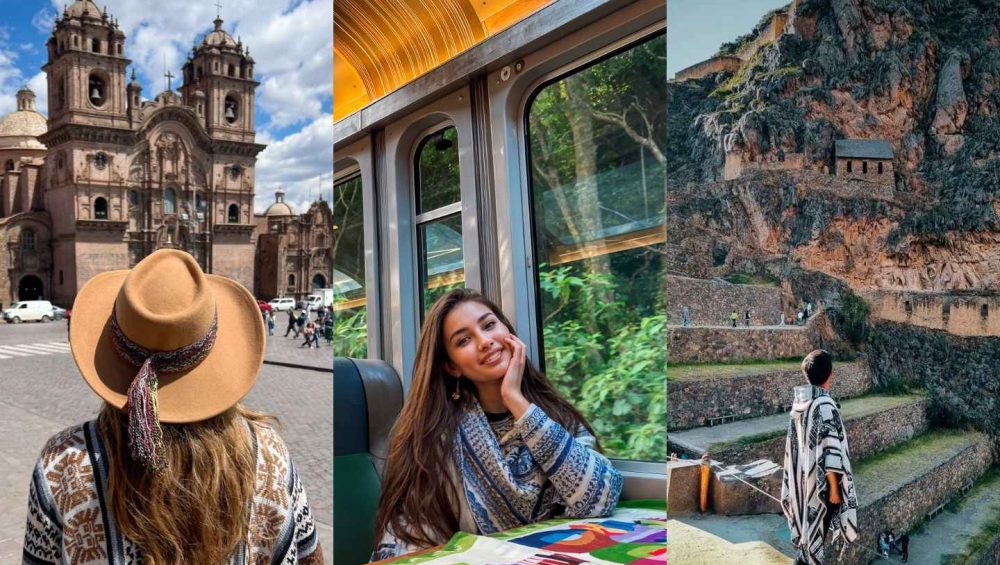
One of the most important trips for those visiting this region of Peru is the journey from Cusco to the Sacred Valley. Therefore, you should know that along the Urubamba River lies a valley full of history, Andean landscapes, and traditional towns that are an essential part of any itinerary. Because of this, organizing this trip correctly is key to making the most of your time and enjoying the journey without complications.
The Sacred Valley stands out for its mild climate, fertile lands, and a high number of Inca archaeological sites. Unlike the city of Cusco, the pace here is calmer, which allows you to mix cultural visits with rest and outdoor activities. Many travelers choose to stay one or more nights in the valley and use it as a base to continue exploring the region.
Another important point when planning the trip is the altitude. While Cusco is at 3,399 meters above sea level, places like Urubamba or Ollantaytambo are at around 2,800 meters above sea level. This difference helps with better acclimatization, helping to reduce the risk of altitude sickness and allowing you to enjoy activities from the first day.
In this guide, you will discover how to organize your trip from Cusco to the Sacred Valley step by step, the main transport options, recommended routes, and practical tips to plan your visit in a simple and efficient way.
The Sacred Valley: What makes it special?
Beyond the beauty of the landscape, this place concentrated the farming, ceremonial and political life of the Incas, who saw the Urubamba River as a vital element for the empire’s prosperity. In fact, in the Andean worldview, this river was seen as the earthly reflection of the Milky Way (Mayu), connecting the earthly world with the cosmos. Its historical and cultural importance remains current, making it a must-visit place for those visiting Cusco.
The most highlighted places of the Sacred Valley
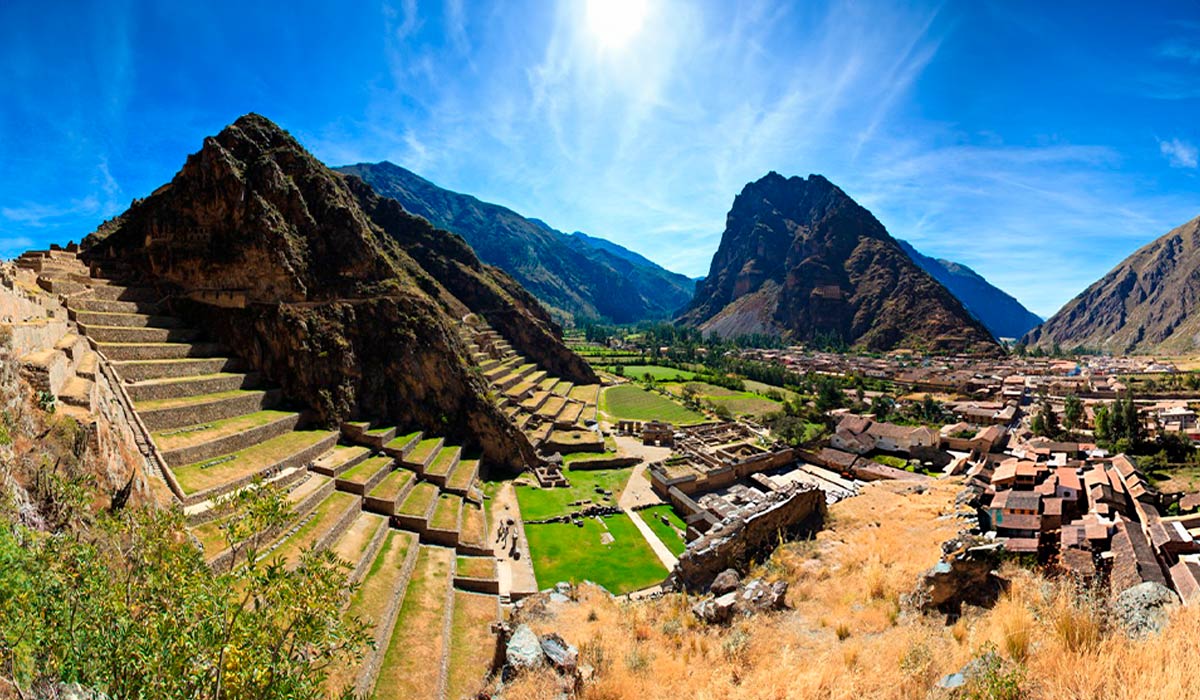
The Sacred Valley of the Incas has important historical sites, traditional towns and beautiful settings. Therefore, each of its destinations offers a different view of Inca skill and the beauty of the landscapes of Peru. Among the most highlighted places are:
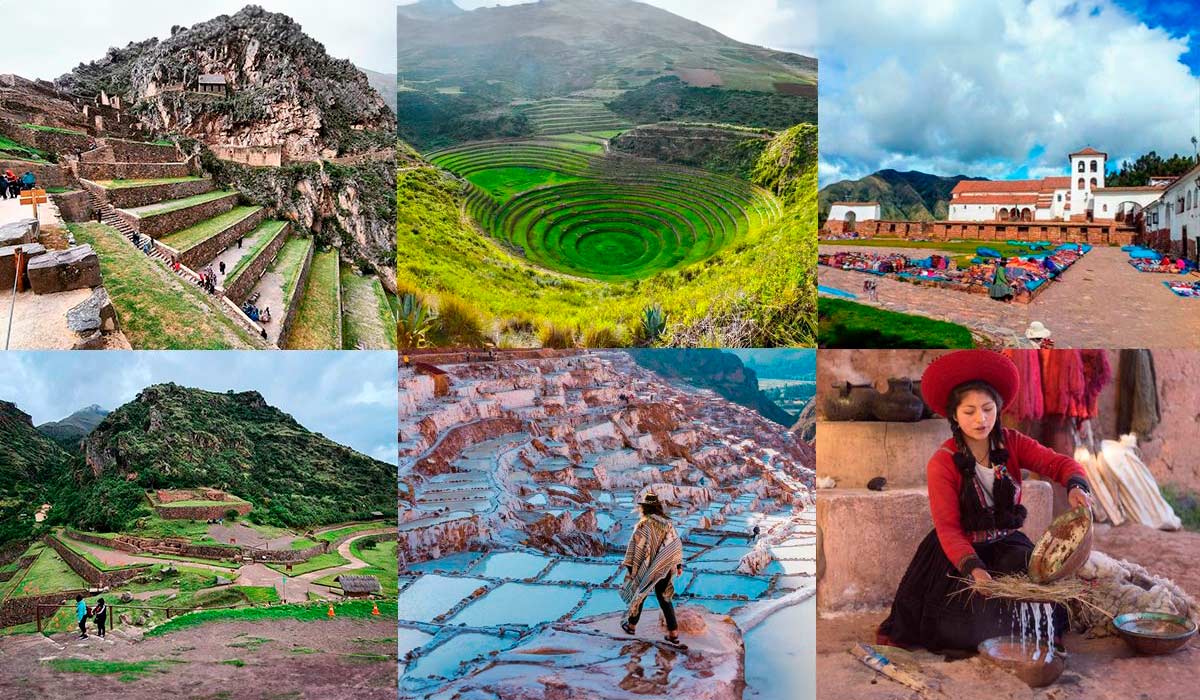
- Písac: Starting the tour here is an excellent option. The town is famous for its craft market, where you will find quality textiles, ceramics and jewelry. On the other hand, in the heights, the ruins of Písac will surprise you with their perfectly joined walls and impressive terraces.
- Chinchero: Known as the “town of the rainbow.” It is located at 3,800 masl, so it offers privileged views of the mountain range. It is the perfect place to visit traditional weaving workshops, where local women show how they dye wool with natural dyes following ancient techniques.
- Yucay and Urubamba: Following the river’s course, you will reach these two towns that breathe peace. Yucay was the rest stop for several Inca rulers due to its good climate. For its part, Urubamba is the logistical heart of the valley, offering the best hotels and restaurants in the area, ideal for staying the night before moving on to Machu Picchu.
- Moray: An important place for the Inca Empire, it is a system of circular terraces that worked as a farming laboratory. Thanks to its design, there is a temperature difference of up to 15 °C between the upper and lower levels, allowing the Incas to acclimate seeds from different regions of the empire.
- Maras Salt Mines: Very close to Moray, you will find thousands of stepped salt ponds that have been used since pre-Inca times. This impressive Andean landscape shows an ancient salt extraction system that is still active and offers one of the most photogenic views of the Sacred Valley.
- Ollantaytambo: Finally, we reach the “Living Inca City.” It is the only town that keeps the original Inca urban layout. Its grand ruins dominate the landscape and serve as a witness to Andean resistance. Also, it is a strategic point for being the main train station to Machu Picchu.
When to visit this place?
The valley has increasingly developed a double personality depending on the time of day, the day of the week, and the month of the year. The main reason is Písac and its famous market, which is held with greater magnitude three times a week. Almost all travel agencies in Cusco offer the one-day Sacred Valley tour on Tuesdays, Thursdays, and Sundays to coincide with the market, following a standard schedule: shopping in the morning in Písac, buffet lunch in Urubamba, and exploration in the afternoon in Ollantaytambo.
However, to make the most of your stay in this 2026, consider these seasonal factors:
- Dry Season (May to September): This is the favorite time for travelers. The days are sunny, with deep blue skies that enhance the Andean landscapes, ideal for photography and hiking. Keep in mind that it is the high season, so there will be more people at the archaeological sites.
- Rainy Season (October to April): Although rain is frequent (especially in January and February), the valley transforms into a green paradise.
- Transition Months (April and October): These months offer the perfect balance: the landscapes are still green, rain is scarce, and the number of tourists is moderate.
About the trip from Cusco to the Sacred Valley
The Sacred Valley follows the course of the Urubamba River from Písac, located about 30 km (18 miles) northeast of Cusco, to Ollantaytambo. Beyond this point, the hills that border the river close in on its path and the fertile plain shrinks, turning into a deep gorge where the Urubamba descends with force toward the Amazon basin.
Options for traveling from Cusco to the Sacred Valley
The roads that connect the imperial city with the valley are in good condition and traffic is usually smooth. Even so, it is important to consider that the journey includes sharp turns and slopes, as you descend from the height of the Cusco mountains toward the warmth of the valley.
There are several ways to make this trip according to your travel style:
- Organized tour: This is the most comfortable option, as it includes a guide and door-to-door transport. It is ideal for those who want to learn the history of the archaeological sites without worrying about logistics.
- Train to Ollantaytambo: You can take a PeruRail service from the San Pedro or Wanchaq stations in Cusco to Ollantaytambo. From there, you can continue by taxi or collective bus toward other points in the valley like Urubamba or Yanahuara.
- Private taxi: With a cost of approximately USD 60-70 per trip, it offers the advantage of total flexibility in schedules and the possibility of asking for stops at viewpoints to capture the best landscapes of Peru.
- Local bus: For a cost of between USD 2 and 3.50, it is the cheapest alternative. The buses leave daily from specific stops (such as Av. Grau 525). It is an authentic option, although less comfortable and with frequent stops.
The route between Cusco and the Sacred Valley
To better organize your itinerary through the landscapes of Peru, here is an approximate reference for road travel times. These estimates will help you decide if you prefer a one-day tour or a longer stay:
- Cusco – Písac: Between 45 minutes and 1 hour.
- Písac – Urubamba: Around 45 minutes following the river course.
- Urubamba – Ollantaytambo: Between 30 and 45 minutes.
- Ollantaytambo – Chinchero: Approximately 1 hour via the plateau route.
- Chinchero – Cusco: Approximately 50 minutes.
Useful recommendations for your visit
To make the most of your vacations and avoid problems, take these practical tips into account:
- The early bird…: Start the day early. Arriving at sites like Ollantaytambo or Písac at 8:00 a.m. will allow you to enjoy the ruins almost alone before the large groups arrive.
- Cash is king: Carry cash (soles), especially small bills and coins. Although in 2026 many businesses use digital payments, in local markets and for the entrance to the Maras Salt Mines, cash is still necessary.
- Onion effect: Wear clothes that you can put on or take off as the weather changes. The valley has a microclimate where mornings are cool, but the midday sun can be very strong.
- Specialized transport: For sites like Moray or the Salt Mines, consider hiring a private taxi or a tour, since public transport only goes as far as the turn-offs on the main road, leaving you far from the attractions.
- Prioritize your health: If altitude changes affect you, stay one or two days in the valley before doing demanding activities. The altitude here (average of 2,800 masl) is lower than in Cusco, which makes recovery faster.