The Inca Trail is, without a doubt, one of the most famous and special hiking routes in Peru. Furthermore, every step of this journey brings you closer to the ancient citadel of Machu Picchu, and along the way, you find the ruins of the Inca Trail, remains that hold stories worth hearing.
The most surprising thing is the excellent condition of these stone buildings after so many centuries. By seeing them up close, you can understand the great skill of the Incas: their way of building, organizing their cities, and giving spiritual meaning to each space.
Among the main archaeological sites guarded by the Inca Trail ruins is Wiñay Wayna, with its terraces and temples that seem to rise straight from the mountainside. Additionally, there is Phuyupatamarca, whose name says it all: “the city above the clouds”, a promise it more than fulfills; and Runkurakay, a curious half-circle guard post. Therefore, each of these spots adds something different to the trip, and together they turn the Inca Trail into much more than a simple hike: they transform it into an enriching experience of great historical and archaeological value.
Inca Trail Ruins: Extraordinary Archaeological Sites
We must be honest from the start: the Inca Trail in Peru is a tough hike. As a matter of fact, the journey can last up to four days, featuring sudden weather changes and altitudes over 4000 meters. However, the views of the Andes Mountains, along with the history hidden in each of the Inca Trail ruins along the path, make the effort completely worth it.
- The landscape is not the same: It changes daily. One day you walk among high mountains, the next you enter a cloud forest, and suddenly an unexpected river or waterfall appears; truly, it is an environment that never stops surprising you. Nevertheless, the altitude is harsh and must be taken seriously. Going over 4000 meters without getting used to the height first can ruin the trip, so this step is key before putting on your boots.
- The terrain does not make things easy either: There are steep slopes, rocky parts, and old stone stairs that are uneven and steep. Similarly, the Andean weather has its own character: it is not rare for a heavy rain to fall, fog to surround you, and then the sun to come out all in the same day. For this reason, your gear is vital: waterproof clothes, warm layers, and sun protection are a must. Moreover, nights are spent in tents at campsites set up along the route with everything you need to rest and eat. Ultimately, there is something very special about this: sleeping right in the mountains, far away from the noise.
And then, there are the ruins of the Inca Trail. Finding them one by one during the hike is, perhaps, what turns this adventure into a truly unforgettable experience. Consequently, each preserved archaeological site shows the work of the ancient Inca civilization, offering the chance to learn its history, look at its ancient architecture, and enjoy the great variety of life that this thousand-year-old path holds.
Discover the 8 incredible ruins of the Inca Trail
Now that you know the background of the route, it is time to go into the true heart of this adventure: the remains that the Inca Empire left carved in the mountain. Next, we present to you in detail the most relevant ruins of the Inca Trail that you will find on each section of the path, from the first kilometer to the doors of Machu Picchu:
1) Llactapata
Llactapata stands as the first archaeological milestone of our expedition, located just 7 kilometers from the official starting point. These first ruins of the Inca Trail sit on a ridge that offers unique panoramic views of the Aobamba valley, allowing us to admire the majesty of the Andean landscapes.
Research suggests that this ancient site had a double function, it served as a resting point and logistics center for those heading to Machu Picchu, and it also worked as a thriving production center. Also, its strong farming focus is shown in its large farming terraces and storage spaces, topped by a large ceremonial platform meant for religious rituals linked to the farming calendar.
On the other hand, one of the most amazing features of this complex lies in the complexity of its construction, which combines rock with granite blocks. In this way, the fact that this material was mined and transported from a quarry located more than 30 kilometers away reveals the very high technical level and the organizing capacity of the Inca Empire architects.
Finally, this fascinating place was rediscovered in the early 20th century by Hiram Bingham, the famous explorer who revealed the seventh wonder to the modern world. Today, Llactapata has become one of the most interesting Inca Trail ruins to visit on the classic route, inviting us to explore the greatness of the past through its impressive buildings, stone paths and its perfect harmony with the natural environment.
2) Runkurakay
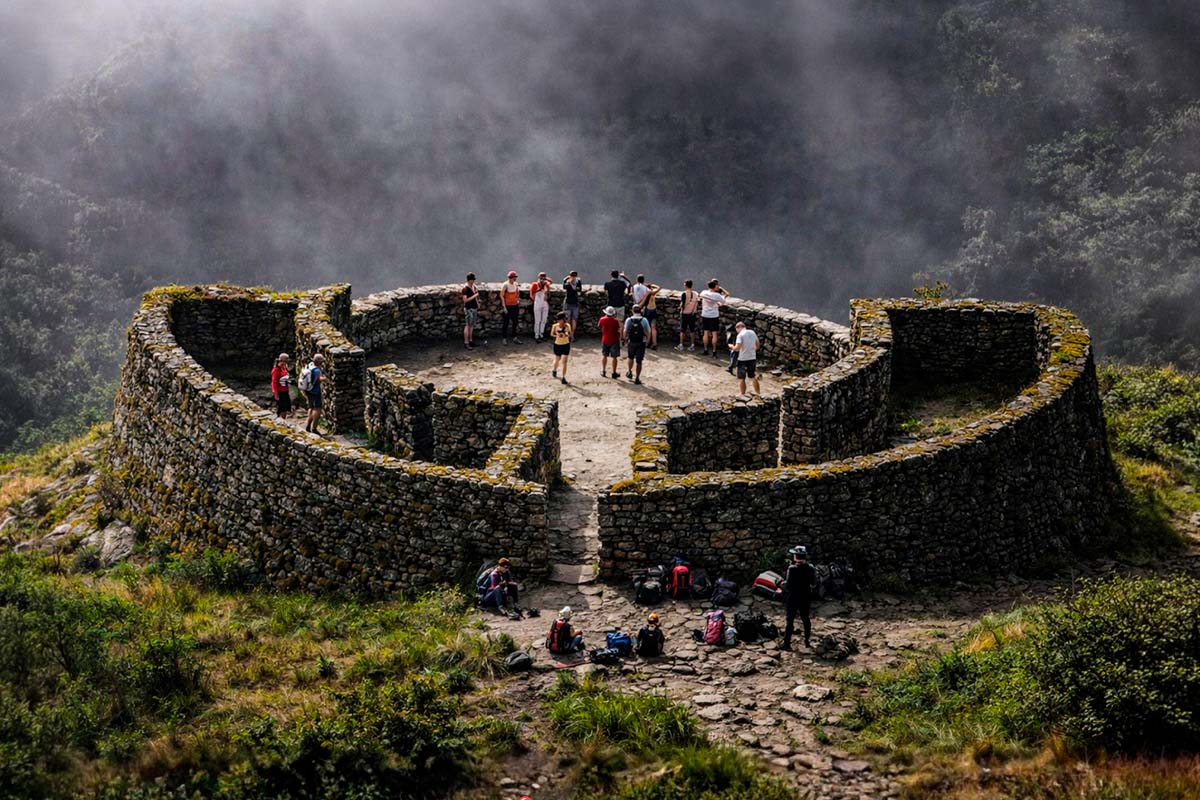
As we move forward in our expedition, about 13 kilometers from the start of the trail (km 82), we will find Runkurakay. It is said that this site worked as a “tambo” or resting point for the messengers and travelers who were heading to the citadel through these ruins of the Inca Trail.
Also, its main circular construction is located on a raised platform, which suggests a multi-purpose design that could have served as a watchtower, logistics warehouse or ceremonial space. In addition, the complex stands out for showing architectural elements, like its trapezoidal doors and zigzag walls, which reflect the undeniable mastery and the unmistakable style of the Inca Empire.
Among the most outstanding features of Runkurakay are:
- Unique circular shape: Unlike other structures on the route, which are rectangular, Runkurakay stands out for its semi-circular design, uncommon in the Inca architecture of the trail.
- Stepped terraces: Small surrounding plots meant for farming, which supplied those who used the tambo.
- Strategic location: At 3,850 meters above sea level, one of the highest structures of the entire route.
Fun fact: The name “Runkurakay” comes from Quechua and could be translated as “basket-shaped building”, referring to its unique circular floor plan, a feature that clearly sets it apart from the rest of the Inca Trail ruins.
Its privileged and extreme location not only makes it one of the highest structures of the entire route, but it also shows the amazing ability of this civilization to build architectural complexes on the highest peaks of the Andean geography.
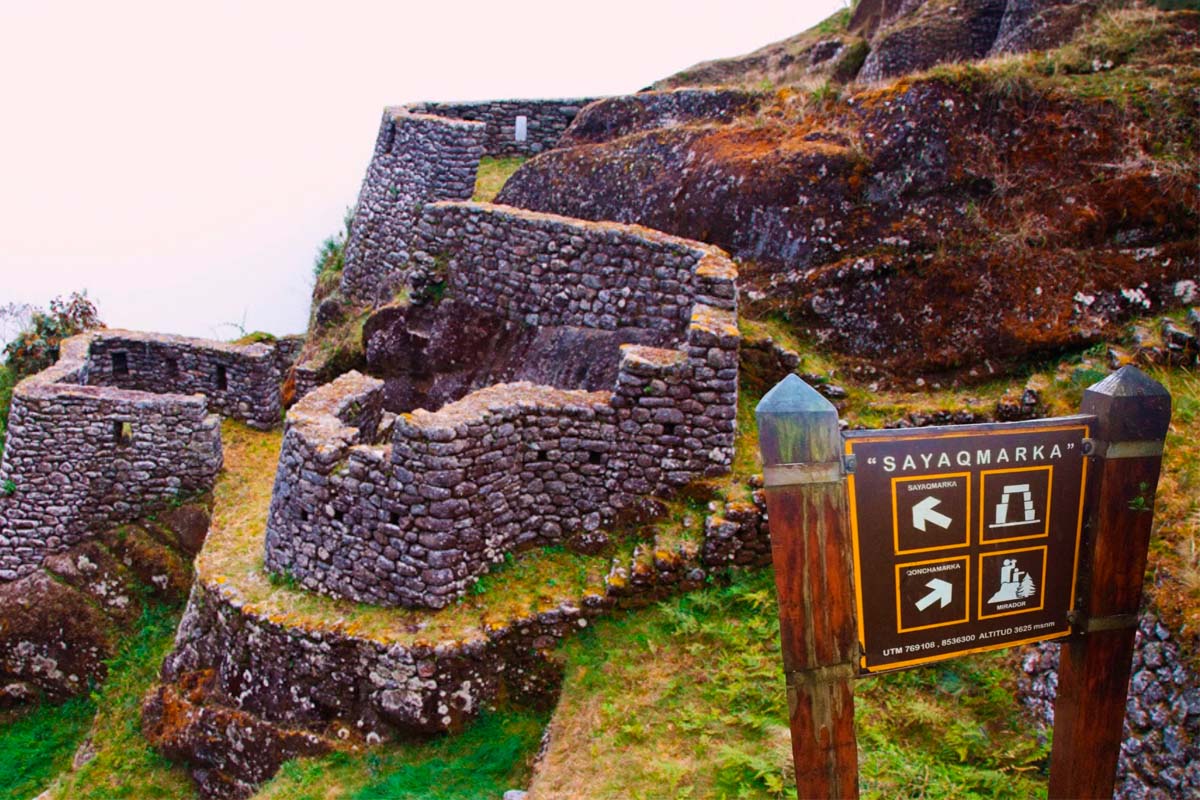
3) Sayacmarca
Continuing our brave climb, about 19 kilometers from the starting point, we will discover the Sayacmarca ruins. An impressive complex located on a steep ridge, which stands out as one of the best preserved Inca Trail ruins of the whole expedition.
Its name in Quechua translates to “Inaccessible Town”, which supports the theory that it worked as a fortress or key defensive structure. Also, its complex architecture welcomes us with narrow passages, steep stairs and a series of platforms that made the most of the shape of the land.
Among the elements that make Sayacmarca a unique site, the following stand out:
- Restricted access: You can only reach the complex through a narrow stone staircase carved into the rock, a detail that supports its defensive role.
- Sacred fountain: A system of channels and a ceremonial fountain linked to the worship of water, typical of the Inca religion.
- Strategic altitude: Located at 3,700 meters, offering visual control over a large part of the surrounding valley.
Some researchers believe that Sayacmarca could have worked as an astronomy observatory, given that several of its structures seem aligned with key solar events, like the solstices.
Beyond its clear defensive nature, Sayacmarca held a deep spiritual purpose, shown by its ceremonial sites and smaller buildings that possibly served as a home for the priest elite in charge of leading the rituals in the heights.
4) Phuyupatamarca
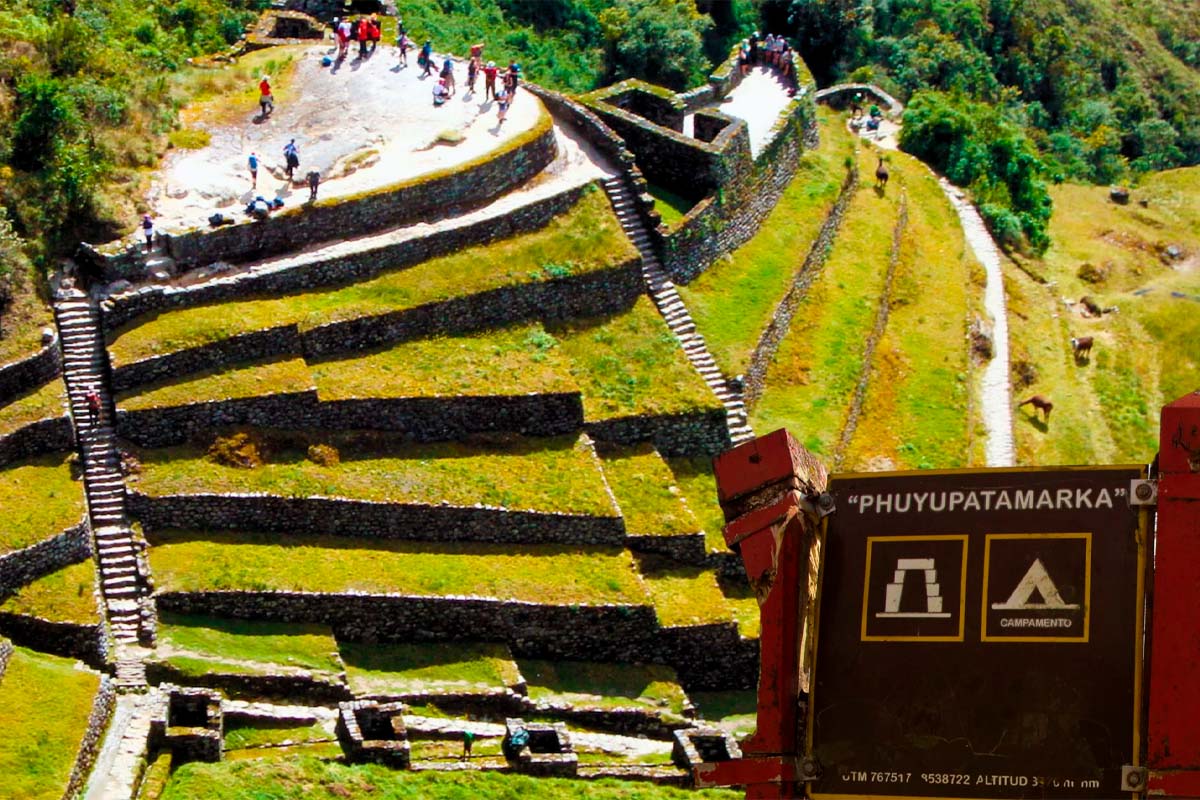
Moving forward in our expedition, we will find Phuyupatamarca (known as the “City above the clouds”), an amazing place that rises to 3,650 meters of altitude and offers visitors impressive views of the mighty valleys and surrounding mountains.
According to researchers, this complex worked as a religious and ceremonial center among the ruins of the Inca Trail. Also, its design includes a series of platforms, farming terraces and a large square, completed by smaller spaces that would have served as homes for the priest elite or as places to perform sacred rituals in the heights.
Among the elements that make Phuyupatamarca an exceptional site, the following stand out:
- Advanced water system: A network of fountains and channels carved in stone that shared the water from nearby springs throughout the whole complex.
- Five ceremonial levels: Stepped platforms that go down the hillside, each with a different ritual role.
- Privileged views: On clear days, it is possible to see the snow-capped mountains of Salkantay and Pumasillo from its upper terraces.
It is worth noting that on clear nights, Phuyupatamarca offers one of the best views of the starry sky of the whole route, which is why some guides consider it a key point to understand the relationship of the Incas with astronomy and the worship of the stars.
The most outstanding feature of Phuyupatamarca is, without a doubt, its complex water engineering work, which allows an efficient sharing of water throughout the sanctuary even centuries after its construction.
5) Winay Wayna
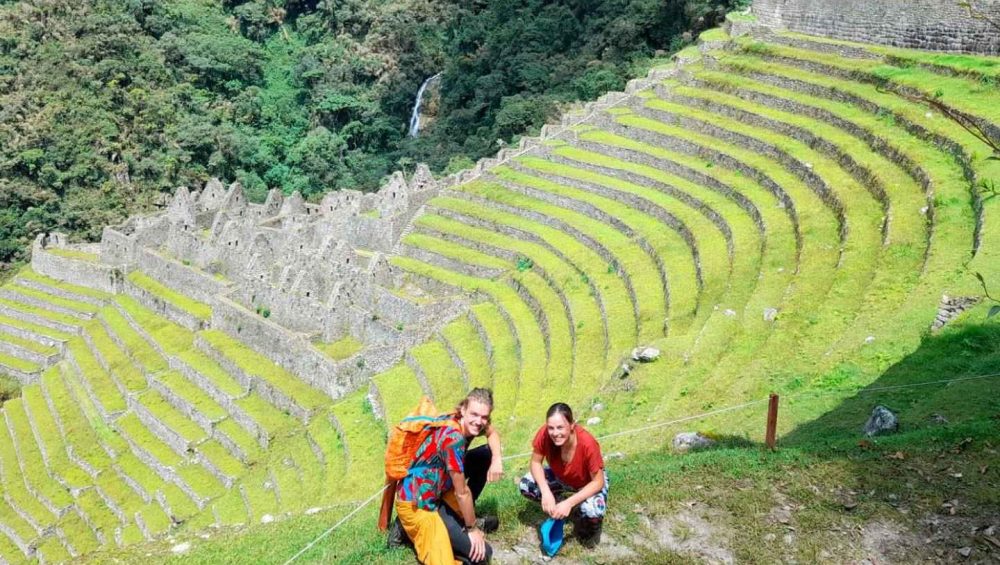
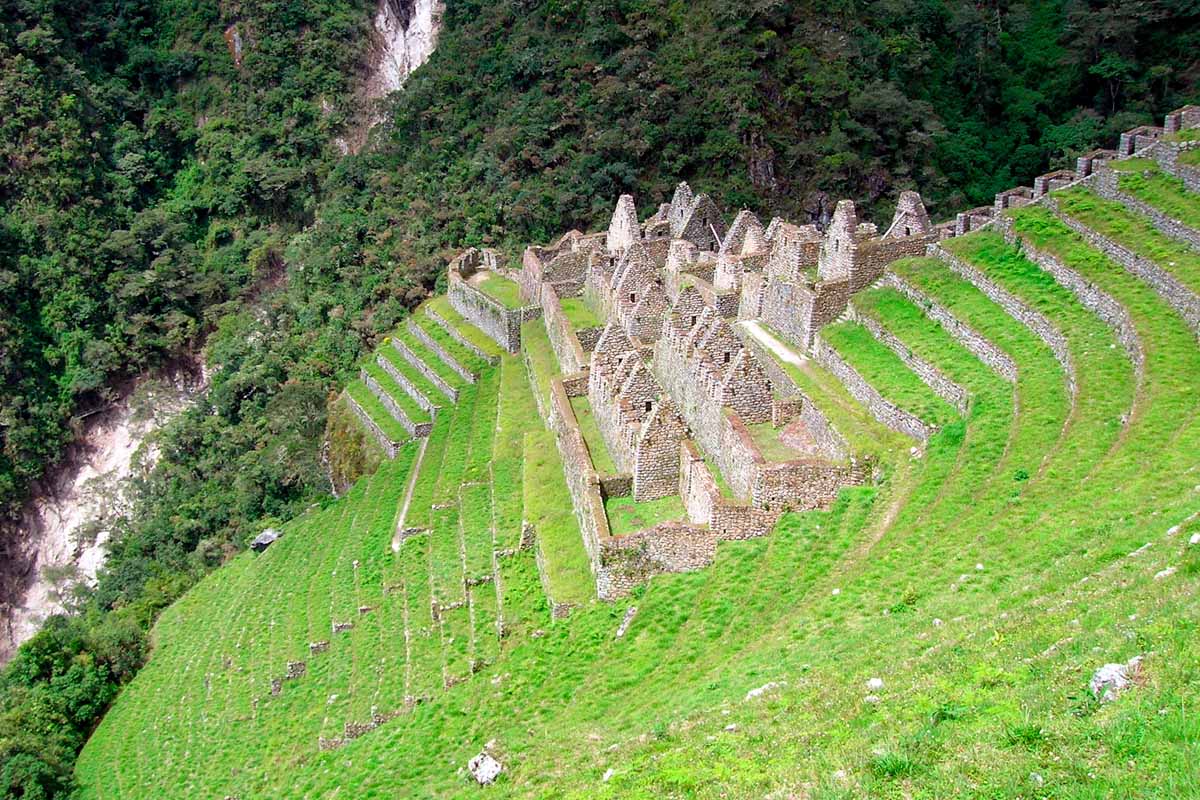
Just 26 kilometers from the starting point, the route will reveal the majestic Winay Wayna complex, whose name translates poetically as “Forever Young”. This settlement is considered one of the most amazing and important ceremonial centers that make up the ruins of the Inca Trail.
Its stepped terraces spread across the mountain as if they were a natural part of it, accompanied by squares, channels, and fountains that the Incas used for ceremonial purposes. But what really captivates is the whole: those stone buildings, wrapped in the thick vegetation of the cloud forest, rising on a steep hillside, with the fog floating around them.
Among the elements that make Winay Wayna stand out from the rest of the ruins, the following are highlighted:
- Double architectural sector: The complex is divided into an upper sector (farming and ceremonial) and a lower one (residential), joined by a staircase and a series of ceremonial fountains.
- Ten running water fountains: A channel system that still works today, fed by natural springs.
- Strategic location: The narrow pass where it sits allowed the Incas to control who came in and who went out, with a defensive advantage that is hard to beat.
Fact: The name “Winay Wayna” is also that of a wild orchid that grows in the area, and that local villagers associated with the eternal youth of the cloud forest surrounding the ruins.
Today, Winay Wayna serves another equally important purpose for hikers: it is the last big camp before Machu Picchu. Many take a break here, not only to rest their legs, but also to take a deep breath and prepare mentally for the final stretch. Few stage farewells take place in a place as beautiful as this one.
6) Intipata
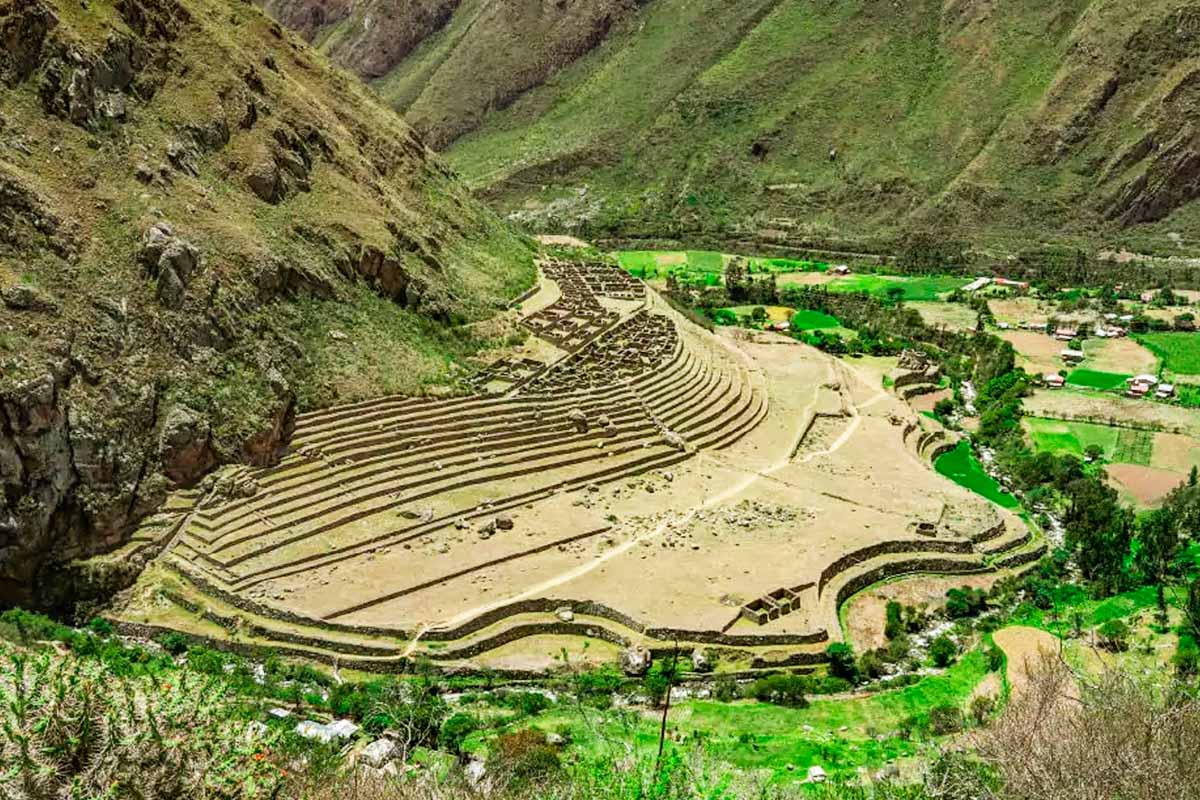
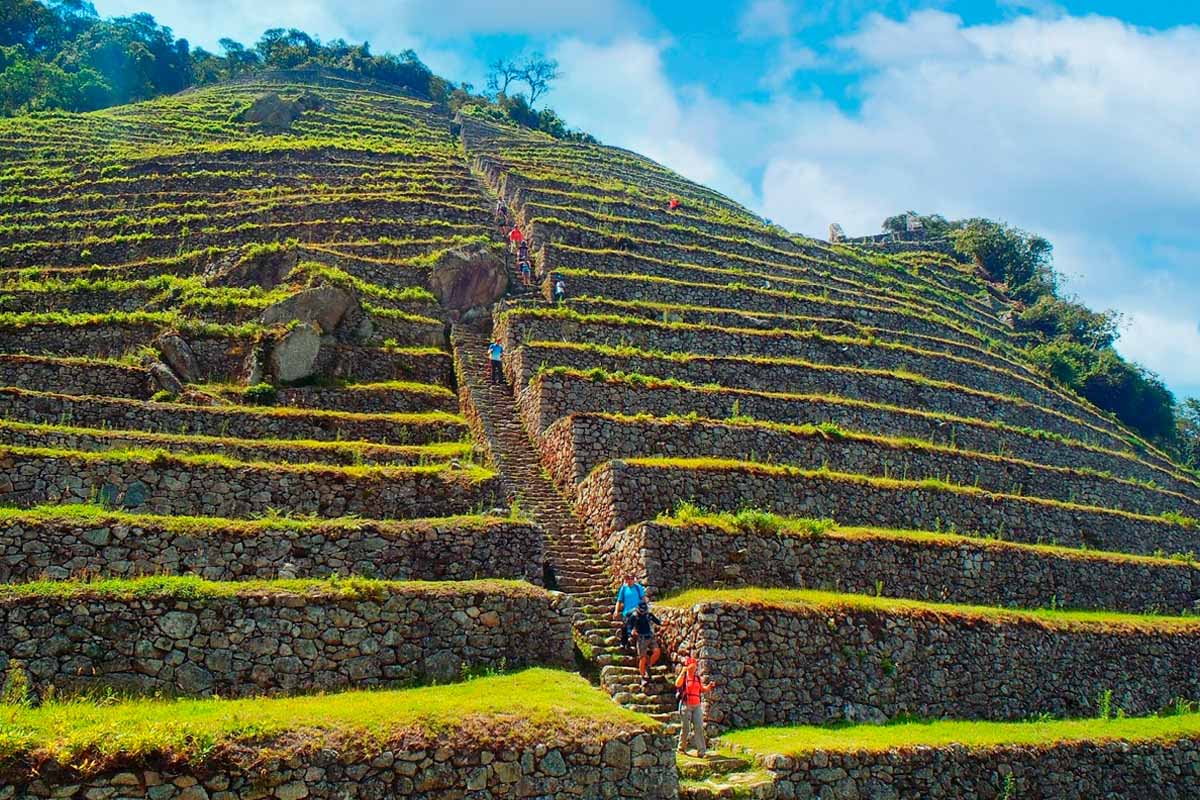
Located about 17 kilometers from the start of our ancient route, its name in Quechua means “Terrace of the Sun”, which reflects its deep relationship with the environment and its main productive role: to supply the walkers of the empire.
This complex displays an amazing series of stepped terraces that show Andean farming engineering. Also, the site includes a large central square and an exact system of channels and fountains, designed to take advantage of sunlight and high mountain rains, allowing for highly efficient farming.
Among the features that make Intipata one of the most unique ruins of the Inca Trail, the following stand out:
- More than 40 farming terraces: Arranged in the shape of an amphitheater on the hillside, taking advantage of every square meter of farmable land.
- Exact sun orientation: The terraces are lined up to maximize sun exposure, key for high-altitude farming.
- Natural viewpoints: From its upper levels you can see a panoramic view of the Urubamba valley and Winay Wayna, its neighboring site.
Unlike other sites on the tour, Intipata was not mentioned in the Spanish colonial chronicles and remained mostly unknown to the academic world until well into the 20th century. Exploring Intipata gives us a direct and impressive view of the great capacity for land adaptation and the genius of a civilization that changed the landscape of the Andes forever.
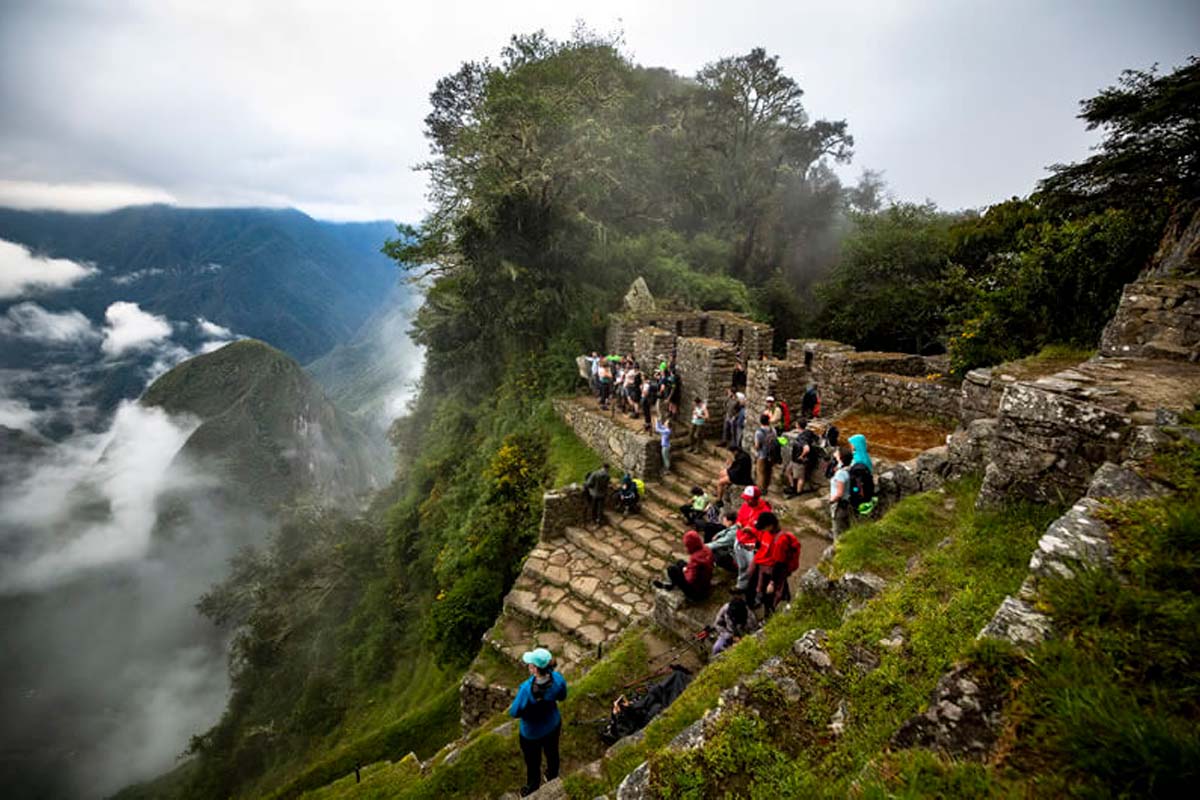
7) The Sun Gate (Inti Punku)
As we get closer to the highest point of our expedition, just 2.5 kilometers from the finish line, we find the Sun Gate, also known as Inti Punku. This impressive stone structure worked as a checkpoint and official entrance to the Machu Picchu sanctuary, protected by guards who controlled access to the citadel.
Being dedicated to the sun god (Inti), this high place had a deep ceremonial and religious importance for the Inca people. Also, its location on the ridge of a mountain offers the first, and possibly the most spectacular, wide view of the architectural wonder that waits patiently in the lower valley.
Among the aspects that make Inti Punku a memorable end for the ruins of the Inca Trail, these stand out:
- Astronomical alignment: During the June solstice, the sun lines up with the gate and Machu Picchu, an event that the Incas would have planned on purpose.
- Access control function: Its design in the shape of a narrow doorway allowed to control the passage of pilgrims and officials to the citadel.
- The first look: From here you get the first full view of Machu Picchu after four days of walking, a moment that many hikers describe as the highest emotional point of the trip.
Fun fact: Many walkers choose to arrive at the Sun Gate before sunrise to witness how the first rays of sun “wake up” Machu Picchu, a show that lasts just a few minutes and depends entirely on the sky being clear.
Nowadays, reaching this doorway represents the biggest reward for those who explore the ruins of the Inca Trail. From there, you can watch how the morning light slowly reveals the shapes of Machu Picchu.
8) Machu Picchu
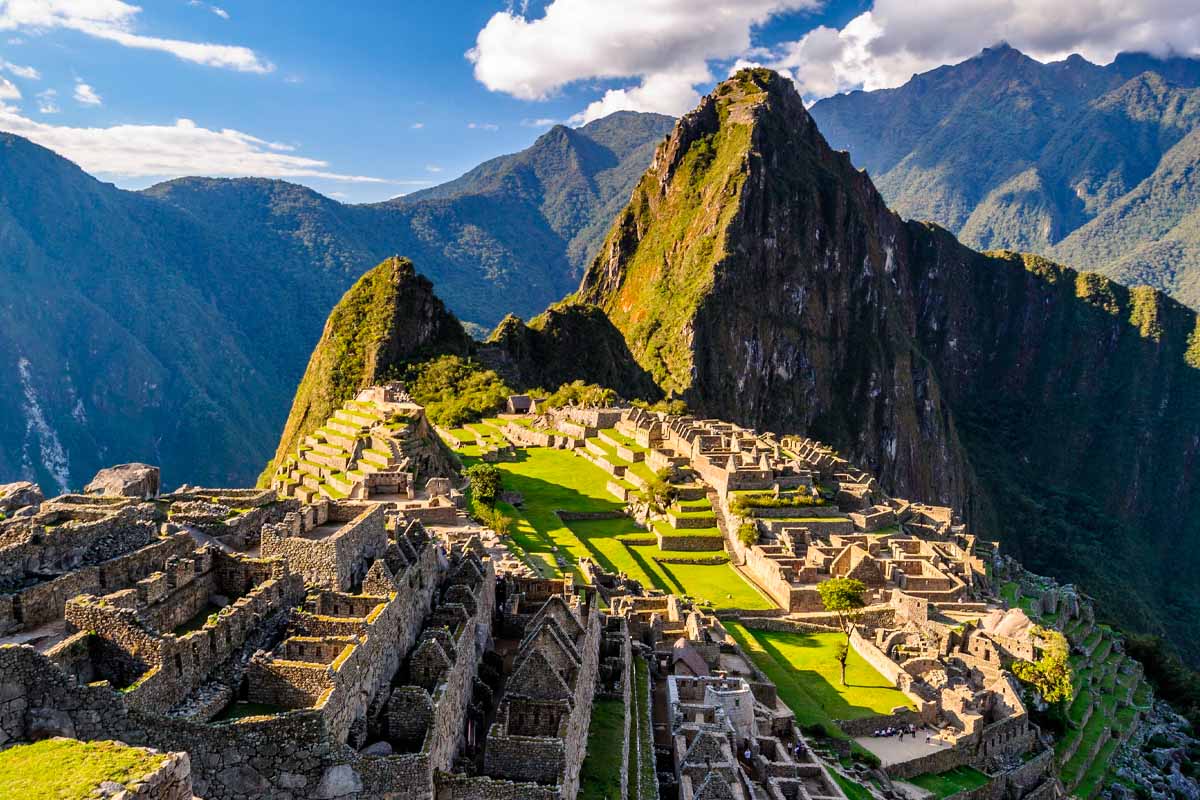
The glorious final destination of our trip is the Machu Picchu citadel, the architectural peak of the 15th century, recognized as the most iconic and impressive archaeological site in the world. This building, located in the heart of the mountains, was built during the rule of the emperor Pachacutec and was kept over time after the empire was abandoned.
This complex amazes with its perfect terraces, sacred rooms, ceremonial squares and an advanced drainage system designed to resist erosion and landslides. Also, its natural environment, surrounded by the lush cloud forest, highlights a beautiful landscape that attracts explorers from all corners of the planet.
Among the milestones that make Machu Picchu the final jewel of the ruins of the Inca Trail, these stand out:
- More than 150 buildings: Spread between agricultural, urban and religious sectors, connected by stairs and stone channels.
- World recognition: Declared a World Heritage Site by UNESCO in 1983, and crowned as one of the New Seven Wonders of the Modern World in 2007.
- Earthquake-resistant engineering: Its walls, built without mortar, adjust slightly to earth movements, which has helped keep it safe for centuries.
In spite of more than a century of research, archaeologists still debate if Machu Picchu was a royal resting home for Pachacutec, an administrative center or a religious sanctuary, since there is no final agreement about its original function.