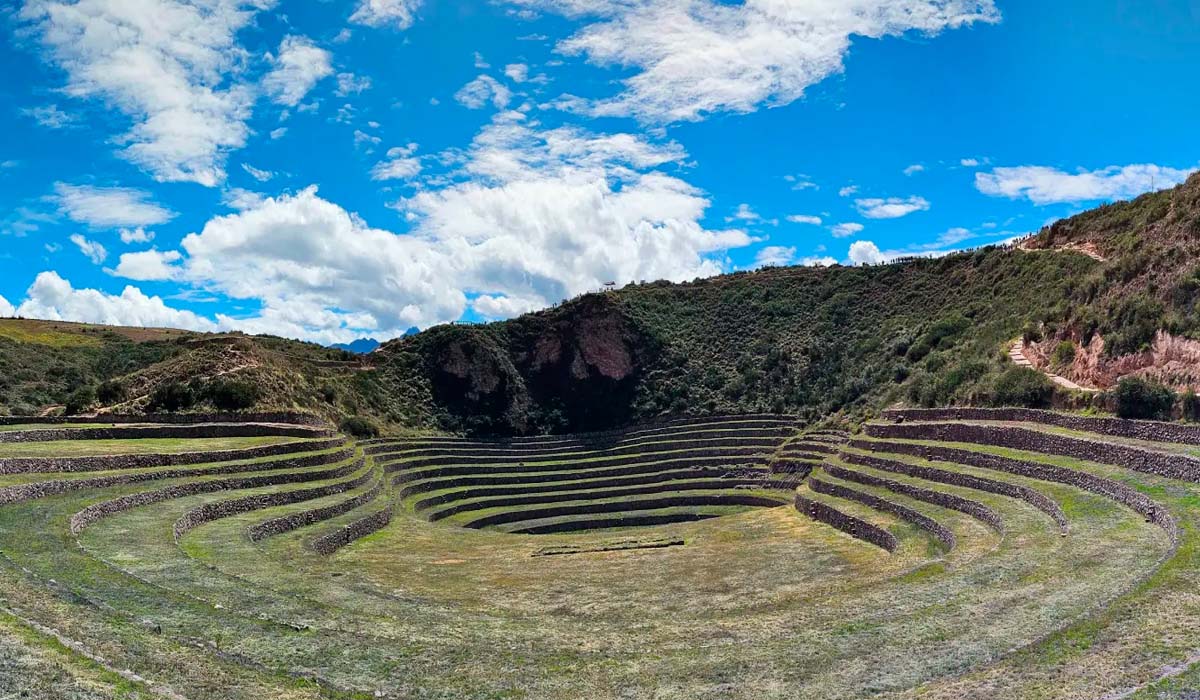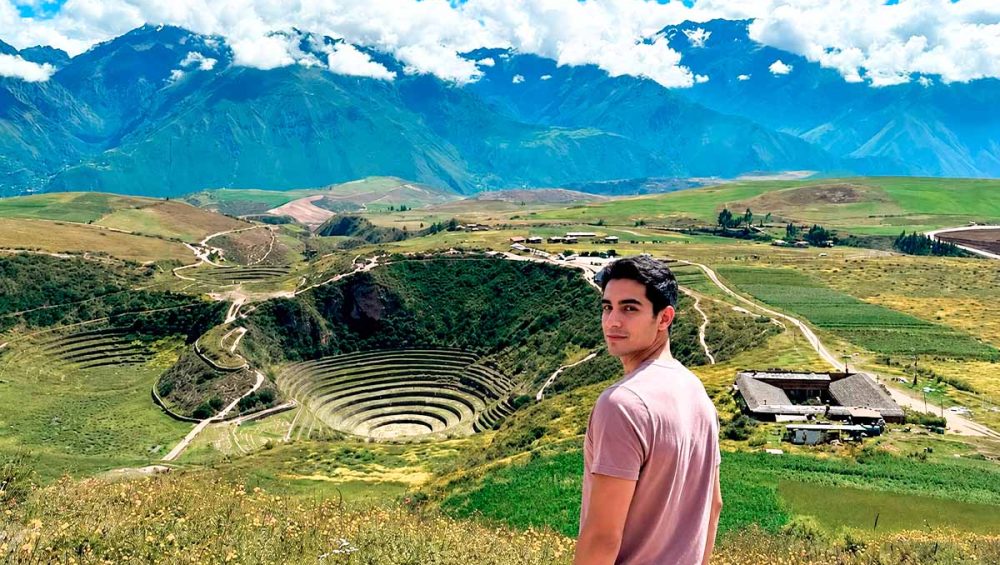
Most people arrive at Moray, just to take the photo from the viewpoint and continue on their way. And it is understood: from above, you can contemplate the concentric terraces sinking into that natural bowl accompanied by the mountains that surround the Sacred Valley. Therefore, it is difficult not to keep that postcard.
But Moray is not a simple landscape designed to be observed. What is seen from the edge is not a fortress or a temple in the conventional sense. It is an agricultural research center. One of the most advanced and best designed in the ancient world, built by a civilization that understood nature with a depth that still surprises scientists today.
The Incas not only knew how to carve stone with extraordinary precision; but they also knew how to observe, experiment, and draw conclusions. Moray Cusco is the clearest evidence of that: a place where knowledge about the climate, the soil, and the plants was translated into architecture, and that architecture produced useful data to feed an empire. In this travel guide, we are going to tell you everything about Moray: what it was, how it worked, what makes it so extraordinary, and how to get there to see it with your own eyes.
A little bit about Moray
Moray is one of the most interesting archaeological sites in the entire Sacred Valley of the Incas. At first glance, what you see are concentric circular terraces that spiral down to the bottom of a natural depression, like a giant amphitheater carved into the Andean geography. The image is fascinating on its own. But what makes Moray truly interesting is what was behind that construction.
Most researchers agree that this complex worked as an agricultural laboratory: a space designed to create controlled microclimates and experiment with crops at different temperatures and altitudes. Each level has slightly different climate conditions, and the Incas knew exactly how to take advantage of that. It was not decoration or architecture for the sake of building. It was applied science.
Going to Moray is one of the best decisions for those who want more than ruins and photos. Exploring this historical place represents an ideal decision for those looking for immersive cultural tourism, adventure routes close to the city of Cusco, and a truly unforgettable educational experience.
Its history
The history of this place begins long before the Incas. The first to live in and care for this part of the Sacred Valley were the Ayamarca and Maras people, cultures that settled here, until the Inca expansion arrived to change everything. As happened with the other towns in the region, they were absorbed into the great Tahuantinsuyo Empire.
However, that meeting was not just a conquest: it was also an exchange. The farming knowledge that these people had gathered over generations was not lost; instead, the Empire took it, studied it, and took it further. That is how Moray was born, a place designed not to feed the masses, but to experiment, research, and understand how to grow life in the most diverse conditions. Among its terraces, curiously, it was the coca leaf that was grown in the greatest amount.
With the arrival of the Spanish, Moray fell into silence. No one wrote about it, no one recorded it, and little by little, the plants covered its shapes until making them disappear. It stayed like that for centuries, sleeping under the brush, until in 1932 an expedition found it again. Years later, researcher John Earls dedicated his work to uncovering the mystery of its design and reached a conclusion that no one argues today: Moray was, in its time, the most advanced farming lab of the Andean world.
-
What are they for and what are the functions of the terraces?
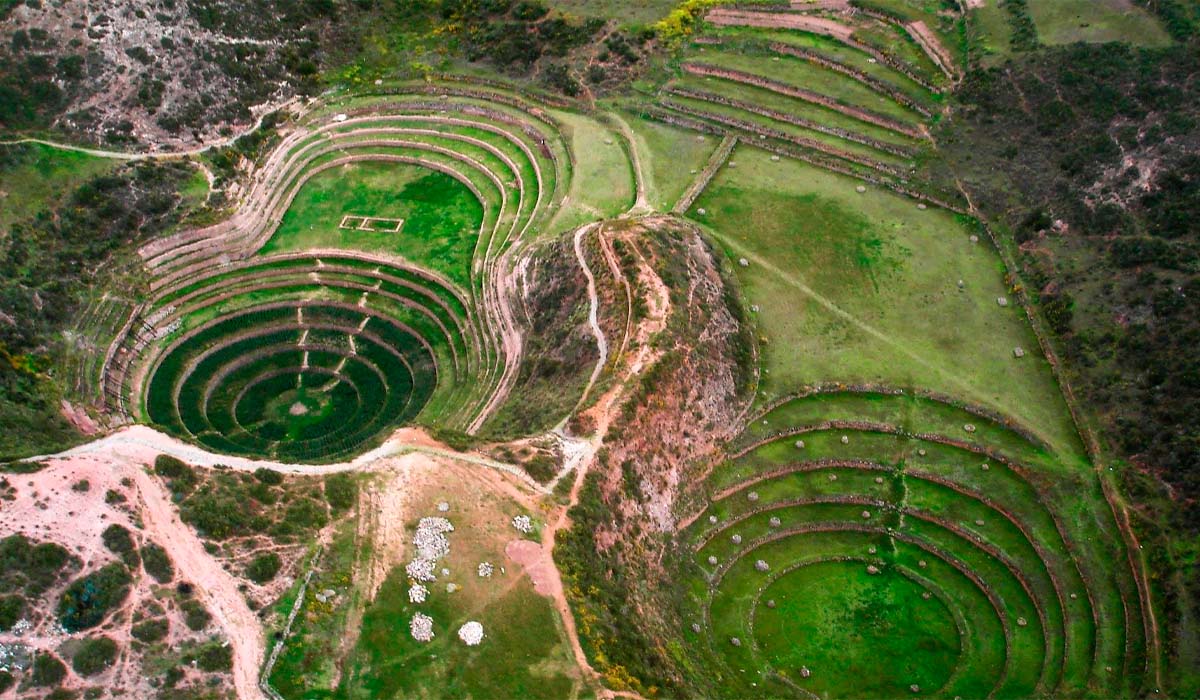
The first thing that surprises you when visiting Moray is its scale: these circular terrace complexes reach up to 150 meters deep, with each stepped level about 1.80 meters high. But beyond its size, what is truly amazing is what happens inside: thanks to its design, the site creates about 20 different microclimates. An achievement that, coming from a civilization without modern tools, still leaves today’s engineers speechless.
The system works in blocks of four terraces. At the bottom, where the wind barely reaches and moisture gathers, temperatures can drop close to 0 °C. Going up to the next block, the environment changes slightly: about 3 °C more, enough to make a difference in what can grow there. And on the upper terraces, the sun hits harder and the seasons are felt more strongly, especially during the dry season, which runs from April to October. To complete the system, the watering channels are built with a carefully calculated slant, sharing the water evenly across each level.
-
What was grown in this laboratory?
Under everything that is seen today, there is something that is not so visible but that explains everything: each terrace was built on retaining walls and filled by hand with fertile soil, also connected to a well-thought-out irrigation network. That control of the environment is what allowed the Incas to work with more than 250 different plant species, distributing them according to the microclimate of each area.
In the deepest terraces, where the environment is more humid and cool, the coca leaf grew along with various medicinal plants. In the middle block, the conditions were ideal for grains like quinoa and kiwicha, foods of high nutritional value in the Andean world. And in the highest part, with more sunlight and greater exposure to the open sky, the foods that supported the empire were grown: different varieties of potato and corn.
How to get there from Cusco
The most common route leaves from Cusco following the road to the Sacred Valley Peru, passing through the towns of Maras and Pichingoto. In total, the trip by vehicle takes about an hour and a half. Also, if you want to go on your own, there is public transport that leaves from Pavitos street, in the center of Cusco.
But if you plan to combine the visit with the Maras Salt Mines, the most practical thing is to join an organized tour: it solves the transport and you also go with a guide. There are options for all budgets, from shared groups to private tours with a custom itinerary.
About tickets, prices, and schedules
To enter Moray you need the Cusco Tourist Ticket, specifically Circuit III. With that same ticket you can also visit the Pisac Site Museum and other points of the Sacred Valley. The cost is 70 soles, with reduced rates for students and foreigners with accredited residence.
The site opens every day of the year, from 7:00 a.m. to 5:00 p.m. If you can, go early: besides avoiding crowds, the morning light makes the terraces look especially good in photos.
Weather, Season, and Tactical Expedition Tips
To begin, it is essential to understand that the weather in the heights of Moray remains mostly cold and dry for most of the year. In this sense, if you plan your visit between the months of June and August, get ready to face freezing mornings that contrast sharply with a midday sun that raises the temperature very quickly. On the contrary, if you decide to venture between December and March, you will enter the rainy season; a logistical challenge that, however, rewards explorers by revealing an intensely green and spectacularly photogenic Andean landscape.
Likewise, to guarantee success and maximum comfort during your exploration of this mysterious laboratory, our expert team suggests equipping yourself strategically with the following essential items:
- Layered thermal clothing: To adapt quickly to the drastic temperature changes offered by the microclimate of the site.
- Sun protection: Wide-brimmed hat and broad-spectrum sunscreen, since the radiation in the Andes is extremely intense even on cloudy days.
- Tactical supplies: Purified water and energy snacks, considering the limited availability of supply services within the archaeological complex.
- Trekking footwear: Ergonomic shoes with excellent grip to walk safely on the uneven and stepped terrain.
Finally, we will keep our operational channels always ready to answer any last-minute questions about your equipment, the weather conditions of the day, or the protocols to visit the site in the rainy season, providing fully updated recommendations based on the real conditions of the ground.
Things you did not know about Moray
The more you know about Moray before arriving, the more things you find when you are there. Here are some facts you probably did not know:
- When the first explorers arrived at the site, they assumed that these huge circular terraces were amphitheaters: spaces for political meetings or ceremonies. The theory changed when a network of hidden irrigation channels that distributed the water was discovered; this finding was what began to reveal that Moray was, in fact, an agricultural research center.
- The scientific curiosity of the Incas had no geographical limits. They brought plants from the coast, the jungle, and different heights of the mountains to observe how they behaved in this controlled environment. And not only that: everything indicates that Moray also worked as an astronomical observatory, where the Andean wise men followed the development of the crops in relation to the cycles of the cosmos and the seasons of the year.
- That temperature difference between levels marked what grew on each terrace. In the deepest and warmest terraces, corn, fruits, and coca were grown. Going up a bit, where the air is cooler, quinoa and kiwicha thrived. And on the highest terraces exposed to the cold, the potato was the main character.
- Finally, even the name keeps a mystery. Nobody knows for sure where the word “Moray” comes from. There are those who say it comes from Muyu (round) and Uruy (down). Others propose that it derives from Aymoray, which in Quechua refers to the corn harvest. And a third theory points to the Moraya, the white freeze-dried potato that is dehydrated in the heights. The debate is still open.
Can you visit Moray with children?
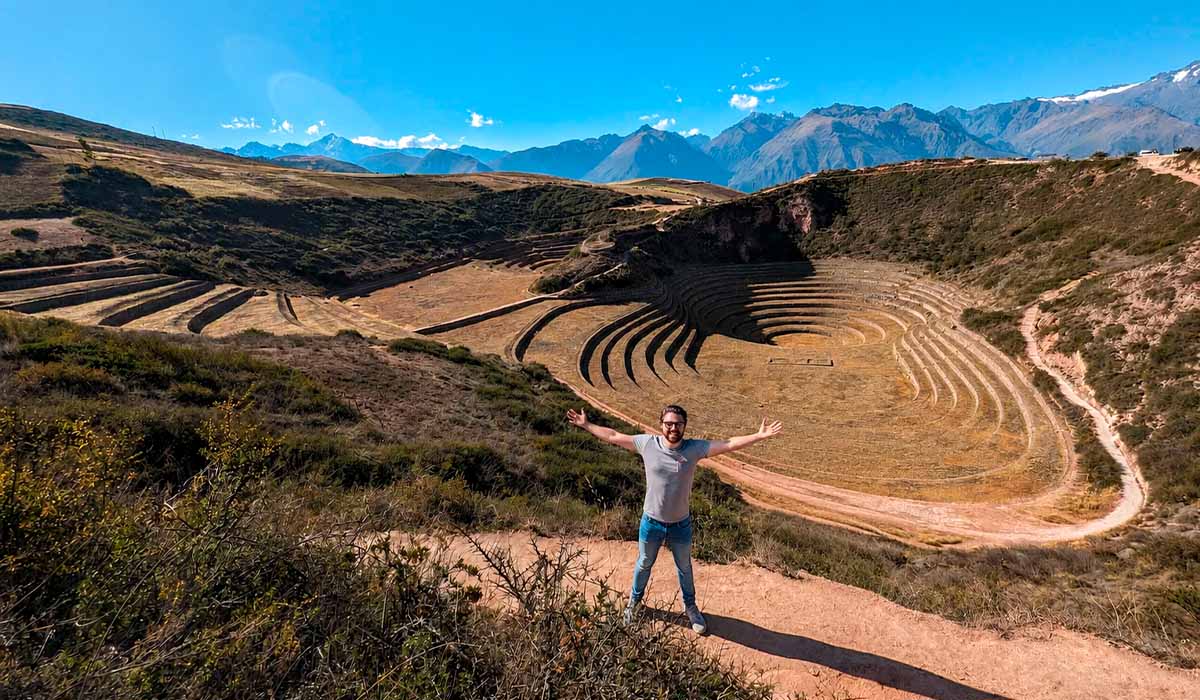
Yes. Moray is one of those places that catches children’s eyes immediately: the paths are safe, there is plenty of space, and the circular geometry of the terraces wakes up a natural curiosity in the little ones. If you also combine the visit with the Maras Salt Mines, just a few kilometers away, you have a complete day that mixes history, science, and landscape in a way that is hard to forget.
Why include Moray in the itinerary?
It is normal to compare Moray with other sites in the Sacred Valley like Pisac or Ollantaytambo. But the comparison is not completely fair, because they are different experiences. Pisac and Ollantaytambo impress with their military and ceremonial architecture. Moray, on the other hand, talks about science: about how the Incas observed nature, measured it, and replicated it inside a controlled space, without destroying it.
If you are looking for something beyond the classic route, Moray is exactly that. An ancient site whose purpose still generates debate, visually striking and, above all, little understood. The kind of place that makes you leave with more questions than you had when you arrived.