
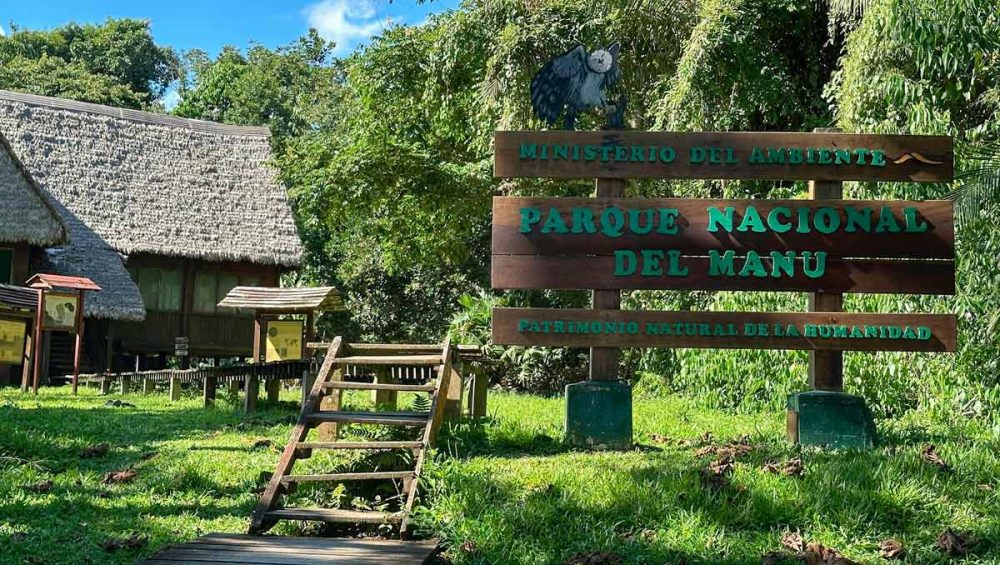
Manu National Park is located in southeastern Peru, between the regions of Cusco and Madre de Dios. It is a protected natural area with international recognition as a Biosphere Reserve and UNESCO World Heritage Site. Its territory drops from the Andes to the Amazon lowland jungle within the same protected area.
What makes it different from other jungle destinations in Peru? In the Peruvian Amazon there are several places to experience the jungle, but Manu offers a trip that goes from the cloud forest to the lowland jungle, with changes in landscape, weather, and wildlife in just a few days. Also, part of the park has regulated access, so it is only visited with authorized operators, and the route starts from Cusco.
In this guide we tell you how to get to Manu from Cusco, what types of tours exist, and what wildlife can be seen. It also covers what the best time to travel is, what to bring, and how to combine Manu with Machu Picchu in the same trip.
What is Manu National Park?
Manu is a protected natural area managed by SERNANP, the agency of the Peruvian State in charge of protected natural areas. The park spans the provinces of Paucartambo, in Cusco, and Manu, in Madre de Dios, and covers the entire basin of the Manu River (its size is 1,716,295.22 hectares).
It was created on May 29, 1973, and UNESCO recognized it as a Biosphere Reserve in 1977 and as a World Heritage Site in 1987. It is good to tell both designations apart: the Biosphere Reserve is broader and includes buffer zones and communities, and the national park is its core zone.
The area is usually described in three zones, with different access rules.
- Cultural Zone: This surrounds the park. There, farming communities take part in the conservation model, and it is the zone closest to Cusco. It is recommended to spend between 3 and 4 days there at least.
- Reserved Zone: Entry is only allowed with authorized operators. Access mixes road and river, and it is usually chosen by those who prioritize wildlife watching. It takes about a week.
- National Park: It is closed to tourism and is meant for research. Within the park’s territory there are Matsigenka people in initial contact and Mashco Piro people in voluntary isolation.
If you are putting together a broader trip, in The Best Tourist Places to Visit in Peru there are other destinations that can be combined with Manu.
Biodiversity: From the Andes to the lowland jungle
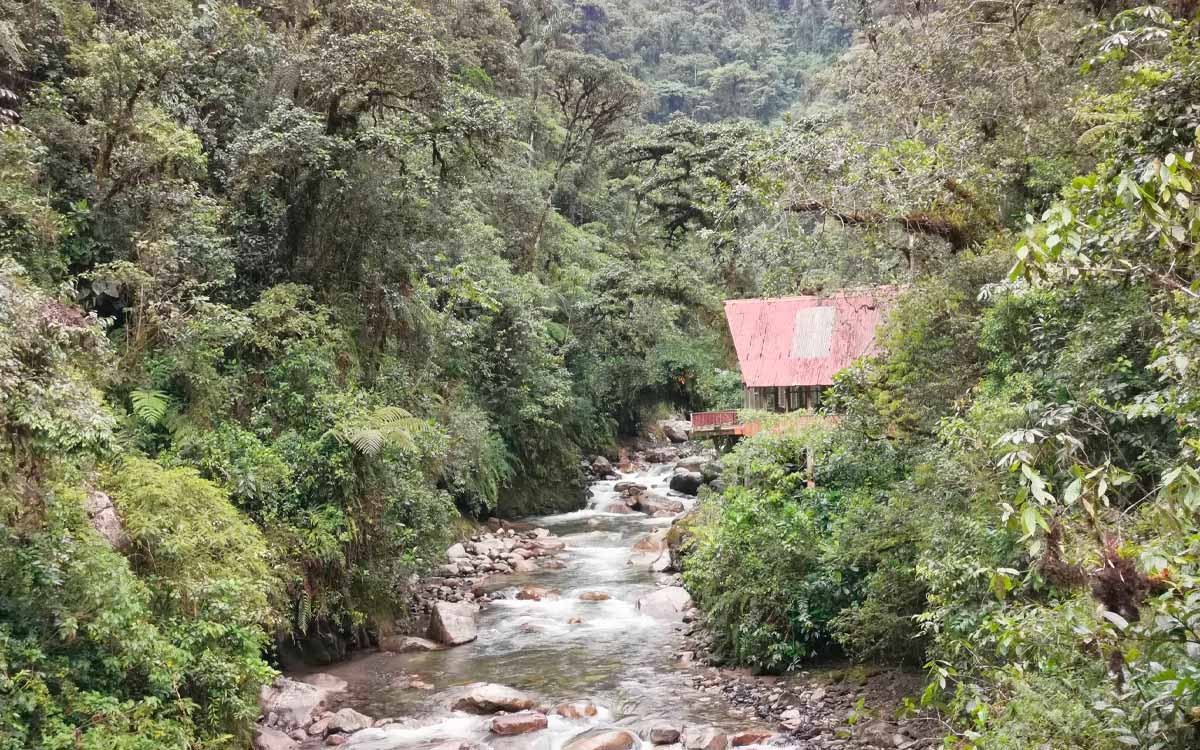
Manu’s altitude changes determine what plants and animals are seen in each section. According to SERNANP, the trip includes puna landscapes, cloud forests, and lowland jungle.
Ecological floors in Manu
- Puna: These are the high Andean ecosystems of the park. It is the starting point of the descent from Cusco to the cloud forest.
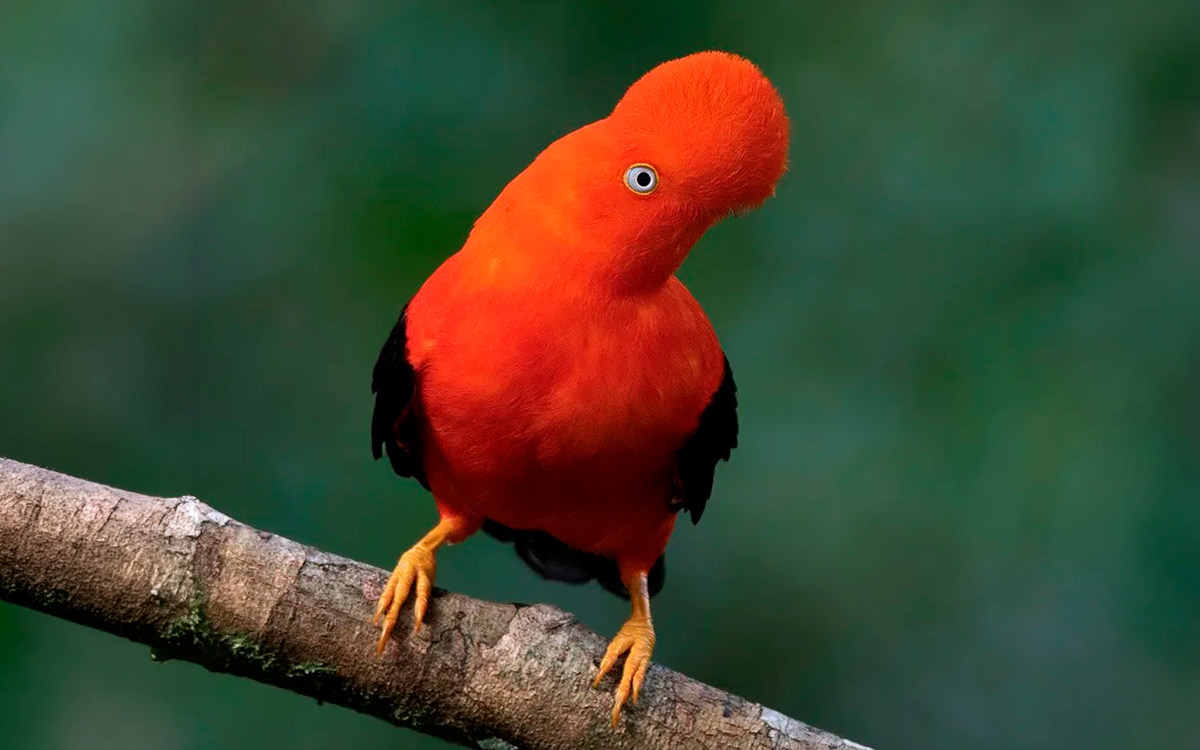
- Cloud forest: It is known for its misty forests, giant trees, waterfalls, and orchids. The Andean cock-of-the-rock and the spectacled bear live here. Above this floor there is a dwarf forest, between about 2500 and 3500 m.
- Lowland jungle: The descent ends in the Amazon plain, where Boca Manu is at 380 m above sea level. Here are the cochas, horseshoe-shaped lagoons formed by old river beds.
The cloud forest also surrounds Machu Picchu and is home to a surprising variety of species. Discovering Machu Picchu Flora and Fauna allows you to find representative animals of this ecosystem, like the spectacled bear and the Andean cock-of-the-rock. This natural richness extends toward the highest areas of the Peruvian Andes, where the Andean condor stands out as one of the most iconic species of the region.
Wildlife that can be seen
The wildlife changes depending on the ecological floor. These are the species that visitors look for the most:
- Andean cock-of-the-rock: It is seen in the cloud forest, where males do their courtship dance. There are viewing points near the Kosñipata River, at about 1600 m.
- Macaws and parrots: They gather daily at the collpas, clay licks with mineral salts that serve as food. SERNANP includes the bird collpas among the park’s attractions.
- Giant otter: It is seen in the cochas. One of Manu’s most stable giant otter families lives at Lake Salvador, and the black caiman can also be seen there.
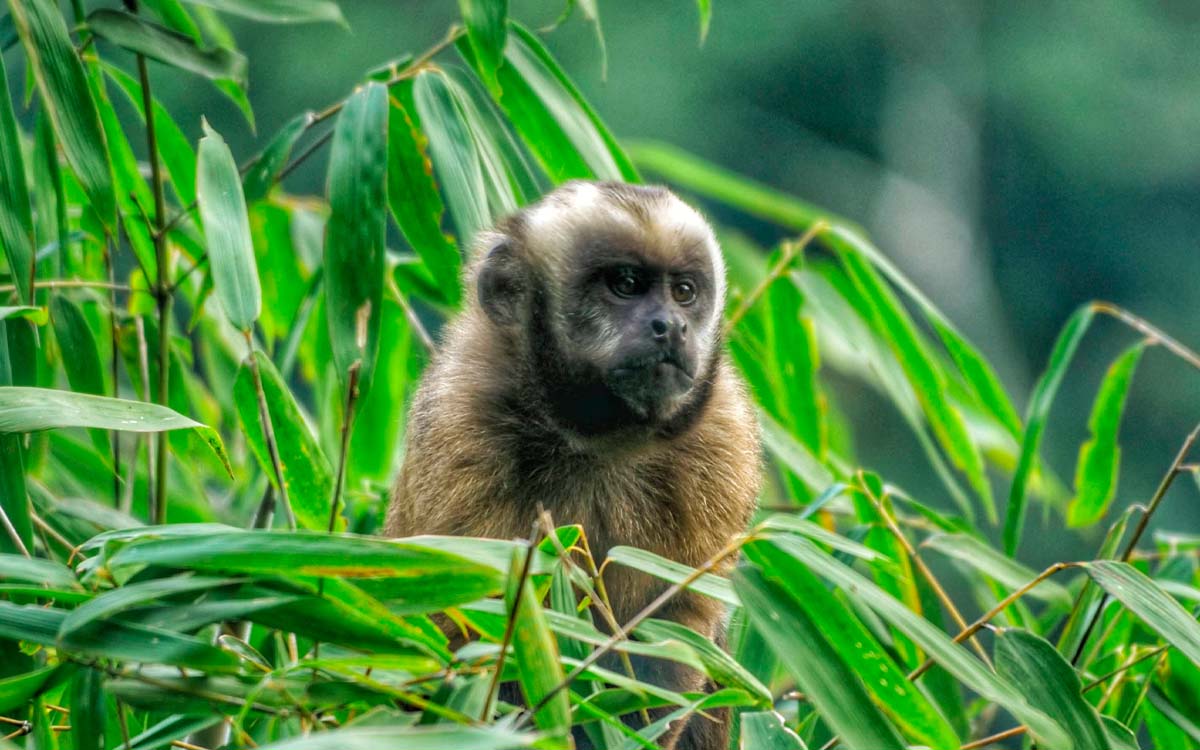
- Monkeys: There are several species of monkeys, and the howler monkey is seen along the riverbanks.
- Jaguar: It is possible to see it along the banks of the Manu River, but it is a shy animal, so sightings are not guaranteed.
- Others: Tapirs are also part of Manu’s wildlife and usually visit the mammal collpas, while a large variety of insects completes the biodiversity of these ecosystems. Among them, butterflies stand out, whose diversity can also be seen in New Butterfly Species, with species identified in the Machu Picchu region.
How to get to Manu from Cusco?
The routes leave from Cusco (or from Puerto Maldonado) and mix road, river and, in some cases, a small plane. The Manu river sector can only be entered with authorized operators by SERNANP, which publishes the list on its website. If you do not have a flight to Cusco yet, Where to Fly to Peru explains the flights from Lima and the airlines that operate that route.
- By land: The road route goes through Cusco, Huarcapay, Ninamarca, Paucartambo, Acjanaco, the cloud forest, Pilcopata and Atalaya. Up to Atalaya it is 224 km and about 9 hours in a tourist bus or 4×4 pickup, on a road that SERNANP describes in fair condition. Along the way are the Huacarpay lagoon, the Ninamarca chullpas and the town of Paucartambo. If you only want to see the High Andean sector, the trip Cusco, Paucartambo and Tres Cruces is 143 km, between 3.5 and 4 hours. Registration is done at the Acjanaco guard post, and the Tres Cruces viewpoint is 13,5 km from there. In this sector you can enter on your own or with a tourism company.
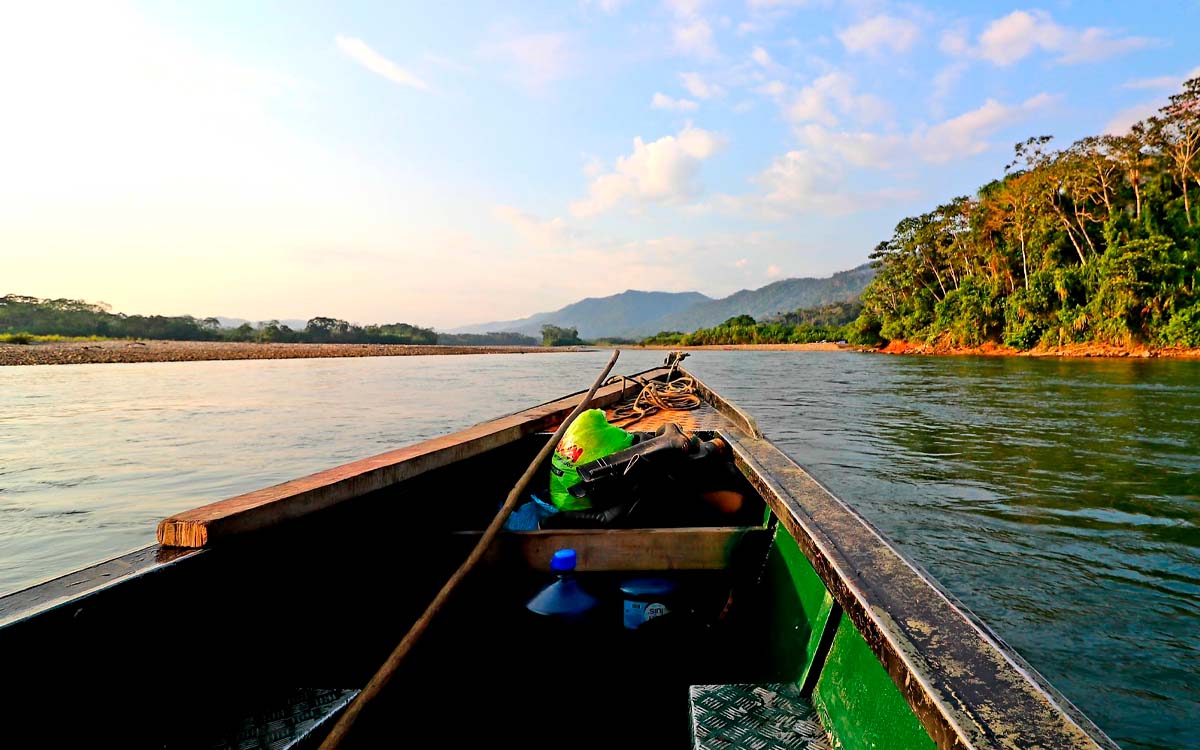
- By river to Boca Manu: From Atalaya the trip continues in a boat with an outboard motor down the Alto Madre de Dios river and then the Manu river, to the Limonal control post (137 km, about 7 hours). The trip goes through Boca Manu. The section along the Manu river between Limonal and Pakitza is 98 km and about 5 hours, which change depending on the water level. You can also get there from Puerto Maldonado: there are 180 km to Boca Colorado (about 8 hours) and then 130 km by boat to Limonal-Romero (about 7 hours).
- Air option: You can fly in a small plane from Cusco to the Boca Manu airstrip. The flight takes between 30 and 45 minutes, and from there you continue by boat to the lodge. These flights are charter or are scheduled based on demand, and depend on the weather, runway conditions, and the luggage limit (one operator states 8 kg per person). They are coordinated through the agency, so it is a good idea to confirm availability when booking.
Types of tours to Manu
Tours to Manu are different based on the area they visit, the days they last, and the lodging. In the High Andean sector you can enter on your own or with a tourism company. For the Manu river sector and the Pusharo petroglyphs you must hire an authorized operator by SERNANP. To choose an agency, Best Tour Agencies for Cusco explains how to check the authorizations of SERNANP and DIRCETUR.
Types of visits
- Cultural Zone: It is the closest to Cusco and the one that takes fewer days. The tours include lunch in the cloud forest, where species like the Andean bear and the Andean cock-of-the-rock live, and a night in an eco-lodge near Atalaya.
- Reserved Zone: You enter through the Manu river, with an authorized operator and with more days of travel. Here are the lakes with giant otters, the macaw and mammal clay licks, and the bird watching trails.
- National Park (intangible zone): It is closed to tourism.
What packages usually include
According to operator lists, packages usually include:
- Land and boat transport.
- Lodging in lodges with mosquito nets.
- Daily meals, with vegetarian and vegan options, and a guide in English and Spanish.
- Park tickets, rubber boots, first aid kit, and bags to repack.
- An informative talk before departure.
They usually leave out:
- Breakfast on the first day, alcoholic drinks, and travel insurance.
- Binocular rental and the single room supplement.
Comparison table
| Tour type | Days | Zone | What you see | Comfort level |
|---|---|---|---|---|
| High Andean Sector (Tres Cruces) | 1 | High Andean | Puna, cloud forest, and sunrise at Tres Cruces | No night in the jungle; camping as activity |
| Cultural Zone | 3 to 5 (some from 2) | Cultural Zone | Cloud forest, Andean cock-of-the-rock, Andean bear, and communities | Eco-lodges |
| Reserved Zone | 5 to 8 (SERNANP recommends 6) | Reserved Zone, Manu river | Oxbow lakes and giant otter, macaw clay licks, birds, monkeys, and black caiman; jaguar not guaranteed | Rustic lodges with mosquito nets |
| From Puerto Maldonado | 7 (SERNANP) | Reserved Zone, Manu river sector | Lowland jungle, bird clay licks, flora and fauna | Ecotourism lodges |
What to see and do in Manu?
Manu activities change depending on the sector. The cloud forest is crossed on the way from Cusco. The oxbow lakes, clay licks, and lowland jungle trails are in the Manu river sector, which can only be entered with an authorized operator. According to SERNANP, visiting hours in the Manu river sector are from 5:00 to 16:00 hrs.
Cloud forest and Andean cock-of-the-rock watching
The Andean cock-of-the-rock is seen in leks, display sites where males gather to compete for females. One of the best known is in the Kosnipata valley, next to the access road to Manu. The visit is done before dawn, from an observation hide. The males display all year round, and an operator points out September to November as the best months.
On this stretch you can also walk to see orchids, bromeliads, and cloud forest birds. SERNANP indicates a marked walking circuit of about 7 km (3 hours) between the Acjanaco guard post and the Pillahuata farm. In Tres Cruces, between May and August and with a clear sky, an optical phenomenon gives the impression that the sun appears twice in the same sunrise.
Macaw clay licks
Clay licks are clay cliffs on the riverbanks. Parrots, parakeets, and macaws gather to eat that clay, which gives them minerals and helps them neutralize toxins in their diet. They are watched from hides in the early morning hours. The species arrive at different times. At the Blanquillo clay lick, for example, the red-and-green macaws dominate in the mid-morning, in groups of more than 40 birds.
SERNANP mentions a hide in Salvadorcillo to watch the bird clay lick and a mammal clay lick in Pakitza, which tapirs and other species visit. Another widely visited clay lick is Blanquillo, in the Madre de Dios river, which some itineraries combine with the Reserved Zone. Activity at the clay licks depends on the weather and each day’s conditions.
Lakes and giant otters
Oxbow lakes are horseshoe-shaped lakes formed by old river channels, and giant otters and black caimans are seen there.
- Salvador Oxbow Lake: It is one of the largest in Manu and houses a stable family of river wolves (giant otters). It is toured by row catamaran, in a session of about 2 hours. There is more activity at dawn or dusk, when the otters go out to fish. Each group receives a scheduled turn.
- Brashco Oxbow Lake: It is on the left bank of the Manu river. SERNANP indicates that it has trails to watch primates, a pier, and a catamaran to tour the lake.
- Otorongo Oxbow Lake: It is on the right bank and, according to SERNANP, has an 18 m high viewpoint. However, some operators report that since September visits to the right bank have been suspended, including this viewpoint.
During visits you must not enter restricted areas (such as dens, camps, and otter feeding grounds) nor feed or handle animals.
Night walks and bird watching
Some lodges offer optional night walks with a guide to see nocturnal wildlife, such as kinkajous, olingos, and ocelots, besides frogs and insects. Since SERNANP sets visiting hours, it is best to confirm with the agency where they are allowed.
For bird watching, SERNANP highlights in the Manu river sector the Limonal Interpretation Center, with an observation platform in a palm swamp, and the Pakitza trail system, preferred by bird watchers. The most active hours are dawn and dusk. For other bird watching destinations in the country, in Activities and Sports in Peru there is a section dedicated to the topic.
What to bring and how to prepare?
The route to Manu goes from cold high altitude areas (Cusco and the High Andean sector) to a warm and humid lowland jungle. SERNANP indicates temperatures of between 5 °C and 30 °C, so it is a good idea to pack luggage for both climates.
Clothing, footwear, and repellent
- Clothing: Long-sleeved shirts and long pants, light and of light colors. Minsa recommends light-colored clothing that covers most of the body. Add warm layers for the nights of Cusco and the high Andean journey, and a waterproof jacket or poncho.
- Footwear: Comfortable hiking shoes. Many packages include rubber boots, so confirm if yours includes them.
- Repellent: Minsa recommends repellents with DEET from 15 to 25%. Apply sunscreen first and then repellent, because CDC warns that products combining both are less effective.
- Others: Hat, sunscreen, reusable bottle, personal medications, camera, and dry or airtight bags, because the humidity is intense. Binoculars can be rented from some operators.
Health: vaccines and health recommendations
- Yellow fever: Minsa recommends a dose at least 10 days before the trip to the jungle. Madre de Dios and the jungle areas of Cusco are among the risk regions, and in 2025 cases were recorded in several regions, among them Madre de Dios and Cusco. CDC recommends the vaccine for travelers 9 months of age and older visiting risk areas, and SERNANP also advises getting vaccinated. Peru does not require proof of vaccination to enter the country. Carry your card or certificate.
- Malaria: According to CDC, there is transmission in the Amazon below 2,500 m. The risk is negligible in the city of Cusco, Machu Picchu, and the Sacred Valley. Those visiting risk areas should consult with a doctor about prophylaxis, which depends on the itinerary.
- Insect bites: It is noted that visitors to Manu National Park have the highest risk of leishmaniasis, transmitted by sandflies. There is no vaccine or chemoprophylaxis, so protection consists of covering the skin and using repellent.
- Other vaccines: Hepatitis A vaccine is recommended for all travelers to Peru and typhoid (typhoid fever) for most, especially in rural areas. It is a good idea to keep routine vaccines up to date.
- Insurance: In Manu, travel by river takes hours and medical care outside of Lima is limited, according to CDC. It is a good idea to hire travel insurance with medical coverage, which many packages do not include.
Consult a doctor or travel clinic in advance, especially if you have any medical condition or allergy. For general safety tips when traveling through the country, see Is Machu Picchu Safe to Visit.
Frequently asked questions
- Can you enter Manu without an operator?
No. SERNANP indicates that to visit Manu National Park it is mandatory to use tourist operators authorized by the entity, which publishes the list on its website. Entry to the park has a general fee of S/ 30 for 1 day, S/ 60 for 2 to 3 days, and S/ 150 for 4 to 30 days. Agencies usually include it in the package. - How many days are needed?
It depends on the zone. The High Andean sector (Tres Cruces) is visited in 1 day. For the Cultural Zone, a 3 to 4 day tour is suitable. For the Manu river sector (Reserved Zone), SERNANP recommends 6 days and operators offer tours of 5 to 8 days. Much of the time goes into transfers: from Cusco to Atalaya it is about 8 hours by road, and from Atalaya to Limonal, about 7 hours by boat. - How much does a tour cost?
The price changes depending on the duration, zone, lodging, and group size. In operator lists checked in September 2026, 3 to 4 day tours to the Cultural Zone start from US$ 299 per person. Those of 5 to 6 days to the Reserved Zone range from about US$ 890 to US$ 1,800 per person. Compare what each package includes before deciding. - Are jaguars seen?
It is possible, but not guaranteed. A study with camera traps estimated between 193 and 241 jaguars in the lowlands of Manu. SERNANP indicates that, with luck, they can be seen on the Manu river. It is an elusive animal and no operator can assure a sighting. - Is there signal or wifi?
Very little. One operator indicates there is signal the first day and the morning of the second, and almost none after that. Another states there is no internet or signal in the jungle. Some lodges, like Casa Matsiguenka, mention wifi, and in several electricity is limited, so it is a good idea to bring a power bank. Confirm with your agency what each lodging offers. - Is it safe?
With an authorized operator and following the guide’s instructions, yes, although there are risks worth knowing. The U.S. travel advisory for Peru, reissued in September 2026, remains at level 2 (exercise increased caution). The main risks are health-related (mosquitoes, yellow fever), which are addressed in the preparation section. For more recommendations, see Safe Mobility Guide.