
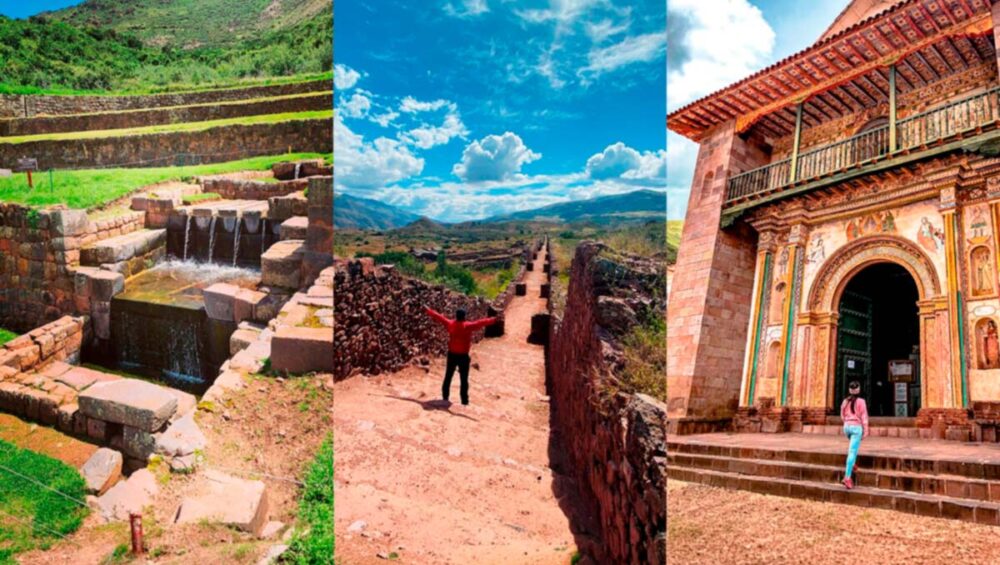
When people think of a cultural trip through Cusco, the Sacred Valley is usually the first stop. And with good reason: Pisac, Ollantaytambo and Moray are spectacular, but during the high season, they are also full of buses and lines. What if there were a route with history, landscapes, and impressive architecture, but without so many crowds? That route exists, and it is located on the other side of the city: the South Valley of Cusco, a quieter, less-known tour with a pace that allows you to enjoy each site without rushing.
The South Valley also holds a history that dates back long before the Inca Empire. According to ancient traditions, the Incas arrived in Cusco from lands to the south, a region that played an important role in the development of the cultures that preceded their expansion. Here you will find traces of different eras: from Piquillaqta, one of the main urban centers of the Wari culture, to the impressive Inca constructions of Tipón and Raqchi. A journey that allows you to discover how different civilizations left their mark on this part of Cusco.
In this blog, you will find the most important details of the South Valley of Cusco: which sites to visit, what ticket you need, how it compares with other destinations in the region, how to organize the tour, and some practical tips to plan your visit. Everything with the essential information so you can decide if this route fits into your itinerary.
What is the South Valley of Cusco and where is it located?
The South Valley of Cusco is the tourist name given to the route that leaves the city toward the southeast, following the highway that goes to Urcos, Sicuani, and Puno. It is not a valley with official boundaries, but rather a corridor with several archaeological and colonial sites that bring together three layers of history: the Wari culture, the Inca Empire, and the Andean Baroque of the colonial era. For this reason, in a single tour, you can go from a pre-Inca city to a temple dedicated to Wiracocha and a church covered in murals.
Location and distances from Cusco
The city is at 3,399 m.a.s.l., and the route moves away from it toward the southeast. These are the approximate distances by road:
| Site | Distance from Cusco | Approximate Time |
|---|---|---|
| Tipón | 27 km | 30 min |
| Piquillaqta | 32 km | 35 min |
| Andahuaylillas | 40 km | 45 min |
| Raqchi | 110–120 km | 2 to 2.5 h |
The route: From Cusco to Raqchi
The most logical order is the one following the highway, from west to east (you can mark it like this on the map):
- Cusco → Tipón: First stop and the closest one. It is the famous “water temple,” with Inca terraces and channels that still function today.
- Tipón → Piquillaqta: Just about 6 km further ahead. Here you can see the ruins of a large city of the Wari culture, prior to the Incas.
- Piquillaqta → Andahuaylillas: The town where the church of San Pedro Apóstol is located, known as the “Sistine Chapel of the Americas” for its murals and interior decoration.
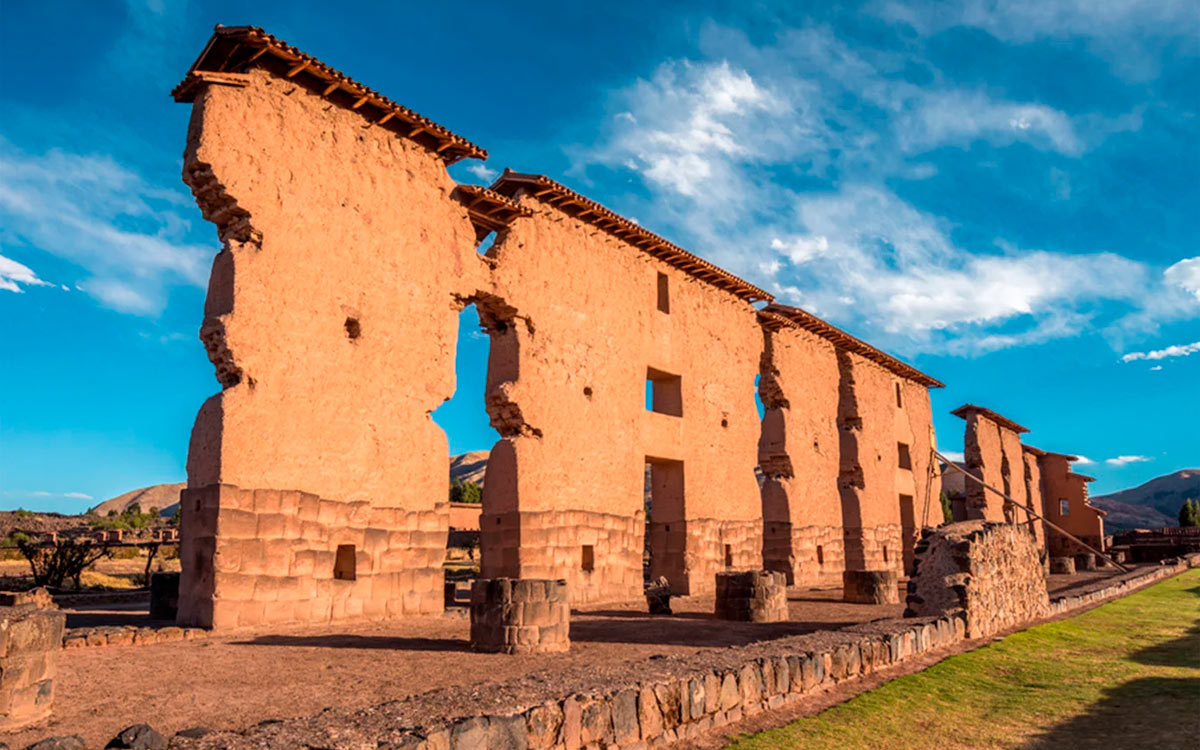
- Andahuaylillas → Raqchi: The longest stretch. Raqchi is located at about 3,500 m altitude and preserves the Temple of Wiracocha, with its huge central wall and hundreds of circular colcas (storehouses).
Fact: Tipón, Piquillaqta, and Andahuaylillas are easily combined in a half-day outing. Raqchi is much farther away and is almost always visited on a full-day tour or a separate trip.
Why is it an alternative to the Sacred Valley?
- Fewer crowds: Being a less crowded circuit, you can explore the sites more calmly and take better photos.
- Different history: Instead of citadels and markets, here you see hydraulic engineering, Wari urban planning, and Baroque art.
- Proximity and ease: With an outing of just a few hours, you can see three attractions, and it does not require great physical effort.
- Ideal complement: It works very well as an extra half day for anyone who has already toured the Sacred Valley or wants something different.
What to see in the South Valley of Cusco?
The South Valley brings together sites from different eras and cultures: from Inca hydraulic engineering and an ancient Wari city to a temple dedicated to Wiracocha and a colonial church known for its murals. The tour also offers natural landscapes, traditional towns, and countryside restaurants that complement the visit. These are the most highlighted places usually visited:
1. Tipón: the “water temple”
Tipón is one of the best examples of how the Incas mastered water. The complex brings together 13 agricultural terraces, channels, ceremonial fountains, and a wall, and water from the springs still flows through those channels today.
According to tradition, it was one of the royal residences and gardens ordered to be built by the Inca Wiracocha, possibly for his father, Yahuar Huaca. Its terraces also functioned as an agricultural “laboratory” thanks to the variety of microclimates.
2. Piquillaqta and Rumicolca: the Wari city
Piquillaqta is a large city of the Wari culture, which flourished between the 6th and 10th centuries, long before the Incas. It is believed to have had about 700 buildings, with stone and adobe walls reaching up to 12 meters in height. The site sits on the slopes overlooking the Huacarpay lagoon.
A short distance away (about 10 to 15 minutes on foot according to some sources) is Rumicolca, a huge stone gateway. Its core is of Wari origin, likely an aqueduct, and the Incas reinforced it with carved blocks, turning it into a control gate along the road between Cusco and Puno.
3. Andahuaylillas: The “Sistine Chapel of the Americas”
From the outside, the church of San Pedro Apóstol looks simple, with whitewashed adobe walls. On the inside, however, almost every surface is painted or covered in gold: murals, gilded altarpieces, polychrome ceilings with Mudéjar influence, and a large collection of canvases. It was built over an ancient sacred Inca space between the late 16th and early 17th centuries, and inside it houses a restored organ.
A few steps away is the Ritos Andinos Museum, an ethnological museum about corn and coca rituals, with unique pieces such as mummies and elongated skulls.
4. Raqchi: the Temple of Wiracocha
Raqchi is the farthest stop, but also the most unique. Its main structure is a massive rectangular building measuring about 92 meters long by 25.5 meters wide, with a central wall about 12 meters high.
Around it, more than 150 circular colcas (storehouses) and water fountains can be seen. It is believed that the site was part of an annual Inca pilgrimage, and its architecture is different from that of other complexes in the region.
5. Route extras
- Huacarpay Lagoon: A protected wetland about 30 km from Cusco. In its four permanent lagoons, more than a hundred species have been recorded, making it a good spot for a quiet break.
- Oropesa and its bread: The area is known for its ovens and traditional bread.
- Typical food: In the countryside restaurants of Tipón, it is common to find baked guinea pig (cuy al horno), stuffed hot pepper (rocoto relleno), and fried pork (chicharrón).
- Towns and handicrafts: The main squares of Andahuaylillas and the souvenir stalls next to the sites complete the visit.
Tourist ticket and entry fees for the South Valley of Cusco
To tour the South Valley, you need to combine two types of entry tickets: the Tourist Ticket of Cusco (BTC) for some sites and independent entry tickets for others.
Tourist Ticket of Cusco (BTC)
The BTC is managed by COSITUC and comes in two types. Prices are for foreign adults.
| Ticket | What’s Included | Cost | Validity |
|---|---|---|---|
| Partial – Circuit 2 (City and South Valley) | Tipón, Piquillaqta, and six city attractions | S/ 70 | 2 days |
| Integral (Full) | All 16 sites across the three circuits | S/ 130 | 10 days |
Circuit 2 includes: Tipón, Piquillaqta, the Qorikancha Site Museum, the Regional Historical Museum, the Museum of Contemporary Art, the Popular Art Museum, the Qosqo Center of Native Art, and the Pachacútec Monument.
Where to buy it:
- It is not sold online. It is bought in person at the COSITUC office (Av. El Sol 103, Galerías Turísticas, office 101), at the ticket counters of the monuments, or, for an extra fee, at some agencies.
- An ID document is required. For foreigners, a passport.
- Children under 10 years old enter for free to the sites included in the Tourist Ticket of Cusco.
Independent entry fees
- Andahuaylillas: The church of San Pedro Apóstol is not included in the BTC. It is paid separately (S/ 15–18) and taking photos inside is not allowed. The Ritos Andinos Museum has a low cost, with some operators listing S/ 3. Carry cash in soles.
- Raqchi: The Temple of Wiracocha has its own entry ticket, managed by the Ministry of Culture, and is bought at the site’s ticket window. According to several sources, it costs between S/ 10 and S/ 15, with a reduced fee for students, and is open every day, approximately from 7:00 to 18:00 hours.
Cost summary
| Site | Entry | Cost |
|---|---|---|
| Tipón and Piquillaqta | BTC (partial or full) | S/ 70 / S/ 130 |
| Andahuaylillas (church) | Independent | S/ 15–18 |
| Ritos Andinos Museum | Independent | Approx. S/ 3 |
| Raqchi | Independent | S/ 10–15 |
| Rumicolca | Not needed | Free admission |
South Valley vs. Sacred Valley vs. Cusco City: How do they differ?
If you are already planning your Cusco itinerary, this table helps you see what each area offers and which one best fits your trip:
| South Valley | Sacred Valley | Cusco City (Circuit 1) | |
|---|---|---|---|
| Main Sites |
Tipón, Piquillaqta, Andahuaylillas and Raqchi | Pisac, Ollantaytambo, Moray and Chinchero | Sacsayhuaman, Qenqo, Puka Pukara, and Tambomachay |
| Crowds and Atmosphere | Uncrowded, peaceful pace, and local towns | Highly visited, especially during peak season | Very crowded due to its proximity to the city |
| Typical Duration | Half day (4.5 to 6 h) or full day if Raqchi is included | Full day, or longer if visiting multiple sites | Half day, or one full day at a relaxed pace |
| Type of Attraction | Inca hydraulic engineering, Wari city, and Baroque art | Inca citadels, terraces, markets, and towns | Inca monuments and fortresses near the city |
| Required Ticket | BTC: Partial Circuit 2 (S/ 70, 2 days) or Integral (S/ 130, 10 days). Andahuaylillas and Raqchi paid separately | BTC: Partial Circuit 3 (2 days) or Integral (S/ 130). Maras and other services separate | BTC: Partial Circuit 1 (S/ 70, 1 day) or Integral (S/ 130) |
| Physical Demand | Low: short walks on flat or slightly inclined terrain | Low to moderate: stairs and terraces in Pisac and Ollantaytambo | Low to moderate: short walks, at a higher altitude than the city |
| Ideal Traveler | Those seeking something different, peaceful, and more history than crowds | Those wanting the major Inca classics and more scenery variety | Those with limited time wanting to see key essentials near the city |
So, which one to choose?
The South Valley does not replace the Sacred Valley or the city’s monuments: it complements them. If it is your first time in Cusco and you have few days, prioritize the classics. If you already know them, or prefer a quiet day, the South Valley is an excellent way to see another side of the region. With the full ticket (S/ 130, 10 days) you can combine all three areas without paying extra.
Practical tips for visiting the South Valley
What to bring
- Warm clothes and layers: Cusco is at about 3,400 m and Raqchi at nearly 3,500 m, so mornings and afternoons tend to be cool, even if the sun is strong at noon.
- Hat, sunglasses, and sunscreen: Solar radiation at this altitude is high, even on cloudy days.
- Comfortable footwear: There are short walks over uneven ground, especially in Tipón, Piquillaqta, and Raqchi.
- Cash in soles: You need it for Andahuaylillas, Raqchi, the museum, and meals in the towns.
- Passport: Required to buy the tourist ticket and, depending on the site, for entry.
- Water and snacks: Many tours do not include specific time for lunch.
Altitude
Although the South Valley has low physical demand, the altitude is noticeable. If you just arrived in Cusco, take one or two days to acclimate before setting off, walk slowly, drink water, and avoid heavy meals.
Weather and rain
During the rainy season (roughly from November to March) bring a poncho or light raincoat. Several tours indicate they may be canceled due to bad weather.
Etiquette at the church of Andahuaylillas
- Taking photos inside the church is not permitted.
- It is an active place of worship: dress simply, speak quietly, and avoid using cell phones.
Respect for heritage
- Follow the marked paths and do not climb or lean on the walls.
- Do not touch the murals or carved stones.
- Do not leave trash, and avoid taking stones or fragments as souvenirs.
- Buying local handicrafts or food helps the communities along the route.
Frequently asked questions
- Is the South Valley worth it if I already did the Sacred Valley?
Yes. It is a different experience: instead of large Inca citadels, you will see hydraulic engineering, a Wari city, Baroque art, and a temple dedicated to Wiracocha, with fewer crowds. It works very well as a complement. - How much time do I need?
A half-day tour (4.5 to 6 hours) covers Tipón, Piquillaqta, and Andahuaylillas. If you want to include Raqchi, which is about 2 hours from Cusco, a full day is ideal. - Which ticket should I buy?
If you are only doing the South Valley, the partial ticket for Circuit 2 (S/ 70, 2 days) is enough. If you will also visit the Sacred Valley or Cusco city, the full ticket (S/ 130, 10 days) is best. Andahuaylillas and Raqchi are paid separately. - Can it be combined with another tour?
Yes. You can add a stop at the Huacarpay lagoon, and Raqchi is located along the Cusco–Puno route, so it fits well if you are continuing on toward Lake Titicaca. You can also alternate it with a day in the Sacred Valley or Cusco city. - Is it suitable for children or seniors?
In general yes, because it has low physical demand, with short walks on flat or slightly inclined ground. Some tours indicate that children must be accompanied by an adult and that sites are not wheelchair accessible. For seniors and young children, keep the altitude and uneven ground in mind. Some sources state that children up to 9 years old do not pay for the tourist ticket; verify this before traveling.