
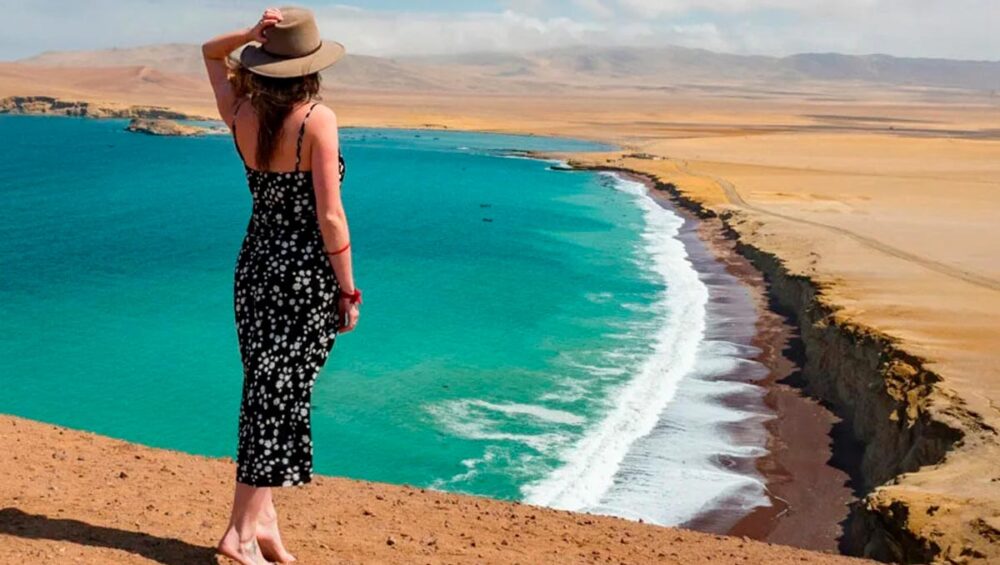
The coast of Peru often remains in the shadow of Machu Picchu and the Andes, but this long desert coastline hides some of the country’s most surprising landscapes. Between the Pacific Ocean and the dry plains of the south, there are islands full of wildlife and huge drawings traced onto the desert. Have you thought about traveling through Peru beyond the mountains? Paracas, the Ballestas Islands, Huacachina, and the Nazca Lines prove why the coast deserves a spot on your route, alongside the best tourist places in Peru.
Paracas is the gateway to the Ballestas Islands, a group of rocky islets where sea lions and birds can be seen on a short boat ride on the Pacific. Farther south, the Nazca desert holds massive geoglyphs of animals, plants, and geometric lines that have fascinated travelers for decades. Together, these destinations offer a very different trip: sea, desert, and mystery on a single route along the Peruvian coast.
In this guide you will find the essentials to plan your visit: the main sites, estimated costs, how to get there from Lima, and practical tips for your trip. If it is your first time in the country, also check where to fly to Peru for the first time to choose the best starting point for your itinerary.
Where is the southern coast of Peru located and what is the route?
The southern coast of Peru is not a region with official borders, but a tourist corridor that follows the Pan-American South highway (route PE-1S) from Lima toward the south. It is a paved and mostly flat road that borders the Pacific and crosses desert, making it the most comfortable way to travel along the coast of Peru.
The route step by step
The classic journey is: Lima → Paracas → Ica/Huacachina → Nazca.
- Lima: Starting point, with bus and tour departures heading south.
- Paracas: About 270 km from Lima. From here, boat rides to the Ballestas Islands depart and the Paracas National Reserve is visited.
- Ica and Huacachina: Ica is the main city in the area, and the Huacachina oasis is only 5 km away. It is an optional stop, but very popular.
- Nazca: The final stop. The Nazca Lines are about 400 km south of Lima, and the Nazca and Palpa geoglyphs have been a UNESCO World Heritage site since 1994.
Approximate distances and times
| Stretch | Approx. distance | Approx. time |
|---|---|---|
| Lima → Paracas | 270 km | 3.5 to 4 h |
| Paracas → Ica | 71 km | 1 h |
| Ica → Huacachina | 5 km | 10 to 15 min |
| Ica → Nazca | 142 km | 2 h |
| Paracas → Nazca | 211 km | 3.5 h |
| Lima → Nazca (direct) | 440–450 km | 6 to 7 h |
A tip for planning
Buses usually chain several legs together with the same vehicle (Lima → Paracas → Ica → Nazca). If one leaves late, the following ones are also delayed. Therefore, if you have a flight over the lines or a boat ride booked, always leave a time margin. To choose the best way to get around, also check our safe mobility guide for your trip to Peru.
What to see on the coast of Peru?: Paracas, Huacachina, and Nazca
This part of the coast of Peru gathers three distinct places on a single route: sea and wildlife in Paracas, dunes and pisco in Ica and Huacachina, and archaeological mystery in Nazca. They are very different stops from one another, yet connected by the same highway and easy to combine.
1. Paracas and Ballestas Islands
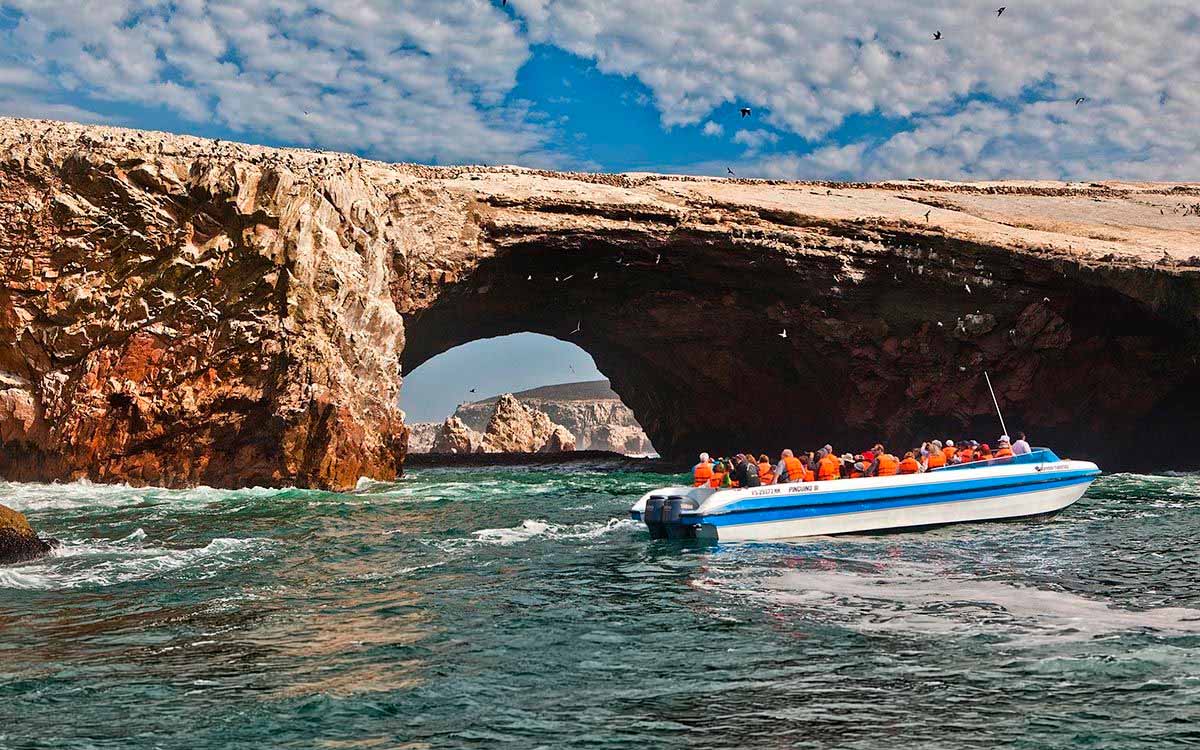
The Ballestas Islands are a group of rocky islets off the coast of Paracas, known as the “Peruvian Galapagos”. Sea lions, Humboldt penguins, pelicans, cormorants, and thousands of guano birds live there, in addition to dolphins that sometimes appear during the crossing. You cannot disembark on the islands or swim with the animals, so everything is enjoyed from the boat.
- How is the ride?: It lasts about 2 hours (half an hour going, one hour among the islands, and half an hour returning), and boats usually depart in the morning from El Chaco pier. Along the route, you can see the Paracas Candelabra, a geoglyph etched into the hillside facing the sea.
- Best time: Sea lions breed between January and March, when the beaches fill with pups. Rides depend on sea conditions and must be authorized before departing.
For its part, the Paracas National Reserve protects the marine ecosystem of the Humboldt Current in a landscape where desert meets the sea. Among its best-known stops are:
- The Cathedral: Rock formation facing the sea, with a viewpoint.
- Red Beach: One of the most photographed due to the color of its sand.
- Lagunillas and La Mina Beaches: For lunch and resting by the water.
- Flamingo viewpoints and Interpretation Center: To learn more about the fauna and flora.
2. Huacachina and Ica: the desert oasis
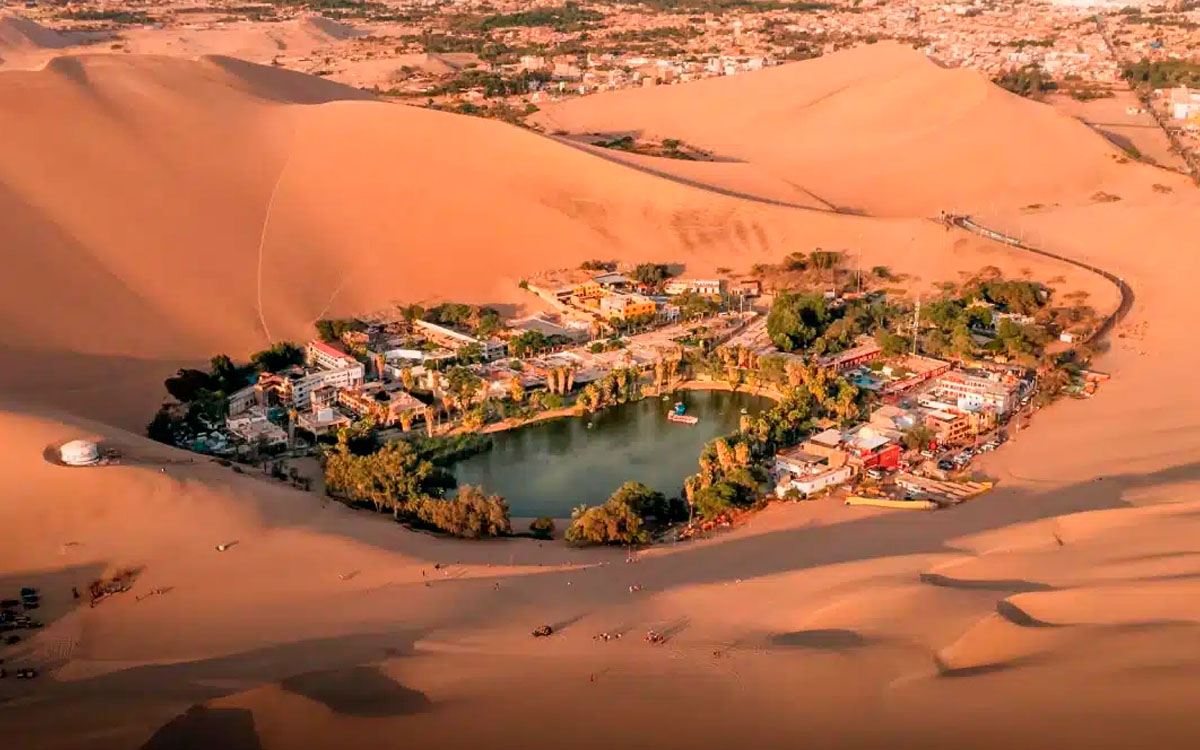
Huacachina is a lagoon surrounded by massive dunes, just 5 km from Ica (about 10 minutes by car). It is the natural stop between Paracas and Nazca, located one hour from Paracas and about two hours from Nazca. At the site you can enjoy:
- Buggies and sandboarding: The buggy ride through the dunes lasts about 2 hours on regular days (1 hour on holidays). Sandboarding is usually done lying down or sitting, and professional gear can be rented.
- Sunset: Many tours are scheduled to watch the sunset from the dunes, which is the most photogenic moment.
- Pisco wineries in Ica: Tours usually combine an industrial winery with an artisanal one. Hacienda Tacama presents itself as the oldest in South America and is closed on Mondays, when Vista Alegre is visited. Among the artisanal ones, El Arrabal stands out. All of them offer pisco and wine tastings.
3. Nazca Lines: What are they and how to see them?
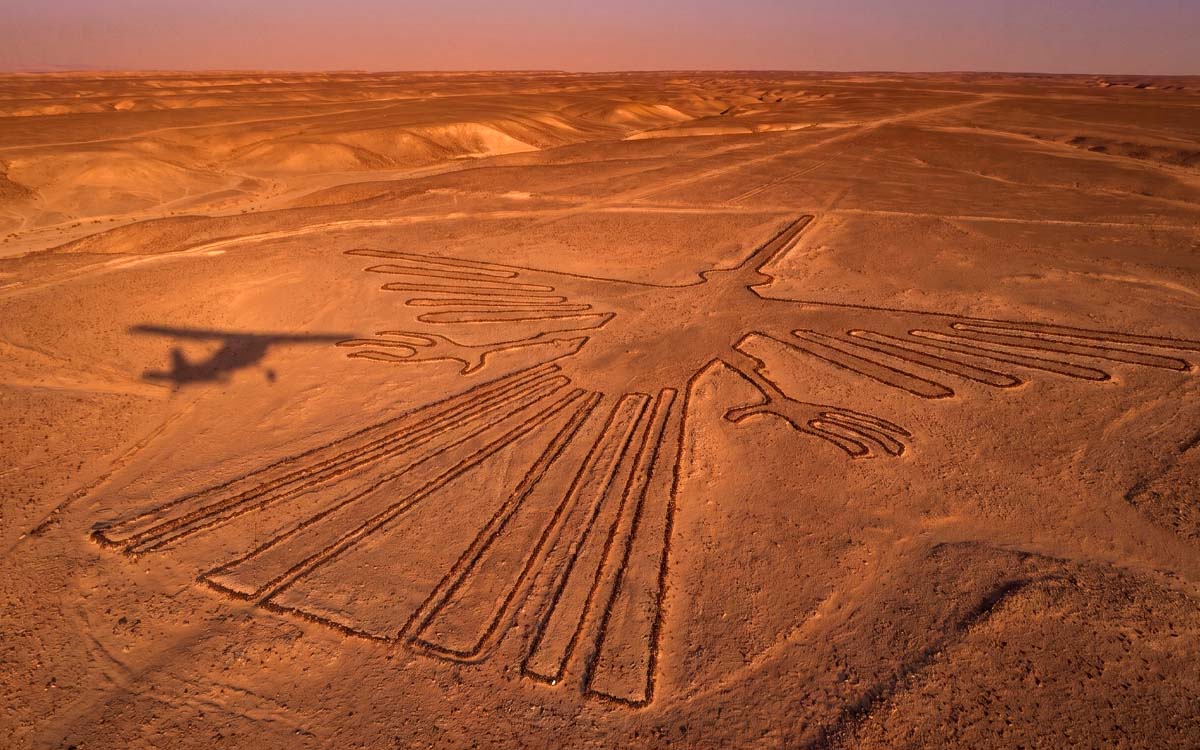
The Nazca Lines consist of hundreds of geoglyphs (straight lines, geometric figures, and drawings of animals, plants, and human beings) traced in the desert between Nazca and Palpa, over about 450 to 500 km². They are attributed mostly to the Nazca culture, which developed approximately between 200 BC and 600 AD.
They were made by removing dark surface stones to reveal the lighter ground beneath, and were preserved by the dry desert climate. Among the best-known figures are the hummingbird, the monkey, the spider, and the condor.
How to see the Nazca Lines
- Overflight: It is the best way to appreciate the figures. It lasts between 30 and 35 minutes and is done in small planes from the Nazca airfield. Before the flight, passengers are weighed and passports are requested. Conditions are usually better in the morning, and since the plane banks so both sides can see each figure, those who get motion sickness easily may feel it.
- Viewing tower: An observation tower on the Pan-American South highway, about 25 km northwest of Nazca. The view is not as spectacular as from the air, but it allows getting close to the geoglyphs. It was made possible thanks to the work of Maria Reiche.
Other points of interest in Nazca
- Antonini Museum: Displays findings from the Italian mission Proyecto Nazca, which worked in the area between 1982 and 2011.
- Chauchilla Cemetery: About 28–30 km south of Nazca. It allows seeing mummies in their tombs, preserved by the dryness of the desert.
- Cantalloc Aqueducts: About 4 km from Nazca, these are the puquios, spiral underground galleries from the Nazca culture used to capture water, some still in use.
Tickets, rates, and costs on your trip along the coast of Peru
Prices change frequently and fees are paid in cash and in soles, almost always on site. These are the reference rates for foreign adults.
Paracas and Ballestas Islands
| Item | Approximate cost | Where it is paid |
|---|---|---|
| Boat tour to the Ballestas Islands | S/ 40 (S/ 60 on holidays) | Operator or El Chaco pier |
| Mandatory fees (pier + SERNANP) | S/ 16 adults, S/ 8 children ages 5 to 16 | At the pier, before boarding |
| Entrance to the Paracas National Reserve | S/ 11 adults, S/ 3 children ages 5 to 16 | At the reserve checkpoint |
Huacachina and Ica
- Huacachina conservation area fee: S/ 8.10 for foreigners (S/ 4 for nationals).
- Buggy, sandboarding, and pisco tour: found starting from about US$ 39–45, without lunch.
- Wineries: Hacienda Tacama charges S/ 25 per adult and is closed on Mondays. On that day Vista Alegre is visited, with an entrance fee of S/ 15.
Nazca
| Item | Approximate cost |
|---|---|
| Overflight (from Nazca) | US$ 80–110 |
| Airport tax + Nazca tourist ticket | S/ 77 |
| Viewing Tower | S/ 3–5 |
| Antonini Museum | S/ 20 (students and children S/ 7) |
| Cantalloc Aqueducts | S/ 10 |
| Chauchilla Cemetery | Approx. S/ 8–10 |
Where to buy and how much cash to carry
- Online or with an operator: The tour to Ballestas and the overflight are usually booked in advance.
- On site: Pier, reserve, airfield, museum, and archaeological site fees are paid at the ticket office, the checkpoint, or the pier itself.
- Cash: If you do all of the above, calculate between S/ 180 and S/ 230 just for fees and entrance tickets, not counting tours, transportation, food, or tips. Carry small bills.
To put together the full budget for your trip, check our article on traveling to Peru: luxury destination or budget adventure?.
How to get there and plan your visit?
Public bus. Cruz del Sur, Oltursa, and Civa, among others, depart from their own terminals in Lima toward Paracas, Ica, and Nazca. Cruz del Sur, for example, leaves from the Javier Prado station. They are economical options, but:
- Buses terminate at public stations and do not enter the hotel areas of Paracas.
- Huacachina is reached with a short taxi ride from Ica.
- Schedules outside of Lima are referential: the same bus usually links several legs together, and a delay at the start carries over to the rest.
Tour from Lima. There are full-day excursions to Paracas (Ballestas + reserve), to Paracas and Huacachina, or to Nazca with an overflight. They solve transportation, but they are long days.
Reference bus fares: Paracas–Lima is around US$ 13–24 with Cruz del Sur. Lima–Nazca costs approximately between US$ 14 and 33, depending on the company and seat type.

Best time to visit and climate
The climate of the Peruvian coast is mostly dry and stable throughout the year, especially in destinations like Paracas, Ica, and Nazca, where rains are scarce and sunny days predominate. However, temperatures, winds, and the presence of fog vary depending on the season.
In general, from November to March there are warmer temperatures and clear skies, while between June and September mornings are usually cooler, especially in areas near the sea. Each destination has particular characteristics that are worth considering when planning the trip.
Paracas and Ballestas Islands
Paracas features a desert climate with pleasant temperatures for much of the year. One of its main characteristics is the presence of winds that usually intensify in the afternoon. For this reason, the 8:00 a.m. schedule is one of the most recommended to visit the Ballestas Islands, as the sea is usually calmer and sailing conditions are generally favorable.
The experience also changes slightly depending on the season:
- December to March: Warmer days and birthing season for sea lion pups.
- April and May: Pleasant temperatures, good lighting, and lower visitor influx.
- June to September: Cooler mornings, with a greater presence of fog and wind.
Marine fauna can be observed throughout the year. However, it is important to remember that boat rides depend on sea conditions and the corresponding authorizations.
Ica and Huacachina
Ica and Huacachina enjoy a warm and dry climate throughout the year, allowing activities such as dune buggy rides, sandboarding, and dune tours in any season.
The months from November to March are especially recommended for those who prefer sunny days and high temperatures. Nevertheless, temperatures can vary from approximately 9 °C during the coldest nights to nearly 32 °C on hot days. Therefore, it is best to bring light clothing for the day and some warm garment for the night.
Nazca and the Nazca Lines overflight
Nazca is one of the driest regions, so overflights of the famous Nazca Lines can be done throughout the year, provided weather conditions are suitable.
To enjoy a better experience, it is important to consider two aspects:
- Best season: From October to March, when clearer skies and good visibility conditions usually occur.
- Best time: During the morning, when there is generally less wind and the flight is usually more stable.
Although the weather is favorable for much of the year, flights can be delayed or canceled due to weather conditions. Therefore, it is recommended to maintain some flexibility in the itinerary.
What to pack according to the weather?
Although these destinations share a desert climate, temperature differences between day and night make it advisable to prepare luggage in advance. To comfortably enjoy the activities, do not forget to bring:
- Sun protection: Sunglasses, hat, and sunscreen throughout the year.
- Light and comfortable clothing: Ideal for walking in the desert and doing outdoor activities.
- Windbreaker jacket or sweater: Especially useful for boat rides around the Ballestas Islands and cool nights in Ica and Nazca.
Ultimately, the southern coast of Peru can be visited throughout the year, although the months from November to March are an excellent alternative for those looking for warm temperatures and sunny days. If you prefer cooler weather, the months of April and May also offer pleasant conditions to explore these destinations.
How to combine the coast of Peru with other destinations
Exploring the southern coast of Peru is an excellent opportunity to continue the trip toward some of the country’s most iconic destinations. After visiting Paracas, Huacachina, and Nazca, many travelers continue toward Arequipa, the Colca Canyon, Puno, and Cusco, combining desert landscapes, colonial cities, and Andean archaeological sites.
Arequipa: the White City
After Nazca, Arequipa is one of the main stops for those continuing toward the southern Andes. Known as the White City, it stands out for its colonial architecture, its volcanic sillar constructions, and its renowned gastronomy.
In addition to exploring its historic center and visiting the Santa Catalina Monastery, Arequipa allows discovering part of the country’s cultural richness, an experience complemented by the attractions presented in Explore the Wonders of Peru: From Gastronomy to Ancient Ruins, where different expressions of Peruvian history and gastronomy are explored.
Colca Canyon: Andean nature and culture
From Arequipa it is possible to continue toward the Colca Canyon, one of the most impressive natural landscapes in southern Peru. Excursions can be done in a full day or extended over two or three days for those wishing to hike and explore the area more calmly. Among its main attractions stand out the flight of the condors, natural viewpoints, and traditional valley villages. These landscapes, along with cultural experiences and recommendations for organizing the visit, are part of Colca Canyon Peru: Condors, Villages & Travel Tips.
Cusco and Machu Picchu: the legacy of the Incas
Cusco represents one of the most important stages of this journey, especially for those wishing to learn the history of the Inca Empire and visit Machu Picchu. Its cobblestone streets, temples, archaeological sites, and living traditions make the ancient Inca capital an essential destination. The historical and cultural richness of the city is reflected in Cusco: A Cultural Journey Through the Heart of the Andes, a tour through the main attractions and traditions that characterize this region. On the other hand, those planning to include Machu Picchu in their itinerary will find useful information on trip organization, main destinations, and available experiences in A Guide to Planning Your Peru and Machu Picchu Adventure.
Altitude considerations
One of the most important aspects when combining the Peruvian coast with the Andes is the change in altitude. While Paracas and Huacachina are located at a low elevation above sea level, cities like Cusco and Puno exceed 3,000 meters.
The approximate altitudes of the main destinations are:
- Lima and Paracas: near sea level.
- Huacachina and Nazca: approximately 400 to 600 m.
- Arequipa: 2,300 m.
- Cusco: 3,400 m.
- Puno: 3,800 m.
Although doing the journey in stages allows experiencing different altitudes, it does not guarantee adequate acclimatization. It is recommended to set aside time to rest and adapt before doing physically demanding activities.
This aspect takes on special importance for those planning to hike, as altitude on the Inca Trail and Machu Picchu is a fundamental factor when preparing treks through the Andes.
Frequently asked questions about the coast of Peru
- How much time do I need to travel along the coast of Peru?
It depends on how much you want to see:- 1 day: only Paracas from Lima (Ballestas Islands and National Reserve).
- 2 days: Paracas, Huacachina, and Nazca, with a tight schedule.
- 3 days: the most comfortable option, with a night in Paracas and another in Huacachina before arriving in Nazca.
- Is the overflight worth it?
It is the best way to see the full figures, but it is best to decide with information:- Pros: The flight lasts about 30 to 35 minutes and allows you to appreciate the scale of the geoglyphs, something impossible from the ground.
- Cons: It costs between US$ 80 and 110 plus S/ 77 in fees, the movement of the small plane can cause motion sickness, and since August 2026, there are safety concerns (see the last question).
If you decide to fly, do it with an authorized operator, in the morning, and ask about the condition of the aircraft.
- Can the lines be seen without flying?
Yes, partially. The viewing tower on the Pan-American South highway costs between S/ 3 and 5 and allows seeing some figures, such as the tree, the hands, and the lizard. You can also visit the Antonini Museum, the Cantalloc aqueducts, and the Chauchilla cemetery to better understand the Nazca culture. Some tourist buses include a stop at the viewing tower. - Is it suitable for children?
In general yes, with some precautions:- The Ballestas Islands and the Paracas Reserve have reduced rates for children aged 5 to 16, and children under 5 do not pay.
- Some buggy tours indicate that small children must sit on an adult’s lap, and overflight tours require weighing passengers.
- Before booking, check the minimum age and conditions for each activity with the operator, especially for the overflight and buggies.
- Can Huacachina be combined with Paracas and Nazca on the same trip?
Yes, it is the classic route. Huacachina is only 1 hour from Paracas and about 2 hours from Nazca. A common plan is to visit Paracas in the morning, arrive in Huacachina for buggies and sunset, sleep there, and continue to Nazca the next day. Public buses terminate in Ica and from there you take a short taxi to the oasis, while tourist buses like Peru Hop enter directly.